
Epifanes Copper-Cruise Antifouling
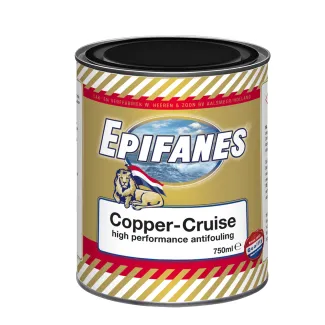
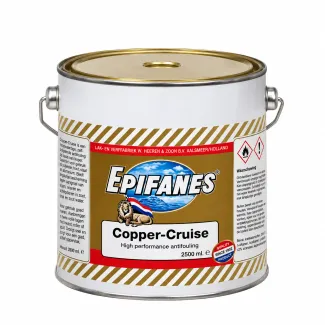
At a glance
- High performance antifouling
- Self-polishing effect
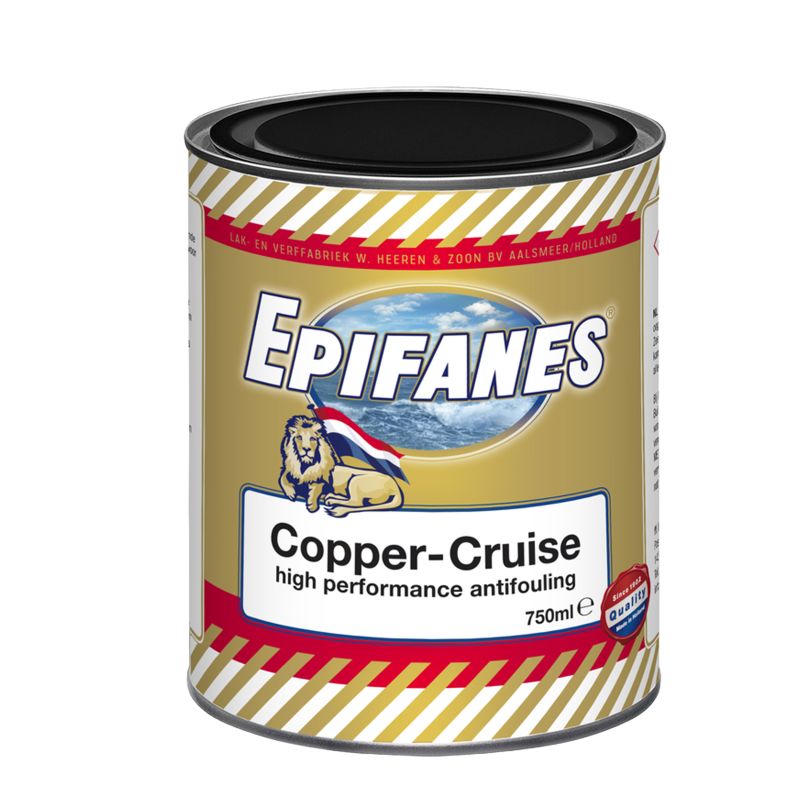
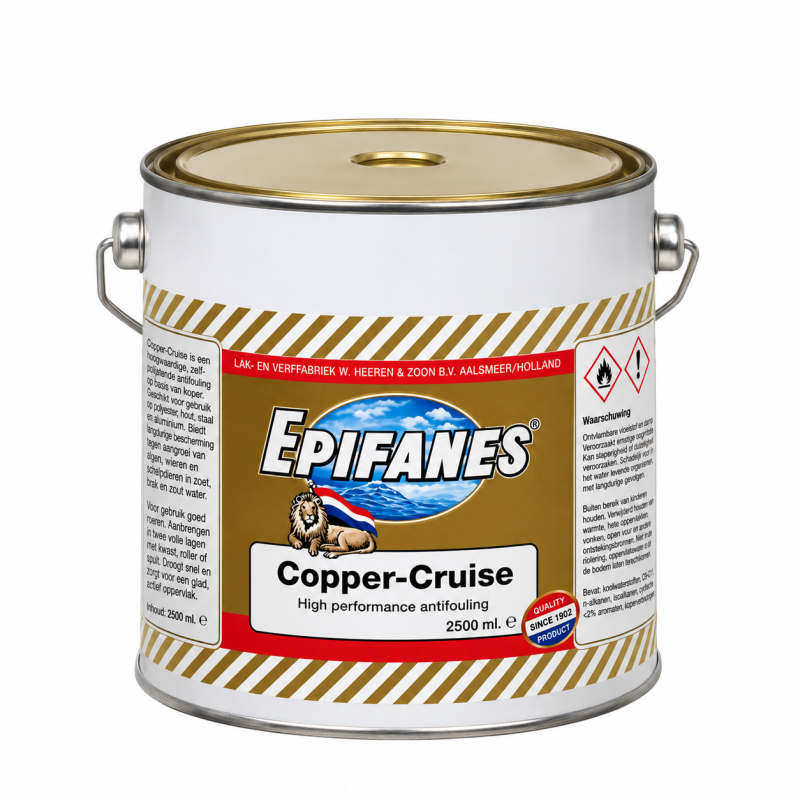
- Contents: 0.75 & 2.5 ltr & 5 ltr
Fast delivery throughout Europe
Secure payment with PayPal, Mastercard, Visa and more
4.7 out of 5 stars on Trusted Shops
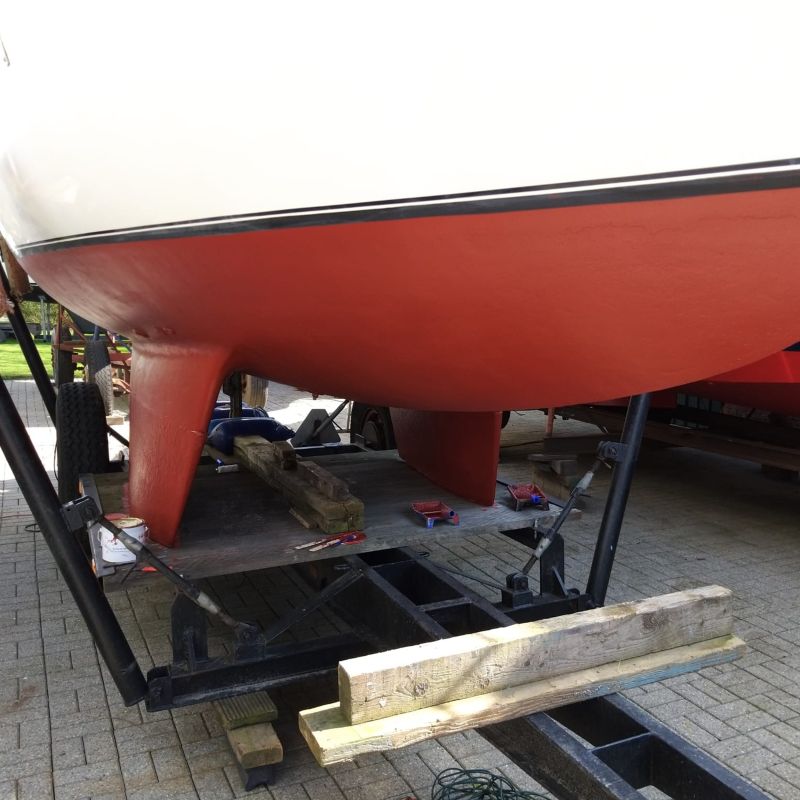
Epifanes Copper-Cruise is a high-performance antifouling based on copper and biocides, designed to provide long-lasting protection for the underwater section of the hull. This antifouling forms a hard, scrub-resistant coating and uses the latest copper-release technology. As a result, the copper is released in a controlled manner, providing very effective protection against fouling.
This popular antifouling contains the highest copper content currently permitted in the Netherlands. As a result, Copper-Cruise is particularly suitable for boats that remain in the water for extended periods and require maximum protection. Epifanes Copper-Cruise is suitable for virtually all types of pleasure craft with speeds of up to approximately 30 knots, in fresh, brackish and salt water.
Features of Epifanes Copper-Cruise
Epifanes' copper-based antifouling offers a number of key advantages:
- Contains the highest copper content currently permitted in the Netherlands.
- Highly effective protection against fouling.
- Suitable for pleasure craft with speeds of up to 30 knots.
- Suitable for use in fresh, brackish and salt water.
Application
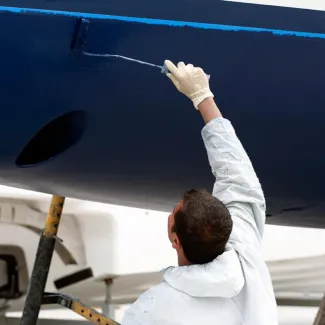
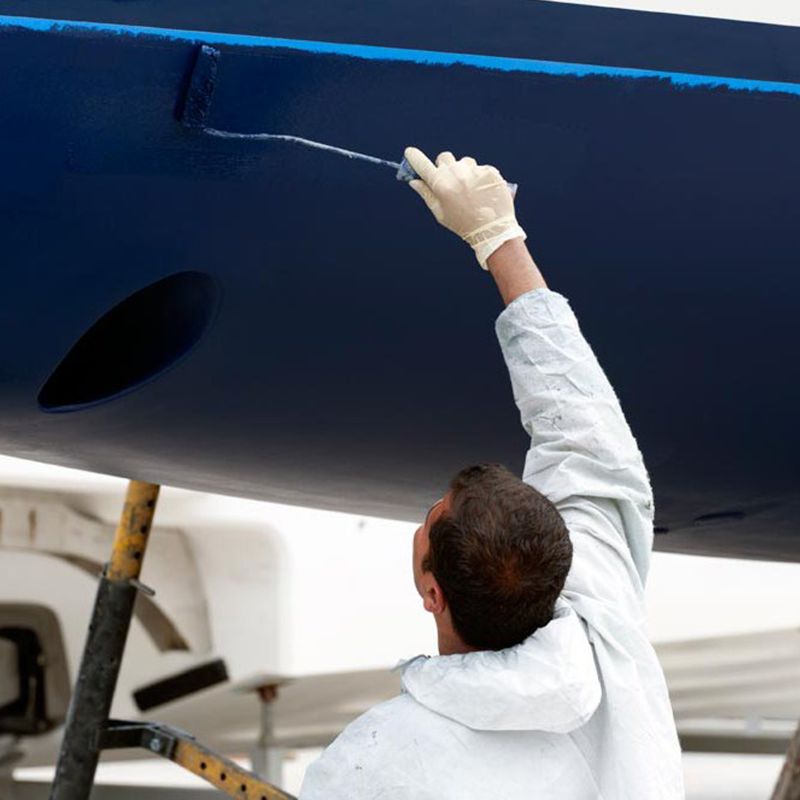
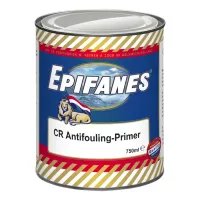
Epifanes Copper-Cruise is suitable as an antifouling coating for wooden, steel and GRP yachts. For optimal adhesion, use the product in combination with a suitable primer, such as Epifanes CR Antifouling Primer (one-component) or Epifanes Interimcoat+ (two-component). After proper surface preparation, Copper-Cruise can also be applied over existing, well-adhering hard or self-polishing copper-based antifouling. For best results, this antifouling should preferably be applied undiluted.
Please note: Copper-Cruise is not suitable for aluminium boats. Special aluminium-compatible antifoulings are available for this purpose. Please feel free to contact our specialists for advice on the most suitable solution for your aluminium boat.
Specifications
Packaging: 0.75 L, 2.5 L and 5 L
Authorisation number: 14301 N
Colour: reddish brown, black, light blue, dark blue, off-white, bright red
Finish: semi-gloss
Coverage: approx. 10 m2 per litre per coat
Minimum sailing speed: 5 knots
Maximum sailing speed: 30 knots
Application temperature: min. 5°C, max. 28°C
Minimum number of coats: 2
Recommended layer thickness per layer: 80-100 µm (wet), 40-50 µm (dry)
Dust dry: after 30 minutes (at 20°C)
Tack-free after: 1 hour (at 20°C)
Overcoatable after: 8 hours at 20°C
Time before launching:
- Minimum: 24 hours
- Maximum: 1 month
Shelf life: at least 2 years from date of production if stored in tightly sealed packaging at a temperature between 5°C and 30°C.
More information?
Do you have a question or would you like more information about the Epifanes Copper-Cruise? Please visit our information centre to find an answer to your question or contact us directly on +31 85 022 0090. Do you need immediate assistance? Then send us a chat message. We will answer your questions as soon as possible during office hours.
Product properties
The key technical properties clearly listed in one place.
- Article number
- BOO000753
-
The materials, substrates or tasks a product is intended for. A general claim such as 'suitable for plastics' does not mean it works with every type of plastic; the specific substrate and its preparation still matter.
- Polyester boten, Stalen-boten, Houten boten
-
The technical product category, such as primer, resin, hardener or cleaner. It explains the product's purpose and helps you find other products with a similar function.
- Self-sharpening antifouling
-
The recommended layer thickness is the thickness at which you apply each coat of paint, coating or resin. It is usually given in micrometres (µm) or millimetres (mm).
- Wet film thickness: the thickness immediately after application.
- Dry film thickness: the thickness after drying or curing.
For a coating with 60% solids by volume, a wet film of 100 µm will theoretically produce a dry film of approximately 60 µm. Film thickness affects coverage, protection and drying. Always check whether the manufacturer specifies wet or dry film thickness.
- 80-100 µm wet (= 40-50 µm dry)
-
The recommended application temperature range indicates the conditions under which the product can generally be applied and cured properly. Three temperatures matter:
- Air: the temperature in the workshop or outdoors.
- Substrate: the temperature of the surface being treated.
- Product: the temperature of the resin, adhesive or coating itself.
A cold substrate can cause condensation and affect adhesion. At higher temperatures, two-component products may react faster, reducing their working time. Check the dew point and follow the product instructions.
- 5-28 °C
-
The recommended number of coats needed to achieve the intended coverage, thickness or protection. Highly absorbent substrates or different application methods may require additional coats. Allow for the specified time between coats.
- At least 2
-
The period for which an unopened product remains usable under the specified storage conditions. Check whether the period starts from the manufacturing date or another date. Shelf life may be shorter after opening, especially for products sensitive to air or moisture.
- At least 24 months
-
The time until the surface no longer feels tacky to a light touch. The material underneath may still be soft, so tack-free does not mean fully cured or ready for heavy loading.
- 1 hour (20 °C)
-
The overcoating interval tells you when the next layer of paint, varnish or coating may be applied. Many multi-coat systems specify both a minimum and a maximum interval:
- Minimum overcoating time: the previous layer is dry or cured enough to accept another coat.
- Maximum overcoating time: the period during which the next coat can bond without extra surface preparation under the stated conditions.
Overcoating too early can affect drying or the finish. Once the maximum interval has passed, cleaning and sanding may be needed to ensure adhesion between coats. Temperature and film thickness affect the waiting times.
- 8 hours (20 °C)
-
A paint or varnish layer is dust-dry when settling dust is less likely to stick to the surface. It may not yet be touch-dry, ready for overcoating or suitable for loading; these are different stages of drying and curing.
- 30 minutes (20 °C)
-
The minimum waiting time between applying an underwater coating or antifouling paint and launching the boat. Some products also specify a maximum time before launch. These times may depend on temperature and applied film thickness.
- After at least 24 hours
-
The authorisation number is the official registration number of an approved biocide-containing antifouling product. It can be used to check whether an antifouling product is authorised in a particular country. Dutch authorisation numbers may end with the letter N, such as 14533 N.
An authorisation applies only to the specified uses and conditions. Not every antifouling product is permitted in every country. Check the number and current instructions on the label, especially if you plan to use the antifouling outside the Netherlands.
- 14301 N
-
Consumption or coverage describes how much product is needed for a given surface area. Consumption may be stated in g/m² or kg/m², while coverage is often given in m²/L or m²/kg. A consumption of 0.2 kg/m² means a theoretical 200 grams per square metre. Actual use depends on film thickness, substrate absorbency, application method and waste.
- Approximately 10 m²/L
- Net contents
- 2.5 L, 5 L, 750 ml
Reviews
Frequently bought together
Useful additions for your project.
Often chosen