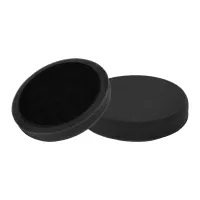
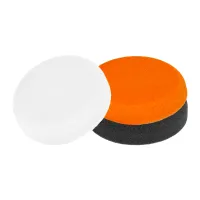
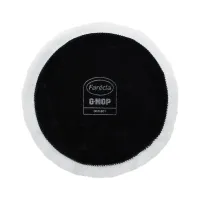
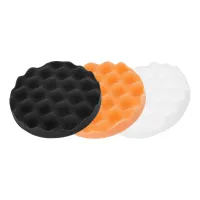
Without the right polishing pad, you won’t get far. Whether you are polishing epoxy, polyester, gelcoat or paint, a good polishing pad is essential for a smooth finish. But which pad should you use for which job? In this article, we explain the types of polishing pads and how to choose the right one for your application.
What is a polishing pad?
A polishing pad (also called a polishing sponge or polishing disc) is a disc that attaches to a polishing machine. You use it with a polishing compound for:
- Cleaning surfaces.
- Correcting surfaces (removing scratches or oxidation).
- Creating a glossy finish.
Pads differ in material, hardness and texture, which together with the polishing compound determine the final result.
Types of polishing pads
Polishing pads are available in different types. At Polyestershoppen, you will mainly find foam pads, wool pads, and microfibre pads.
1. Foam pads
Foam pads are the most versatile and commonly used polishing pads. They come in different densities (hard/soft) and colours, with the colour usually indicating the hardness (depending on the brand).
- Soft foam pads (finishing):
Ideal for applying wax or high-gloss polish, leaving a hologram-free finish.
- Medium foam pads (polishing):
Suitable for light scratches, swirls and dull areas. Most commonly used for general polishing.
- Hard foam pads (cutting)
Designed to remove heavy defects like oxidation, deep scratches or weathered surfaces.
Foam pads are durable, easy to clean, and suitable for almost all surfaces, from paint to epoxy.
2. Wool pads
Wool polishing pads are made from real or synthetic wool fibres attached to a backing (usually foam or velcro). They have very high cutting power, making a wool pad strong and fast-working. Ideal for removing deep scratches or heavy oxidation.
3. Microfibre pads
These polishing pads combine a soft foam core with a microfibre top layer. This provides both cutting power and a fine finish. Microfibre pads are suitable for one-step polishers or for correcting light to medium imperfections.
Which polishing pad to use when?
Use this handy selection table to choose the right polishing pad for your application:
| Application | Type of polish | Recommended pad | Result |
|
Weathered gelcoat, deep scratches |
Coarse polish (cutting) |
Wool pad or hard foam pad |
Strong correction, matte finish |
|
Light scratches, dull spots |
Medium polish (polishing) |
Medium foam pad or microfibre pad |
Gloss restoration, minor correction |
|
High-gloss finish, applying wax |
Fine polish (finishing) |
Soft foam pad |
Hologram-free, deep gloss |
Which pad size do you need?
Polishing pads are available in various diameters, suitable for the type of work and polishing machine:
| Diameter | Use |
| Ø75 mm |
Small surfaces, edges, corners, epoxy jewellery |
| Ø125-150 mm |
Most common size for boats, cars, furniture, floors |
| Ø180 mm and larger |
Large surfaces, such as roofs, floors or hulls of ships |
How to use a polishing pad
Follow these steps to use your polishing pad correctly:
- Attach the right pad to your polisher
Ensure the pad is centred on the backing plate to prevent vibrations and uneven pressure. - Apply polish to the pad
Use a few drops (approx. 3-5 drops) and spread the product manually over the surface. - Polish at low to medium speed
Start slowly, then increase speed for the main polishing work. - Apply even pressure
Do not press too hard; let the machine do the work. Excessive pressure can overheat the pad and damage it. If a scratch or paint defect doesn’t come out, use a heavier pad and compound.
- Check the results
Wipe the surface with a clean microfibre cloth and repeat the steps if necessary. Always clean the pad thoroughly after polishing.
How to clean a polishing pad
During polishing:
- Use multiple pads per job to prevent contamination.
After polishing:
- Clean the pad with warm water and a mild detergent (e.g. dish soap). Rinse thoroughly.
- Allow the pad to dry completely on a clean surface, avoiding radiators or direct sunlight.
Popular polishing brands at Polyestershoppen
At Polyestershoppen, you’ll find polishes and polishing pads from top brands suitable for professional and hobby use:
For each brand, the polish is matched to specific pad types. Preferably, use the pad and polish from the same brand, or ask us for advice.
Need more information about polishing pads?
After reading this article, if you still have questions about polishing or choosing the right pad for your project, feel free to contact our specialists for personalised advice!