A windowsill is exposed daily to sun, rain, and temperature changes. Over time, cracks can appear, or the surface may become weathered. Fortunately, you can easily restore it yourself using the SillFix Polyaspartic coating from Polyestershoppen. In this article, we explain step by step how to make a damaged windowsill look like new again.
What is RESION SillFix Polyaspartic?
RESION SillFix is a fast-curing polyaspartic coating, ideal for repairing damaged windowsills. The coating is available in three standard colors (white, gray, beige) and is easy to apply without a primer.
Key features
- Durable and wear-resistant.
- Waterproof protection.
- Available in three standard colors (RAL 7035, RAL 9016, and RAL 1001).
- Easy to apply without primer.
Required materials
To repair a damaged windowsill, you will need:
- RESION SillFix Polyaspartic (base + hardener)
- Acetone
- Rollers and brushes
- Paint trays
- Microfibre cloths
- Mixing cups and spatulas
- Nitrile gloves
- Sandpaper + sanding block
- Utility knife (Stanley knife)
- Masking tape
Step 1. Preparation and cleaning
Clean the windowsill thoroughly:
- Remove loose or crumbling parts with a scraper.
- Make the surface dust-free.
- Wipe the surface with a microfibre cloth and acetone to completely remove grease and dirt.
Mask the edges with tape to protect the surrounding walls and window frames.

Step 2. Mix the Polyaspartic coating (SillFix)
Polyaspartic must always be mixed carefully.
- Open component A and stir thoroughly with a mixing spatula (the pigment may have settled at the bottom).
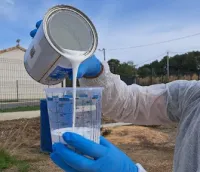
- Pour the desired amount of component A into a mixing cup. Prepare only small quantities (300–500 g). The working time is approximately 20 minutes.
- Add component B to component A and mix carefully until a uniform mass forms. Scrape the sides and bottom of the cup during mixing.
- Pour the mixture into a clean mixing cup and mix again.


Step 3. Apply the first layer
- Pour the mixed product into a paint tray.
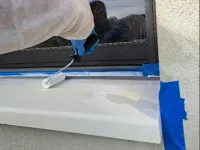
- Apply the coating first with a brush to corners, under the overhang, and along the edges.
- Use a roller to cover the rest of the windowsill with a generous layer of SillFix Polyaspartic.
Allow the first layer to cure completely; at 20°C, this takes approximately 60 minutes.


Step 4. Sanding and preparing for the second layer
After drying, the first layer may show minor imperfections.
- Carefully sand smooth using fine sandpaper and a sanding block.
- Remove any drips with a utility knife.
- Finally, wipe away all dust and debris with a clean microfibre cloth.

Step 5. Apply the second layer
Repeat the steps from Step 3:
- Touch up corners with a brush.
- Apply a second even layer of polyaspartic using a roller.


Step 6. Finishing
Remove the tape once the polyaspartic has fully cured. Trim any excess drips with a utility knife.
You now have a smooth, waterproof, and crack-free windowsill that will last for many years!

Learn more about SillFix Polyaspartic
With this polyaspartic coating, you can easily repair cracks and damage in your windowsill. The result is not only visually appealing but also durable and water-resistant. At Polyestershoppen, you can find all the products and materials needed to complete this project yourself. If you have any questions, feel free to contact our specialists—we’re happy to help!