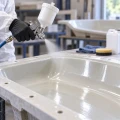
When working with polyester, epoxy, or other casting resins where you are casting something in a mould, a good release agent is indispensable. A release agent ensures that your mould and finished product separate cleanly without damage. But which type of release agent to use for which purpose? In this article, we explain the difference between release wax and PVA (polyvinyl alcohol) and help you choose the right one for your project.
What does a release agent do?
A release agent forms a barrier between your mould and the material you are casting or laminating. This prevents the finished product from sticking to the mould, which can be frustrating and may damage both the mould and your workpiece. Two commonly used release agents are:
- Release wax (also called moulding wax or buffing wax)
- PVA (polyvinyl alcohol)
Each has its own properties and applications.
Release wax
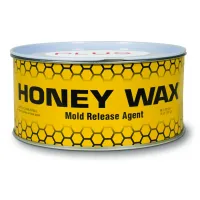
Release wax is a popular choice when working with smooth, non-porous moulds, such as polished polyester or metal moulds. The wax is applied thinly and then buffed off. Multiple layers are often required, especially for a new or untreated mould.
Benefits of release wax
- Leaves no visible layer on your finished product.
- Suitable for repeated use.
- Adds a nice gloss as a bonus.
- Easy to apply and buff.
When to use release wax
- On polished polyester moulds.
- If you want a high-gloss finish.
- For repeated use of a mould.
PVA release agent
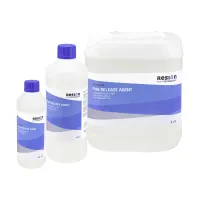
PVA (polyvinyl alcohol) is a liquid, water-soluble film applied over the mould. Once dry, it forms a visible protective layer between the mould and the resin. PVA is often used on new moulds, complex shapes, or materials where adhesion is more likely, such as wood, plaster, or unpolished moulds.
Benefits of PVA
- Highly reliable, even for difficult releases.
- Forms a clear physical barrier.
- Easy to remove with water.
- Ideal for porous or new moulds
When to use PVA
- New moulds.
- Complex shapes.
- When adhesion is more likely (wood, plaster, or unpolished moulds).
Wax or PVA? Or both?
In some cases, both agents are used together. This is especially recommended for new moulds, complex shapes, porous materials, or important projects where reliable release is crucial. For extra release security, combine wax and PVA as follows:
- Apply 5-7 layers of release wax first.
- Allow each layer to cure and buff it off.
- Apply a thin layer of PVA with a sponge.
The wax fills tiny imperfections and creates a smooth surface, while the PVA forms a visible physical barrier.
Points to consider when combining wax and PVA
Always pay attention to the following when combining release wax and polyvinyl alcohol:
-
Use the right polyvinyl alcohol
Some PVAs contain solvents that can affect the wax layer. always use a good quality PVA, such as RESION polyvinyl alcohol. -
PVA is fragile when handled
Let PVA dry completely (30-60 min.) and avoid touching afterwards to prevent damage. -
Do not use in reverse order
Never apply wax over PVA! Wax will not adhere properly and both agents will lose their effectiveness. -
End result: no high gloss without post-processing
PVA leaves a matte film on your workpiece. You can rinse it off with water, but if you want a high-gloss finish, polishing is usually required afterwards.
Overview of release agents
See the table below to find out which release agent is suitable for your application.
| Application | Release wax | PVA | Wax + PVA |
|
Smooth, polished mould |
Yes |
Optional for extra protection |
Best choice for new moulds |
|
New or porous moulds |
Limited effectiveness | Yes | Yes |
|
High-gloss finish without post-processing |
Yes | No | No |
|
Difficult-to-release shape |
Limited effectiveness | Yes | Best solution |
|
Single-use mould (e.g., wood or plaster) |
Not suitable | Yes | Best solution |
Buying release agents
At Polyestershoppen.com, you can find high-quality release waxes and PVA release agents. Our product specialists are happy to help you choose the right product for your application. Do you have questions about your specific project? Feel free to contact our customer service team— we’re happy to advise you!