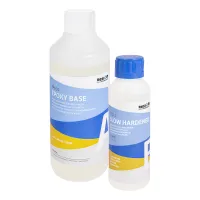
Recommended

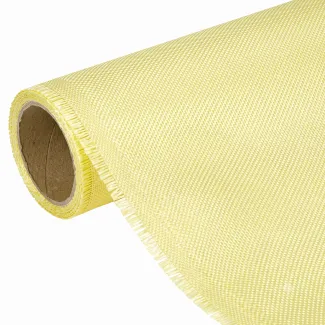
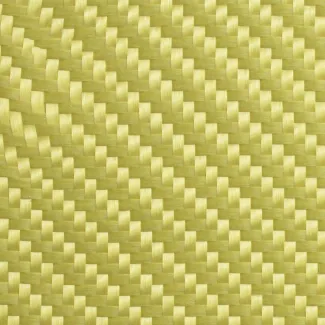
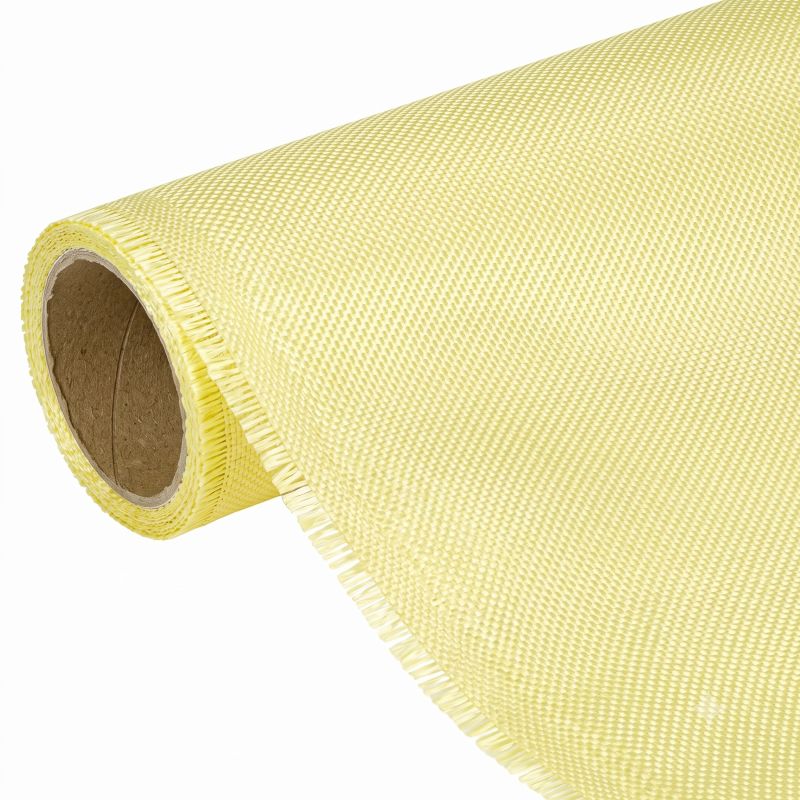
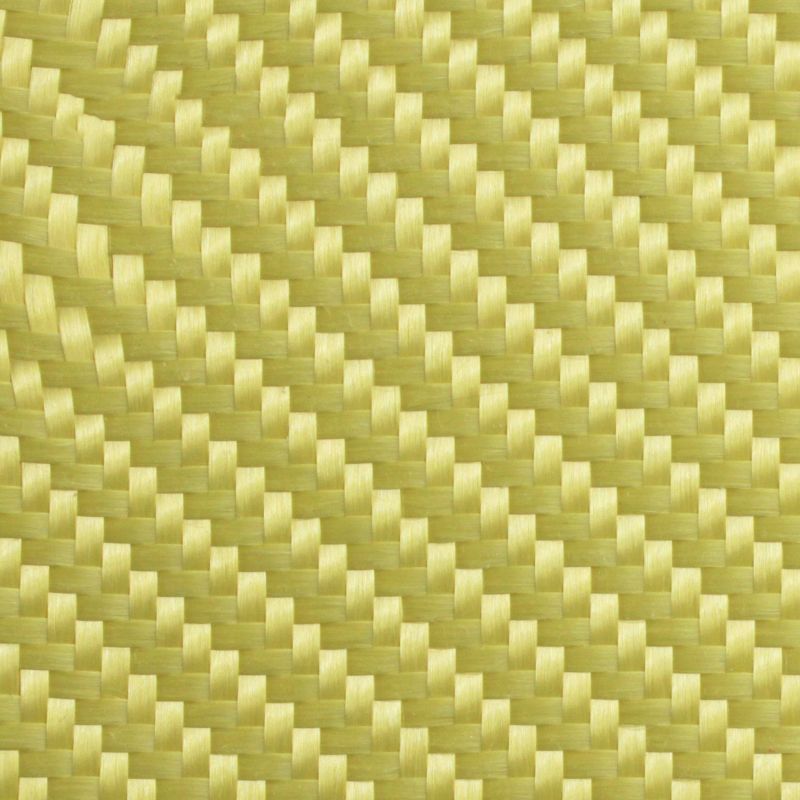
Aramid is better known by its brand name Kevlar. Aramid fibres are strong, synthetic, yellow fibres. These fibres are particularly impact and abrasion resistant and have very high impact strength. From the aramid/kevlar fibre comes the saying: "Five times stronger than steel".
Aramid fabric is slightly less stiff than carbon fibre, but can withstand point loads incredibly well. Hence, it is often used in bulletproof vests. Its downside is that abrasion and cutting is difficult, which is why we also have special shears in our range for this purpose.
Kevlar also has the property of being very tough. You can also use kevlar (in combination with epoxy resin) for rubbing surfaces. This aramid cannot be used as a textile fabric and must therefore be combined with a resin.
| Application method | Layer thickness | Resin consumption |
| Hand lay-up | 0.40 mm | approx. 283 gr/m2 |
| Wet Bagging | 0.32 mm | approx. 198 gr/m2 |
| Resin Infusion | 0.30 mm | approx. 182 gr/m2 |
Weight: 175 gr/m2
Roll width: 120 cm
Dimensions:
The key technical properties clearly listed in one place.
Fibre type affects a composite's strength, stiffness, toughness and weight. Common reinforcement fibres include:
Final properties also depend on fibre orientation, fabric type, resin content and laminate quality.
The technical product category, such as primer, resin, hardener or cleaner. It explains the product's purpose and helps you find other products with a similar function.
Fabric or reinforcement type describes how the fibres are arranged. This affects how easily the material drapes over a shape and which directions it mainly reinforces.
Note: a Square reinforcement (0°/90°) is not the same as a plain-woven square fabric. Also consider fibre type and areal weight (g/m²).
The product's dimensions, usually shown as length × width × height or another product-specific order. Check whether the measurements describe the outside, inside or usable space, especially for containers and moulds.
The measurement across a product from one side to the other, for example for rolls, panels or fabrics. With rolled materials, the usable width may differ from the overall width.
Areal weight is the weight of one square metre of dry reinforcement, expressed in g/m² (grams per square metre). For example, 200 g/m² glass fabric contains 200 grams of dry fibres per m², without resin. Areal weight helps with reinforcement selection and resin consumption estimates, but it is not the final laminate thickness.
Useful additions for your project.