
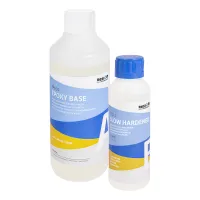
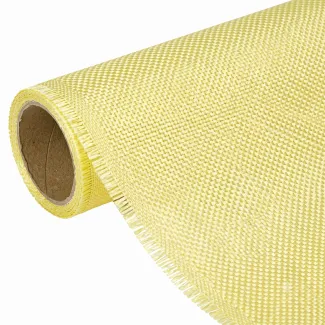
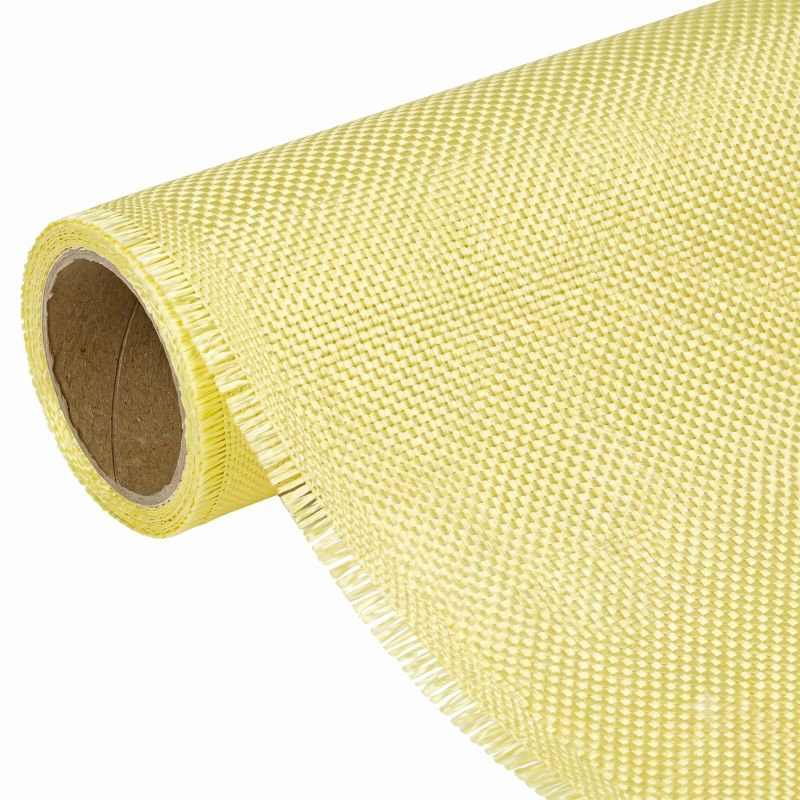
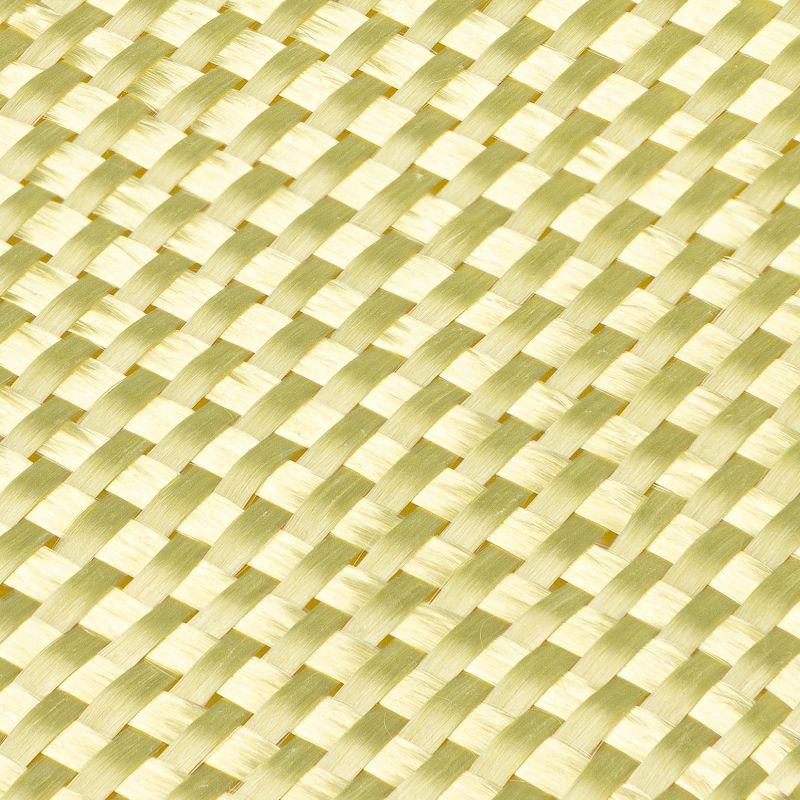
Aramid fabric 170 gr/m2 square (100 cm)
At a glance
- Non pliable
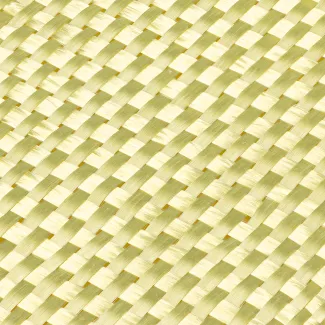
- Square weave
- Very high impact resistance
Fast delivery throughout Europe
Secure payment with PayPal, Mastercard, Visa and more
4.7 out of 5 stars on Trusted Shops
Aramid fabric 170 gr/m2 is a tough fibre that protects objects from point loads. Square weave is denser than twill weave, which also makes this weave more suitable when no resin is used, such as in motorbike suits and stab proof vests. Several layers of fabric are then stitched together.
Features aramid fabric
- Very strong.
- Impact and shock resistant.
- Good point load resistance.
Resin consumption
| Application method | Layer thickness | Resin consumption |
| Hand lay-up | 0.42 mm | approx. 297 gr/m2 |
| Wet Bagging | 0.33 mm | approx. 207 gr/m2 |
| Resin Infusion | 0.31 mm | approx. 190 gr/m2 |
Specifications
Weight: 170 gr/m2
Roll width: 120 cm
Dimensions:
- 1 x 1 m (1.20 m2)
- 1 x 2 m (2.4 m2)
- 1 x 3 m (3.6 m2)
- 1 x 5 m (6 m2)
- 1 x 10 m (12 m2)
- 1 x 25 m (30 m2)
- 1 x 100 m (120 m2)
Tip: not sure which type of fabric is right for your job or product? Then take a look at our page on fabrics or contact us!
Product properties
The key technical properties clearly listed in one place.
- Article number
- KOO001498
-
Fibre type affects a composite's strength, stiffness, toughness and weight. Common reinforcement fibres include:
- Glass fibre: a cost-effective choice used widely in polyester and epoxy laminates.
- Carbon fibre: very stiff and lightweight, suitable for parts that need to be light and hold their shape.
- Aramid: a tough fibre with good resistance to certain impacts and tearing, but often harder to cut neatly and sand.
Final properties also depend on fibre orientation, fabric type, resin content and laminate quality.
- Kevlar
-
The technical product category, such as primer, resin, hardener or cleaner. It explains the product's purpose and helps you find other products with a similar function.
- Weefsel
-
Fabric or reinforcement type describes how the fibres are arranged. This affects how easily the material drapes over a shape and which directions it mainly reinforces.
- Plain weave (square weave): the yarns pass alternately over and under each other. The fabric is stable and works well on flat or gently curved surfaces.
- Twill weave: recognisable by its diagonal pattern. It is more flexible than plain weave and drapes more easily over curves.
- Unidirectional reinforcement (UD): the fibres run mainly in one direction, usually marked 0°. It provides reinforcement primarily along that direction.
- Multiaxial reinforcement: fibres are arranged in several directions, for example biaxial (+45°/-45°), Square (0°/90°) or triaxial (0°/+45°/-45°). Fibre bundles are normally held together by stitching rather than a conventional weave.
Note: a Square reinforcement (0°/90°) is not the same as a plain-woven square fabric. Also consider fibre type and areal weight (g/m²).
- Plain
-
The measurement across a product from one side to the other, for example for rolls, panels or fabrics. With rolled materials, the usable width may differ from the overall width.
- 120 cm
-
Areal weight is the weight of one square metre of dry reinforcement, expressed in g/m² (grams per square metre). For example, 200 g/m² glass fabric contains 200 grams of dry fibres per m², without resin. Areal weight helps with reinforcement selection and resin consumption estimates, but it is not the final laminate thickness.
- 170 g/m²
Reviews
Frequently bought together
Useful additions for your project.
