An epoxy floor is a popular choice for garages. It is strong, wear-resistant and easy to clean. However, dark marks may appear over time where the car tires are parked. These tire marks can sometimes be difficult to remove and may even become permanent.
Fortunately, you can significantly reduce the risk of tire marks. We explain what causes these stains, how to remove them and which floor coatings are suitable for protecting your garage floor.
Causes of tire marks on epoxy floors
Car tires are not made of rubber alone. They also contain various additives that help keep the rubber flexible and protect it against wear and aging. Under the influence of heat, pressure and prolonged contact, certain substances from the tires can penetrate the floor coating.
1. Plasticizers and rubber additives
Car tires contain plasticizing oils, antioxidants and other rubber additives. These substances help the tires maintain their properties. When a car remains parked in the same spot for an extended period, certain substances can migrate from the rubber into the floor coating. This process is known as migration. It can cause black, brown or sometimes even purplish discoloration.
Not all tires leave the same marks. The composition of the rubber varies depending on the manufacturer and type of tire. As a result, one car may leave dark stains while another leaves hardly any marks. This problem is not limited to epoxy floors. Polyurethane (PU) floors and other resin-based floor coatings can also become discolored through contact with car tires.
2. Hot tires and the effect of coating thickness
Car tires heat up while driving. When you park your car, the tires transfer some of this heat to the floor coating. This generally does not cause problems with a properly applied and fully cured flooring system. However, if the coating has not cured sufficiently, has been applied too thinly or does not adhere properly to the substrate, the combination of heat and pressure can cause damage. In some cases, the coating may even start to peel away locally.
It is therefore important not only to choose a suitable floor coating, but also to follow the specified coating thickness and curing time.
3. Surface marks and permanent discoloration
Not every dark mark on a garage floor is permanent. Sometimes it is simply rubber residue or dirt left on the surface. These marks can usually be removed with a suitable cleaning product. However, when substances from the tires have actually penetrated the coating, the situation is different. The discoloration is no longer limited to the surface and often cannot be removed by cleaning.
It is therefore advisable to consider resistance to car tires when choosing a coating for your garage floor.
Preventing tire marks on epoxy floors
The most important measure is to choose a floor coating that is resistant to plasticizers and other substances found in car tires. A standard epoxy floor may be perfectly suitable for parking a car, but this does not automatically mean the coating can withstand prolonged contact with tire rubber.
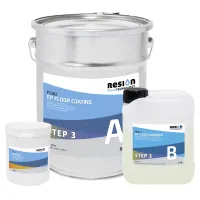
Protection with RESION PU Tyre Proof Finish
To reduce the risk of tire marks, we recommend finishing your garage floor with RESION PU Tyre Proof Finish. This is a transparent, two-component polyurethane coating specifically designed as a protective topcoat for epoxy and PU floors. The coating is resistant to plasticizers and the migration of substances from tire rubber, helping to reduce the risk of permanent discoloration. Tyre Proof Finish also provides a wear-resistant satin finish that is easy to clean. The coating is suitable for outdoor applications and does not yellow.
Do you already have an epoxy or PU floor? In many cases, you can also protect an existing floor with Tyre Proof Finish. However, proper surface preparation and good adhesion of the new coating are essential.
Polyaspartic floor coating as an alternative
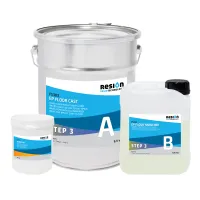
Are you planning to install a new garage floor? A polyaspartic floor coating is also worth considering. Our RESION Polyaspartic Floor Coating offers good resistance to plasticizers and is suitable for garages exposed to light to medium-duty use.
One of the advantages of polyaspartic coatings is their fast curing time. This allows you to apply multiple layers in a single day. The coating is also UV-resistant and available in various RAL colors.
Coating thickness, adhesion and curing
The way a floor coating is applied also plays an important role. A coating that is too thin may be more susceptible to damage caused by the combination of hot tires and prolonged loading. Always apply the coating according to the specified consumption rate and recommended layer thickness. Applying more coating than recommended is not necessarily better. An excessively thick layer can actually cause problems during curing. Proper preparation of the substrate is also essential. A coating with poor adhesion may become damaged or start to peel more easily under the influence of heat and pressure.
Another common mistake is parking a car on the floor as soon as it is ready for foot traffic. At that point, the coating may not yet be fully cured. Many epoxy flooring systems take approximately seven days to cure completely at 20°C. RESION PU Tyre Proof Finish also requires seven days at this temperature to reach full cure. Always follow the specified curing times and load restrictions before parking your car in the garage.
Dark floor colors and protective mats
Black tire marks are more noticeable on a light gray or white floor than on a darker surface. If you are planning to install a new garage floor, you may therefore want to consider a darker color, such as anthracite. A dark floor does not prevent discoloration, but it does make any tire marks less noticeable.
To further reduce direct contact between the tires and the floor, you can place protective mats in the areas where you normally park your car. However, not every mat is suitable. Some rubber mats contain plasticizers or other substances that can cause discoloration themselves. Always choose mats that are suitable for use on epoxy and PU floors.
Removing tire marks from an epoxy floor
Have you noticed dark marks on your garage floor? First, try removing the dirt with a suitable floor cleaner. Remove loose dirt and sand using a soft broom or vacuum cleaner. Then clean the floor with water and a mild cleaning product.
For cleaning epoxy and PU floors, you can use Dr. Schutz PU Cleaner, for example. This floor cleaner removes dirt and grease without damaging compatible floor coatings. If the tire marks remain visible after cleaning, the discoloration may have penetrated the coating. In that case, more intensive cleaning is unlikely to make much difference.
Do not use acetone, thinner or other aggressive solvents without checking their compatibility first. These products can damage the floor coating or make it appear dull. Always check whether a cleaning product is suitable for your floor and, if in doubt, test it on a small, inconspicuous area first.
Repairing permanent discoloration
When discoloration has penetrated the coating, it may be necessary to refinish the floor. Depending on the condition of the existing floor, the coating can be prepared and finished with a new topcoat. If the floor is damaged or the coating is peeling away in certain areas, the cause must first be identified.
Keep in mind that a transparent topcoat will not hide existing discoloration. In some cases, it may therefore be necessary to apply a new colored coating first. Would you like to install a new garage floor yourself? Our Epoxy Garage Floor Kit contains the materials needed to create a strong epoxy floor. If you regularly park a car in your garage, we recommend finishing the floor with RESION PU Tyre Proof Finish.
Need more information about removing black marks from resin floors?
Are you unsure about the best approach for your floor, struggling to remove tire marks or looking for ways to prevent new stains? Our product specialists are happy to help. We can advise you on suitable cleaning products, protective floor coatings and possible solutions for repairing your floor.
Feel free to contact us. Ideally, send us a few photos of your floor and let us know which floor coating you have used. This will help us provide more specific advice.