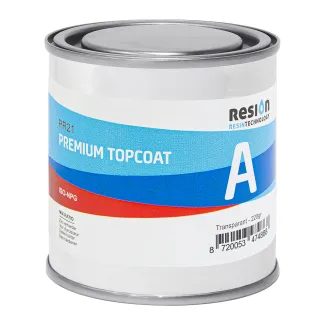

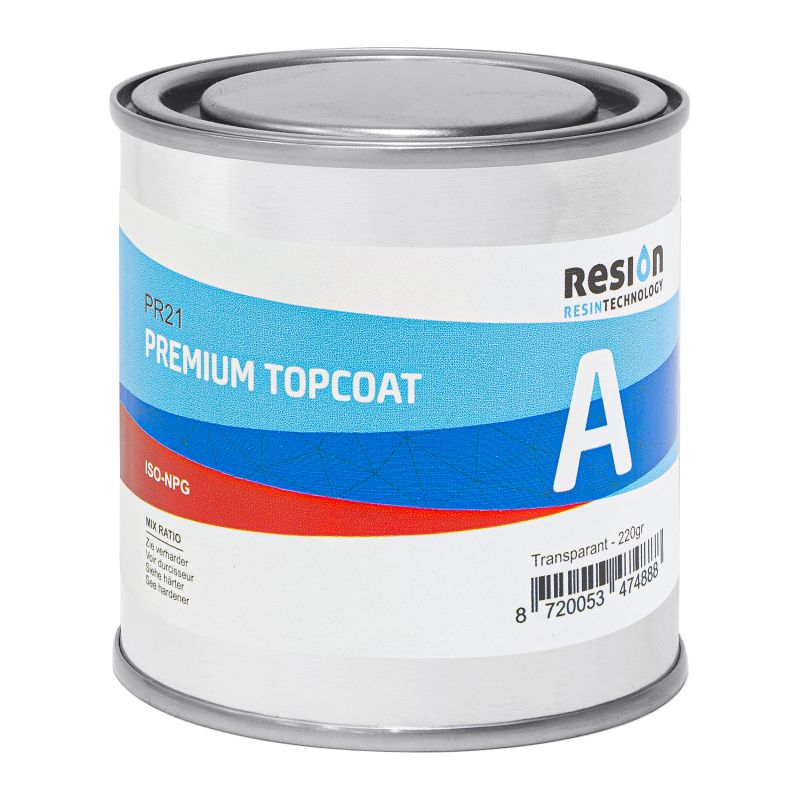


Pre-coloured topcoat (250 gr)
At a glance
- Small packaging
- Tack-free curing
- ISO-NPG quality
Not sure about your choice?
Want to know which polyester product you need? Use our selection tool!
Our polyester topcoat is now also available in a small package of 250 grams. RESION Topcoat is an ISO-NPG polyester topcoat available in many RAL colours. The coating is suitable for finishing polyester products and is, thanks to the ISO-NPG quality, ideally suited for small boat repairs and yacht building. RESION Topcoat gives a semi-gloss finish with a light structure. If desired, you can sand the topcoat flat and polish it to a high gloss. Polyester topcoat is very resistant to water, chemicals and high temperatures.
ISO-NPG topcoat
RESION topcoat is of ISO-NPG quality, giving this polyester coating a premium-grade performance. The advantages of an ISO-NPG certified topcoat include enhanced colour retention, gloss level, and chemical resistance. In addition, an ISO-NPG coating offers superior resistance to UV radiation, water, and high temperatures.
Benefits of RESION topcoat
- Small packaging of 250 grams.
- ISO-NPG quality.
- Available in various RAL colours.
- Reliable colours due to our own polyester mixing machine.
How to process polyester topcoat
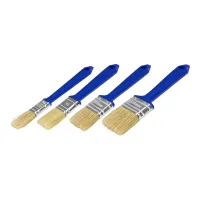
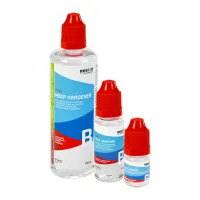
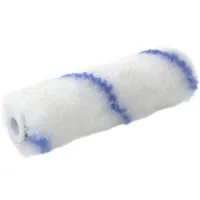
Lightly sand the polyester surface and clean it with acetone. Then add 2% hardener and mix the polyester topcoat well. When working with topcoat, always use nitrile gloves and a respirator mask. After the topcoat is mixed well, you have a processing time of about 20 minutes at room temperature. Now apply the topcoat with a fleece roller and use a paint brush for hard-to-reach areas. Then let the topcoat cure.
Product properties
The key technical properties clearly listed in one place.
- Article number
- POL001783
-
The technical product category, such as primer, resin, hardener or cleaner. It explains the product's purpose and helps you find other products with a similar function.
- Gelcoat & Topcoat
-
The period for which an unopened product remains usable under the specified storage conditions. Check whether the period starts from the manufacturing date or another date. Shelf life may be shorter after opening, especially for products sensitive to air or moisture.
- 3-6 months
-
A paint or varnish layer is dust-dry when settling dust is less likely to stick to the surface. It may not yet be touch-dry, ready for overcoating or suitable for loading; these are different stages of drying and curing.
- Approximately 15 minutes
-
Curing time is the period a product needs to reach a specified stage of cure. It is usually given in hours or days, often at a reference temperature such as 20 °C. A product may be tack-free or safe to handle before reaching its full mechanical and chemical resistance. Film thickness and mixed quantity may also affect the time.
- 2 hours
-
Consumption or coverage describes how much product is needed for a given surface area. Consumption may be stated in g/m² or kg/m², while coverage is often given in m²/L or m²/kg. A consumption of 0.2 kg/m² means a theoretical 200 grams per square metre. Actual use depends on film thickness, substrate absorbency, application method and waste.
- Approximately 300-400 g/m²
- Net contents
- 250 g
-
Working time is the period during which a product remains workable after mixing or activation, usually given in minutes at a specified temperature, often 20 °C. With reactive resins, the chemical reaction also continues in the mixing container, and larger quantities or higher temperatures can shorten this time. Working time is different from gel time and full curing time.
- Approximately 20 minutes (at 20 °C)
-
Hardener type indicates which component or substance is needed to cure a resin, adhesive or coating. The mechanism varies with the chemical system:
- Epoxy: usually a specific compatible hardener (component B), mixed with the resin at the stated ratio.
- Polyester and vinyl ester: often an MEKP initiator that starts the curing reaction. Dosage is normally given as a percentage.
- Two-component polyurethane: uses a compatible second component, often based on isocyanates, as specified for the system.
Hardeners are not interchangeable. Use only the combination, dosage and safety precautions stated by the manufacturer.
- MEKP hardener
-
Mixing ratio indicates how much of each component is needed, for example resin (A) and hardener (B). A ratio of 100:50 by weight means 100 grams of A to 50 grams of B; by volume you might use millilitres. Weight and volume ratios are not necessarily the same because the components may have different densities. Accurate measuring is important for proper curing.
- 100:2 (by weight)
Safety information
Read the warnings and use appropriate protective equipment before handling the product.
Reviews
Frequently bought together
Useful additions for your project.