Recommended

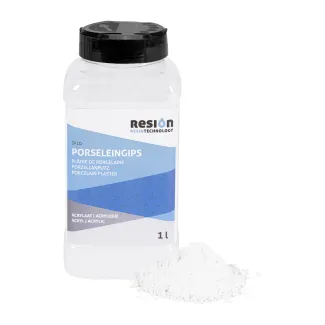

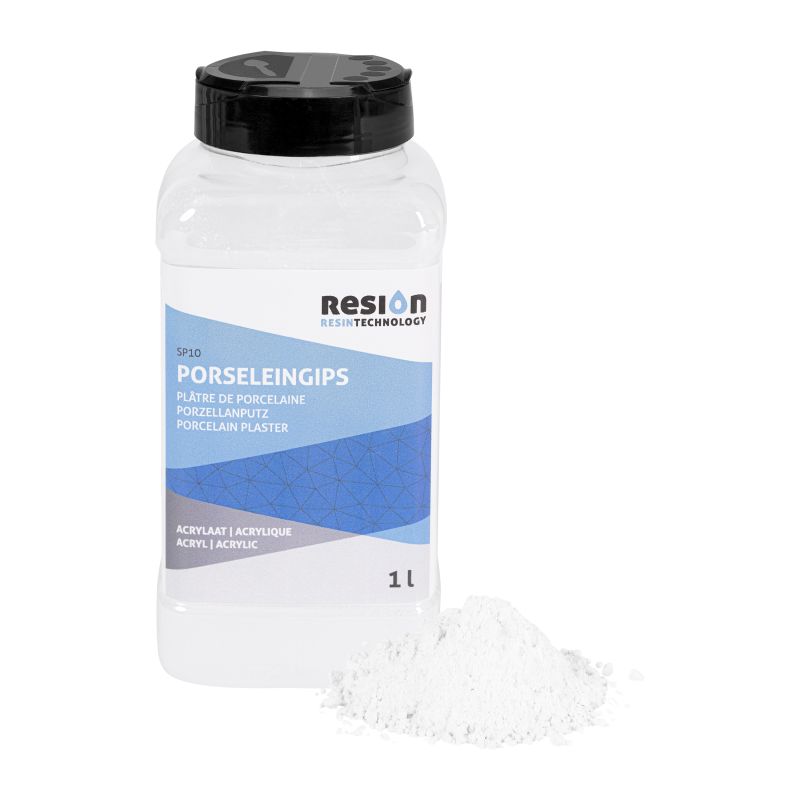

Zellaan Porcelain Plaster is a harmless casting compound based on acrylate. Porcelain plaster is used to cast plaster sculptures and is suitable for processing with, among other things, Silicones or Alginate.
Zellaan porcelain plaster is easy to process and is supplied in powder form. By mixing it with water according to the mixing ratio, the gypsum powder hardens into a porcelain like material.
Benefits of Porcelain Plaster
Porcelain plaster is easy to apply. Just follow the instructions below:
The key technical properties clearly listed in one place.
The technical product category, such as primer, resin, hardener or cleaner. It explains the product's purpose and helps you find other products with a similar function.
Mixing ratio indicates how much of each component is needed, for example resin (A) and hardener (B). A ratio of 100:50 by weight means 100 grams of A to 50 grams of B; by volume you might use millilitres. Weight and volume ratios are not necessarily the same because the components may have different densities. Accurate measuring is important for proper curing.
The tasks a product is intended for, such as laminating, casting, bonding, sealing or protecting. Products intended for the same application can differ considerably in processing, curing time and final properties.
The period for which an unopened product remains usable under the specified storage conditions. Check whether the period starts from the manufacturing date or another date. Shelf life may be shorter after opening, especially for products sensitive to air or moisture.
The overcoating interval tells you when the next layer of paint, varnish or coating may be applied. Many multi-coat systems specify both a minimum and a maximum interval:
Overcoating too early can affect drying or the finish. Once the maximum interval has passed, cleaning and sanding may be needed to ensure adhesion between coats. Temperature and film thickness affect the waiting times.
Curing time is the period a product needs to reach a specified stage of cure. It is usually given in hours or days, often at a reference temperature such as 20 °C. A product may be tack-free or safe to handle before reaching its full mechanical and chemical resistance. Film thickness and mixed quantity may also affect the time.
Useful additions for your project.