Recommended

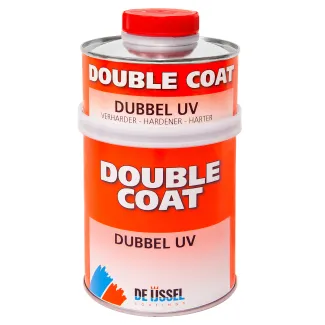
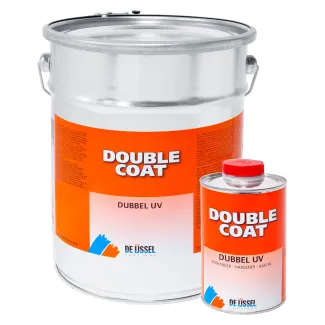
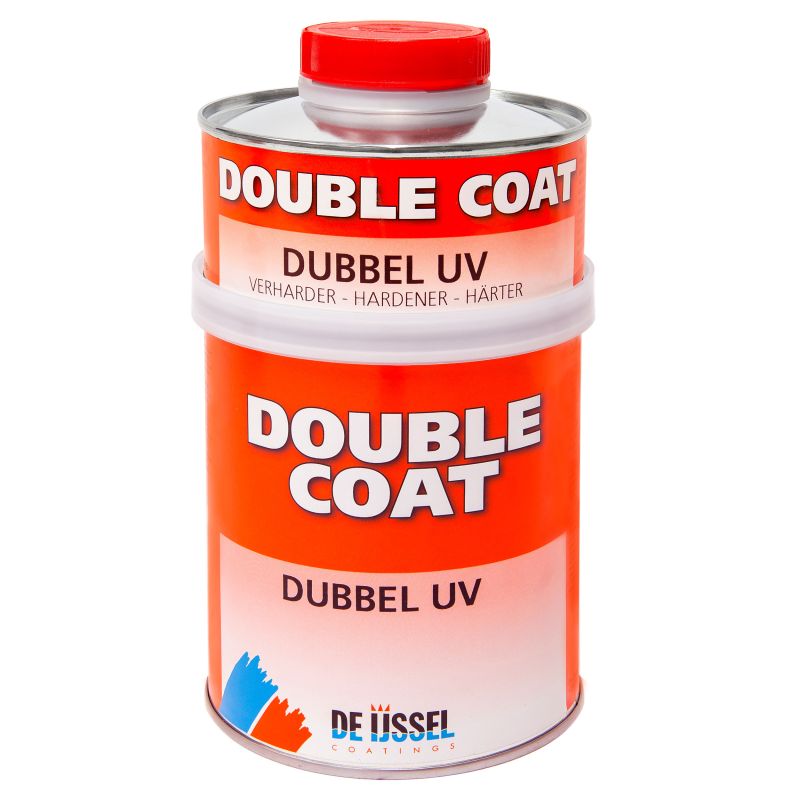
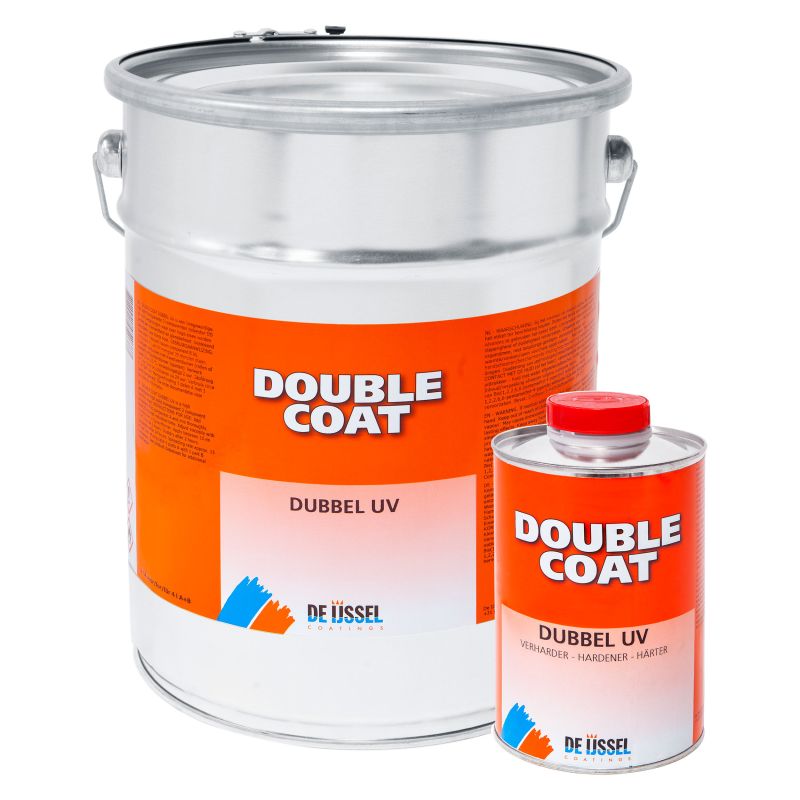
De IJssel Double Coat Double UV is a high-gloss polyurethane topcoat with special UV filters. This clear varnish protects items against weather influences such as UV light. The 2-component transparent topcoat is very suitable when gloss retention and scratch resistance are desired.
The flexibility of the varnish makes it very suitable for application on pre-treated wooden surfaces. In addition, we recommend this varnish if you have worked with a resin that is not UV-resistant in itself. Thanks to this Double Coat Double UV lacquer the end product remains protected against various weather influences including UV radiation.
Double Coat Double UV has many advantages, namely:
Are you going to use De IJssel Double Coat Double UV? Then it is useful to follow the instructions below.
After 24 hours you can apply another coat of DD Varnish Double UV without sanding. After longer intervals you should sand between coats. You get the best result by sanding between coats and allowing the penultimate coat to cure for a few days. Then sand the layer finely with P400 sandpaper and apply the final coat.
| Packaging | Base | Hardener |
| 750 ml (suitabe for approx. 6 m2) | 562 ml | 188 ml |
| 4 litres (suitabe for approx. 30 m2) | 3 litres | 1 litre |
Contents: 750 ml or 4 litres
Colour: transparent
Gloss: high gloss
Mixing ratio: 75 parts by weight of lacquer and 25 parts by weight of hardener
Coverage: approx. 125 grams/m²
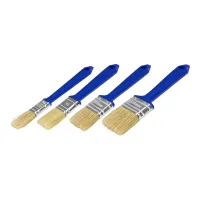
Application: paint brush, roller or spray
Brush thinner: 0-5%
Spray thinner: 10-15% (air spray)
Pot life: approx. 2 hours (20°C)
Dust dry after: 2 hours
Fully cured after: 7 days
Shelf life: 12 months (if stored in original packaging, in a cool, frost-free place)
Would you like more information or advice on using De IJssel Double Coat Double UV? Get in touch with our specialists, we will be happy to help and advise you! View our information centre for an answer to your question or contact us directly on +31 85 022 0090. Need immediate assistance? Then send us a chat message. We will answer your questions quickly during office hours.
The key technical properties clearly listed in one place.
Gloss level indicates how much light a dry paint or coating reflects and how the finished surface looks.
Gloss can be measured in gloss units (GU) at a specified angle. Terms such as matt and satin do not necessarily mean exactly the same thing across manufacturers. Substrate condition and application also affect the final appearance.
The technical product category, such as primer, resin, hardener or cleaner. It explains the product's purpose and helps you find other products with a similar function.
The period for which an unopened product remains usable under the specified storage conditions. Check whether the period starts from the manufacturing date or another date. Shelf life may be shorter after opening, especially for products sensitive to air or moisture.
Mixing ratio indicates how much of each component is needed, for example resin (A) and hardener (B). A ratio of 100:50 by weight means 100 grams of A to 50 grams of B; by volume you might use millilitres. Weight and volume ratios are not necessarily the same because the components may have different densities. Accurate measuring is important for proper curing.
A paint or varnish layer is dust-dry when settling dust is less likely to stick to the surface. It may not yet be touch-dry, ready for overcoating or suitable for loading; these are different stages of drying and curing.
Curing time is the period a product needs to reach a specified stage of cure. It is usually given in hours or days, often at a reference temperature such as 20 °C. A product may be tack-free or safe to handle before reaching its full mechanical and chemical resistance. Film thickness and mixed quantity may also affect the time.
Consumption or coverage describes how much product is needed for a given surface area. Consumption may be stated in g/m² or kg/m², while coverage is often given in m²/L or m²/kg. A consumption of 0.2 kg/m² means a theoretical 200 grams per square metre. Actual use depends on film thickness, substrate absorbency, application method and waste.
A specific thinner that can be used, where permitted, to adjust a product's application properties or viscosity. The correct thinner and maximum quantity depend on the product. Incorrect thinning can affect coverage, drying and curing.
The application or processing methods specified by the manufacturer, such as brushing, rolling, spraying, casting or hand laminating. The chosen method can affect consumption, layer thickness and finish.
Working time is the period during which a product remains workable after mixing or activation, usually given in minutes at a specified temperature, often 20 °C. With reactive resins, the chemical reaction also continues in the mixing container, and larger quantities or higher temperatures can shorten this time. Working time is different from gel time and full curing time.
Useful additions for your project.