Making a carbon overlay with real carbon fabric (carbon) is not difficult. In this article we explain step by step how to achieve optimal results!
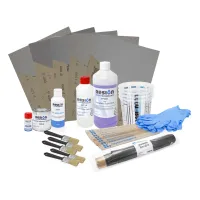
Supplies
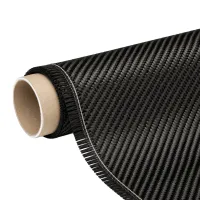
- Twill fabric 200 gr/m2
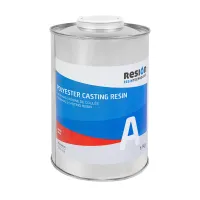
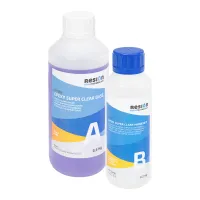
- Transparent epoxy coating or Polyester casting resin
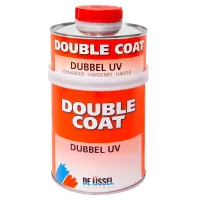
- DD Paint Double UV
- Mixing spatulas
- Mixing cups
- Nitrile gloves
- Laminating spatulas
Which carbon fabric should I use?
We distinguish 2 types of carbon fabric: square (plain) woven and twill woven. Twill fabric has a diagonal sight line and is the most commonly used carbon for overlays. This carbon weave is also very drapable, unlike square woven carbon. Twill weave is therefore more suitable for flat parts.
Which epoxy resin should I use?
The first choice for carbon fabric is a transparent epoxy coating. This epoxy is very clear and will add a nice deep effect to the carbon layer. Polyester casting resin can also be used.
Step 1. Preparation
If the dashboard is not yet black, you must first degrease it and paint it black with, for example, acrylic lacquer. It is advisable to test the adhesion of both the paint and the epoxy over the paint on a scrap piece or an inconspicuous spot.
If the dashboard is already black, you just need to degrease it thoroughly and you can move on to the next step!
Step 2. Applying and impregnating the carbon fabric
After the surface has been properly prepared, you can apply an adhesive layer with epoxy coating. If the resin is still sticky, you can drape the carbon fabric in resin. This can be easier, especially for difficult corners. You can also choose to apply the carbon without an adhesive layer, so that the carbon can be moved more easily. A combination of both can of course also be used.
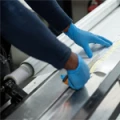
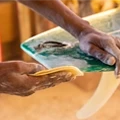
Once the carbon is positioned to your liking, you can saturate it with the epoxy coating. Spread the epoxy as much as possible with a laminating spatula, and you can blot away excess resin with kitchen paper. The structure of the fabric should be visible, there should be no puddles of epoxy present.
Step 3. Finish
After the epoxy resin has hardened, the dashboard can be coated with several layers of epoxy coating. This will fill the structure of the tissue. After a few layers, sanding can be done and, if necessary, more coating can be applied to fill the remaining structure. Make sure that the carbon is sanded as little as possible. If the dashboard is completely smooth, it can be lacquered with Double Coat DD Paint Double UV for a scratch-resistant and UV-resistant finish.
More information?
In the article above you read how you can cover an object with carbon fabric (carbon). Do you have any questions about the products or the working methods? Please feel free to contact our customer service team! They are happy to help you with your project.