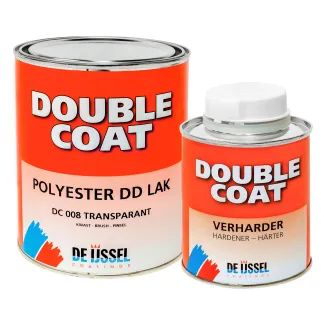

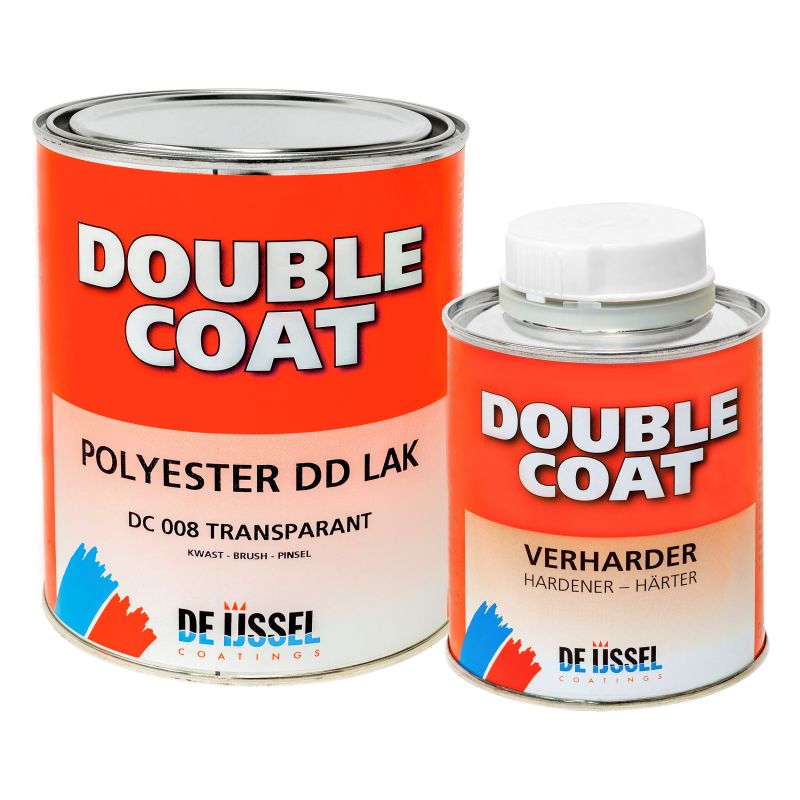


DD Paint High Gloss 1 kg
At a glance
- Suitable for approximately 10 m2
- High gloss, scratch resistant
- Available in all RAL colours
Product description
Double Coat DD Paint is a high-quality two-component polyester lacquer for embellishment and protection of polyester, epoxy, metal, wood and plastic. DD Paint is known for its high scratch resistance, UV stability and long gloss retention. This makes it very suitable as a boat varnish or as scratch-resistant protection for an epoxy table.
DD Paint High Gloss is available in every RAL colour and various standard colours. So you can always finish your boat in the desired colour and gloss level. Double Coat DD Paint is also available in semi-gloss and matt gloss. Colours in selection screen may vary slightly from reality. If you want to be sure that you order the right colour, please order a RAL colour fan or an IJssel colour chart.
Benefits of DD Paint High Gloss
- Excellent UV resistance.
- High scratch resistance.
- Excellent colour and gloss retention.
- Available in any RAL colour.
Directions for use
Double Coat DD Paint is easy to apply. Ensure the surface is properly prepared before applying the polyester paint. Sand the surface to P280 and degrease with Double Coat degreaser (or BioSafe biodegradable degreaser). Dust should be removed with a tack cloth. Wood and metal surfaces should be prepared properly. First apply a suitable primer (HB Coating or ZF Primer).
Always wear proper protection when applying Double Coat paints. Therefore, always use a suitable vapour mask, safety glasses, gloves and covering clothes.
You apply DD Paint using the following steps:
- Open the base component, stir it well and weigh the desired amount into a clean mixing cup using a (digital) scale.
- Add the hardener in the correct ratio to the resin (67:33).
- Mix both components gently, scraping the sides and bottom of the mixing cup. Let the mixture rest for 30 minutes.
- After resting, add approximately 3-5% brush thinner to the mixture and stir thoroughly again.
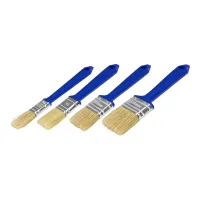
- Apply DD Paint High Gloss evenly using a foam roller*, brush or spray.
- Immediately roll or brush out the surface ligthly without applying too much pressure.
After 24 hours (at 20°C), a second coat can be applied without sanding. For the best results, lightly sand between coats and allow the penultimate coat to dry for several days. Then sand lightly with P400 or P600 before applying the final coat. DD Paint is dust dry after approximately 2 hours and fully cured after 5 days.
Packaging
| Packaging | Base | Hardener |
| 1 kg (approx. 8 m2) | 670 grams | 330 grams |
Product properties
The key technical properties clearly listed in one place.
- Article number
- LAK000036
-
Gloss level indicates how much light a dry paint or coating reflects and how the finished surface looks.
- Matt: little reflection and a subdued appearance.
- Satin: a gentle sheen between matt and high gloss.
- High gloss: stronger reflections and a more pronounced colour, although surface imperfections may become more visible.
Gloss can be measured in gloss units (GU) at a specified angle. Terms such as matt and satin do not necessarily mean exactly the same thing across manufacturers. Substrate condition and application also affect the final appearance.
- High gloss
-
The technical product category, such as primer, resin, hardener or cleaner. It explains the product's purpose and helps you find other products with a similar function.
- Finish coat
-
The period for which an unopened product remains usable under the specified storage conditions. Check whether the period starts from the manufacturing date or another date. Shelf life may be shorter after opening, especially for products sensitive to air or moisture.
- 12 months
-
Mixing ratio indicates how much of each component is needed, for example resin (A) and hardener (B). A ratio of 100:50 by weight means 100 grams of A to 50 grams of B; by volume you might use millilitres. Weight and volume ratios are not necessarily the same because the components may have different densities. Accurate measuring is important for proper curing.
- 67:33 (by weight)
-
Curing time is the period a product needs to reach a specified stage of cure. It is usually given in hours or days, often at a reference temperature such as 20 °C. A product may be tack-free or safe to handle before reaching its full mechanical and chemical resistance. Film thickness and mixed quantity may also affect the time.
- Approximately 5 days
-
Consumption or coverage describes how much product is needed for a given surface area. Consumption may be stated in g/m² or kg/m², while coverage is often given in m²/L or m²/kg. A consumption of 0.2 kg/m² means a theoretical 200 grams per square metre. Actual use depends on film thickness, substrate absorbency, application method and waste.
- Approximately 125 g/m²
-
A specific thinner that can be used, where permitted, to adjust a product's application properties or viscosity. The correct thinner and maximum quantity depend on the product. Incorrect thinning can affect coverage, drying and curing.
- Brush: 3-5%, Spray: 5-15%
- Net contents
- 1 kg
-
The application or processing methods specified by the manufacturer, such as brushing, rolling, spraying, casting or hand laminating. The chosen method can affect consumption, layer thickness and finish.
- Brush, Roller, Spray
-
Working time is the period during which a product remains workable after mixing or activation, usually given in minutes at a specified temperature, often 20 °C. With reactive resins, the chemical reaction also continues in the mixing container, and larger quantities or higher temperatures can shorten this time. Working time is different from gel time and full curing time.
- Approximately 120 minutes
- Colour
- RAL colours
Safety information
Read the warnings and use appropriate protective equipment before handling the product.
DD Hoogglans Lak DC800 wit - 670 gr
Recommended protective equipment
Hazard pictograms
Warnings and precautions
Reviews
Frequently bought together
Useful additions for your project.