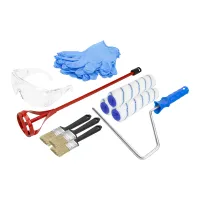
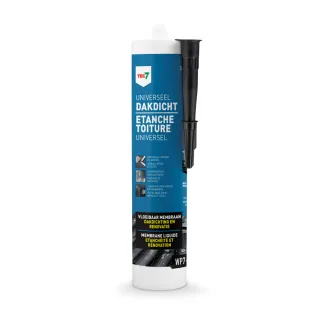
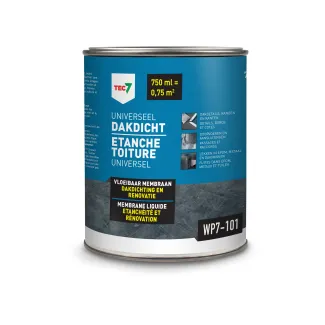
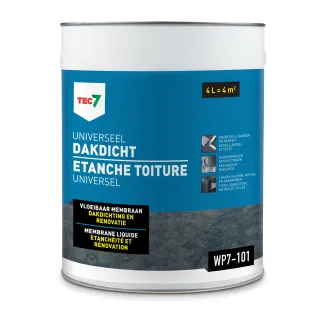
Tec7 WP7-101 Universal Roof Sealing
At a glance
- WP7-101
- Liquid membrane
- 100% waterproof

Fast delivery throughout Europe
Secure payment with PayPal, Mastercard, Visa and more
4.7 out of 5 stars on Trusted Shops
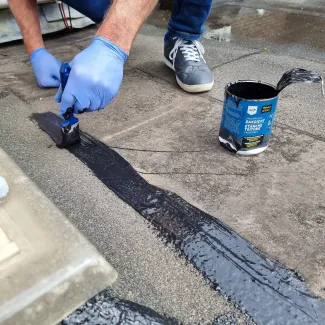
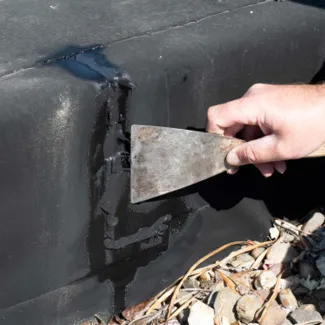
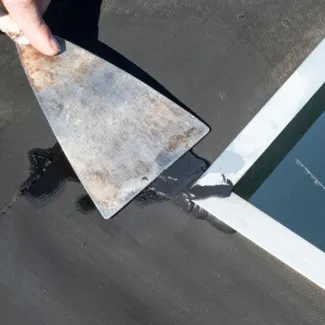
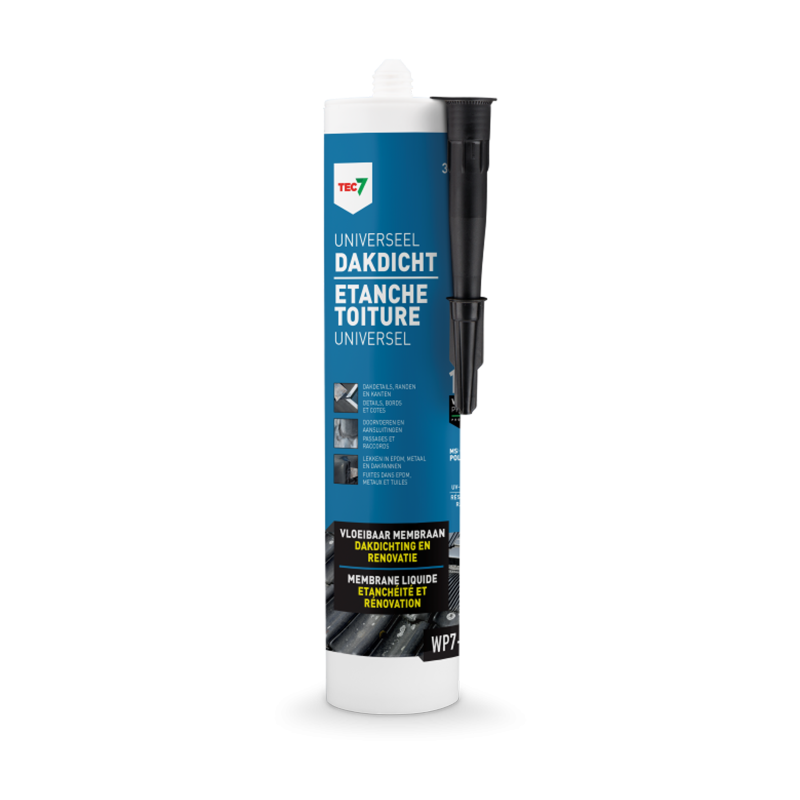
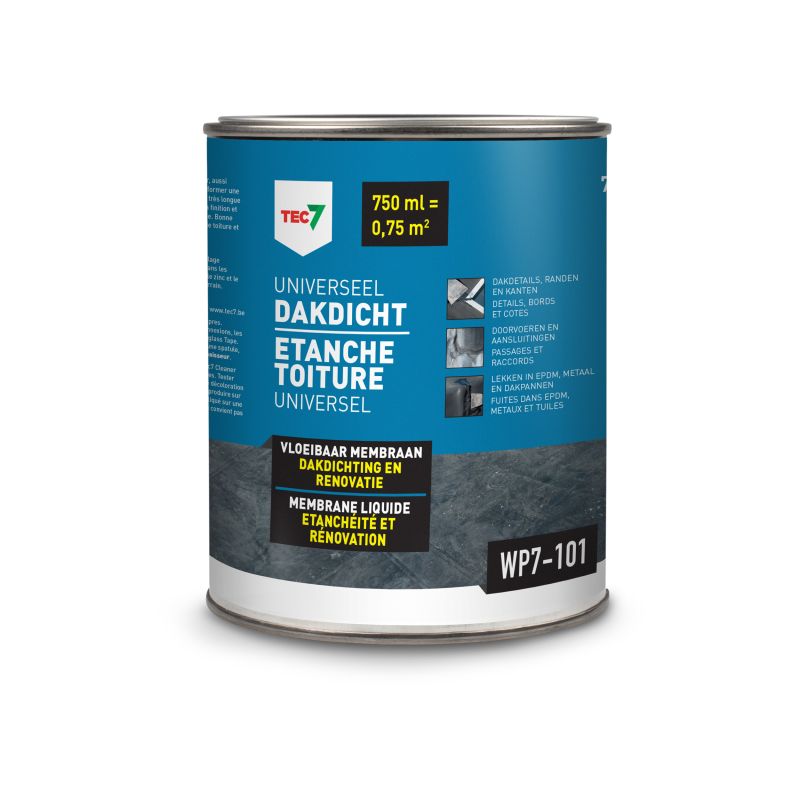
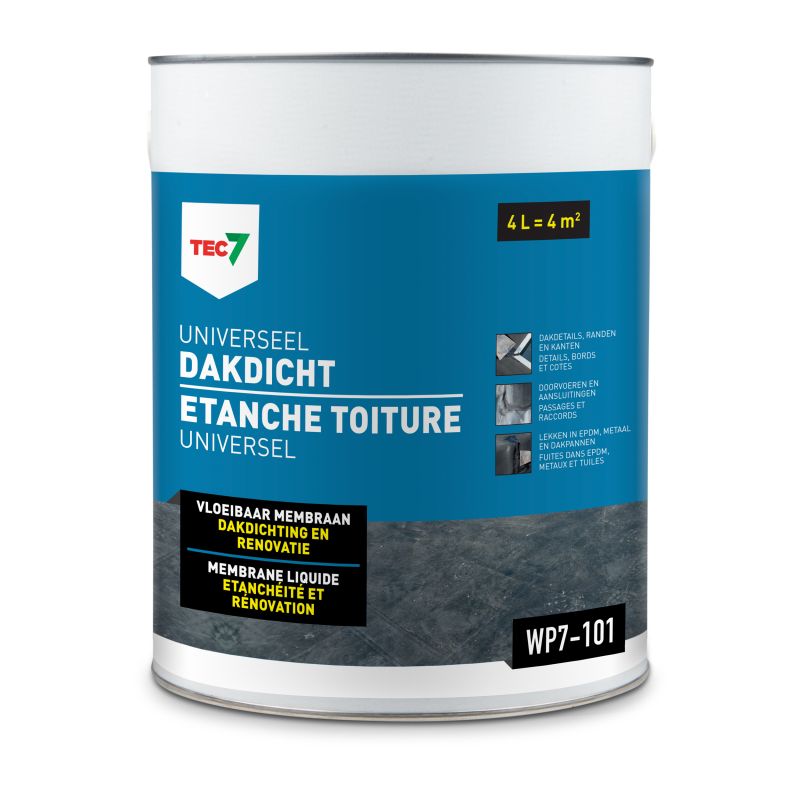
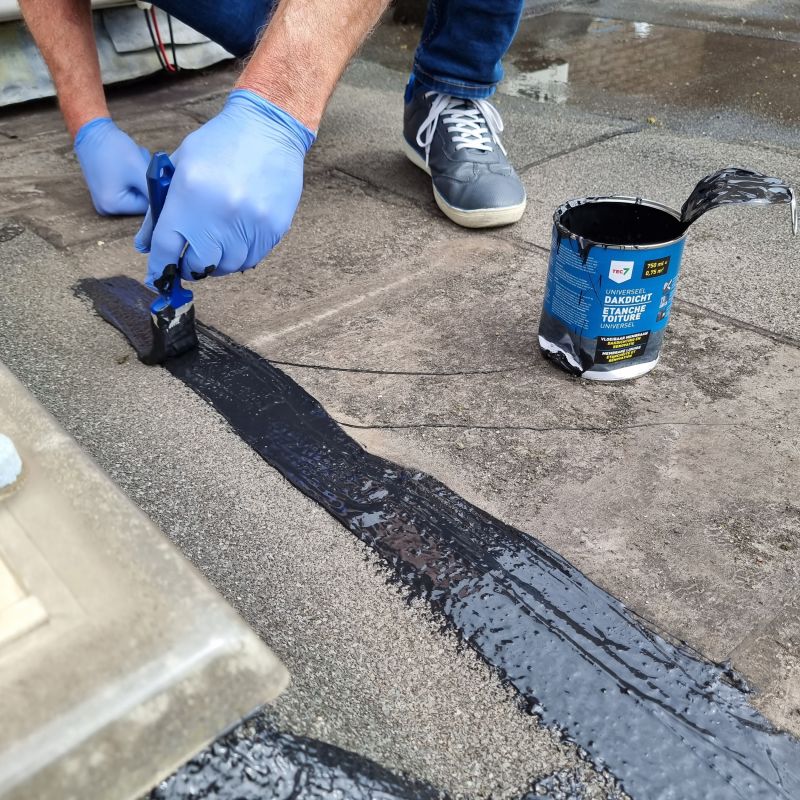
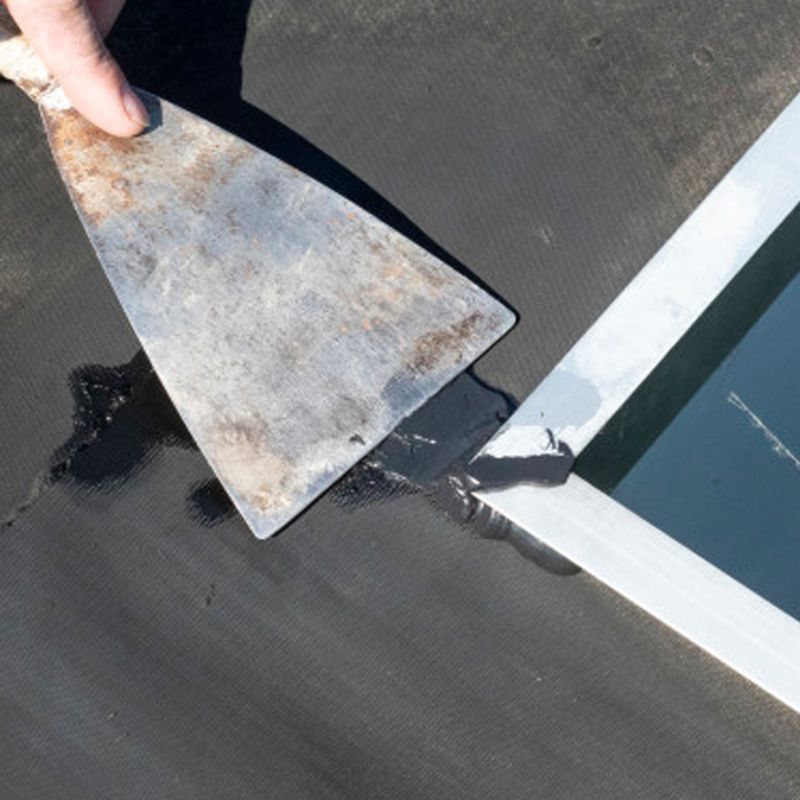
With WP7-101, you can easily waterproof roof details, edges and borders. This liquid hybrid MS polymer is easy to spread and cures quickly to form a waterproof membrane with a very long service life. Tec7 Universal Roof Sealing is suitable for repairing, finishing and renovating medium-sized roofs. The liquid membrane can be applied horizontally and vertically to most roofing and building materials. WP7-101 can also be applied to slightly damp substrates. The product is rain-resistant after 2 hours and contains no solvents or toxic substances.
Benefits of Tec7 Universal Roof Sealing
- Durable waterproof and windproof sealing, even in difficult areas.
- Good adhesion to EPDM, roof tiles and metal roofing materials.
- 100% waterproof and UV-resistant from a layer thickness of 1 mm.
- Permanently flexible and suitable for foot traffic.
Applications of WP7-101
- Roof sealing and renovation.
- Sealing roof details such as penetrations, joints, transitions, edges and corners.
- Renovating roofing elements and small flat roofs.
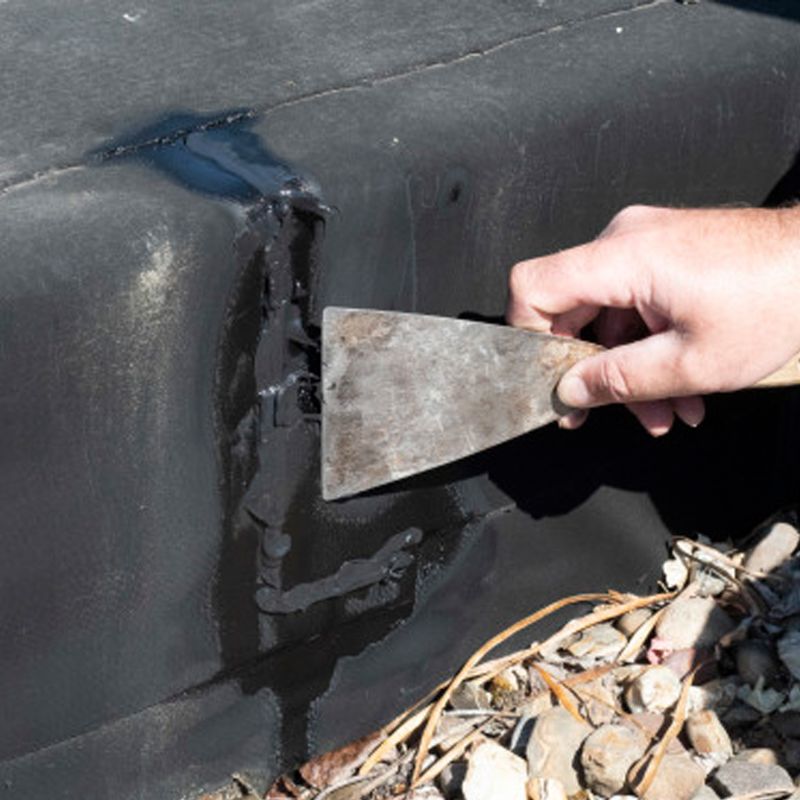
- Repairing leaks in EPDM membranes, lead flashing, and zinc and copper roofing.
- Protecting garden timber in contact with the ground.
Directions for use
- Apply WP7-101 on a clean, stable surface. The surface may be slightly damp.
- Always reinforce weak areas, joints, seams and corners with Fiberglass Tape. Fully reinforce areas larger than 4 m² with Fiberglass Reinforcement Mesh.Then apply WP7-101 with a brush or spatula in a single layer at least 1 mm thick.
- Clean tools immediately with Tec7 Cleaner. Once cured, the product can only be removed mechanically. Clean your hands with RESION Cleaning Wipes.
- Any remaining product can be stored for a short period, provided the bag inside the container is sealed without trapping any air.
We recommend always testing adhesion to EPDM and plastics beforehand. Discolouration and/or loss of adhesion may occur on bituminous materials. WP7-101 can be applied to bituminous roofing with a slate-chip finish but is not suitable for permanent immersion. Product consumption depends on the roughness of the substrate.
Specifications
Base: 1K hybrid MS polymer
Contents: 310 ml (cartridge), 750 ml (tin), 5 litres (bucket)
Colour: black
Odour: none
Curing: by reaction with atmospheric moisture
Consumption: 1 litre/m² (at a layer thickness of 1 mm)
Consistency: paste
Relative density: 1.45
Application temperature: +5 °C to +35 °C
Temperature resistance: -40 °C to +90 °C
Open working time: 45 minutes
Skin formation: 1 hour
Curing:
After 24 hours: > 2 mm
After 72 hours: > 4 mm
Shrinkage (DIN EN ISO 10563): ≤ 4%
Hardness (Shore A, DIN 53505): 35
Tensile strength (DIN 53504 S2): 1.0 N/mm²
E-modulus (DIN 53504 S2): 0.4 N/mm²
Elongation at break (DIN 53504 S2): approx. 300%
Shelf life: 12 months in the original, unopened packaging, provided it is stored in a dry, cool and frost-free environment.
Safety precautions: consult the safety data sheet.
Product properties
The key technical properties clearly listed in one place.
- Article number
- DAK001082
-
The recommended application temperature range indicates the conditions under which the product can generally be applied and cured properly. Three temperatures matter:
- Air: the temperature in the workshop or outdoors.
- Substrate: the temperature of the surface being treated.
- Product: the temperature of the resin, adhesive or coating itself.
A cold substrate can cause condensation and affect adhesion. At higher temperatures, two-component products may react faster, reducing their working time. Check the dew point and follow the product instructions.
- 5-35 °C
-
The chemical base describes the chemistry of an adhesive, sealant, resin or coating, such as epoxy, polyester, polyurethane, (methyl)methacrylate or a hybrid polymer. It affects curing, flexibility and adhesion. Products with the same chemical base are not necessarily suitable for the same applications.
- One-component MS hybrid polymer
-
The characteristic smell of a product when opened or applied, such as neutral, mild or solvent-like. Smell intensity is not a reliable indication of exposure to hazardous substances; refer to the safety data sheet.
- odourless
-
The period for which an unopened product remains usable under the specified storage conditions. Check whether the period starts from the manufacturing date or another date. Shelf life may be shorter after opening, especially for products sensitive to air or moisture.
- 12 months
-
The time after application during which a skin forms on the surface of a sealant. Tool the joint before the skin develops, as adjusting it afterwards can affect the finish or adhesion. Temperature and humidity influence this time.
- 1 hour
-
Consumption or coverage describes how much product is needed for a given surface area. Consumption may be stated in g/m² or kg/m², while coverage is often given in m²/L or m²/kg. A consumption of 0.2 kg/m² means a theoretical 200 grams per square metre. Actual use depends on film thickness, substrate absorbency, application method and waste.
- 1 litre/m² (for 1mm thickness)
- Net contents
- 310 ml, 5 L, 750 ml
-
Heat resistance describes the temperature a material can withstand after correct processing and curing, usually expressed in degrees Celsius (°C). Continuous exposure is different from a brief temperature peak, and mechanical loading may also affect the limit. Heat resistance is not the same as the temperature at which the product can be applied.
- -40 to 90 °C
Safety information
Read the warnings and use appropriate protective equipment before handling the product.


Reviews
Frequently bought together
Useful additions for your project.