RESION ISO-NPG Topcoat (special colour request)


At a glance
- For special colour requests
- Cures tack-free
- ISO-NPG quality
Fast delivery throughout Europe
Secure payment with PayPal, Mastercard, Visa and more
4.7 out of 5 stars on Trusted Shops
Please note: do you need topcoat in a specific RAL colour? You can order Topcoat in RAL colour here!
In addition to RAL colours, RESION polyester gelcoat is also available in various other colour spectra, such as NCS, Sikkens, and Sigma colours. Do you have a specific colour in mind? Enter the desired colour number for this product and we'll make sure it's custom-made for you!
ISO-NPG topcoat
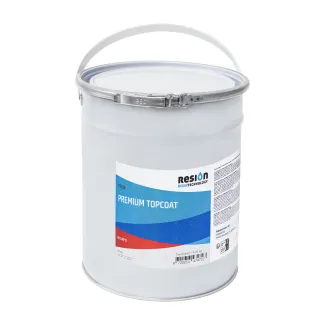
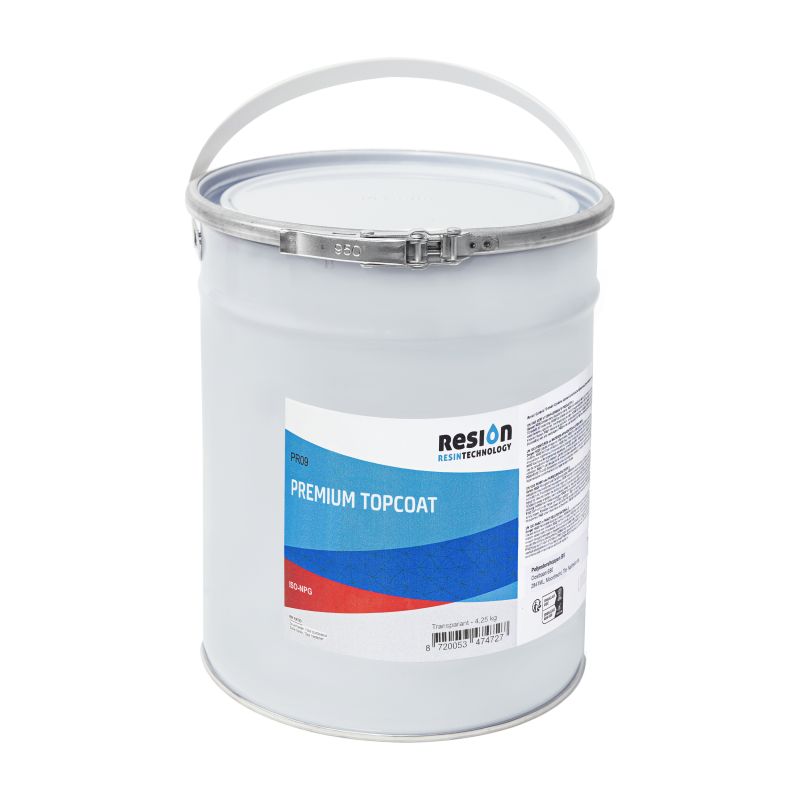
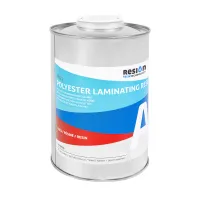
RESION Topcoat is an ISO-NPG polyester topcoat available in all RAL colours. The top coating is suitable for finishing polyester products and, thanks to the ISO-NPG quality, is ideally suited for boat repair and yacht building. RESION Topcoat provides a satin finish with a light structure. If desired, you can sand the polyester topcoat flat and polish it to a high gloss.
This polyester paint is highly resistant to water, chemicals and temperature, making the topcoat extremely suitable for boats and ponds.
Tip: don't forget to order the correct amount of MEKP hardener along with the topcoat!
How to process polyester topcoat
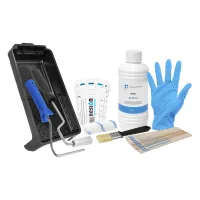
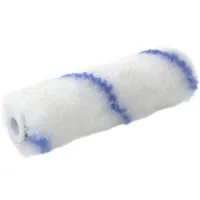
Lightly sand the polyester surface and clean it with acetone. Then add 2% hardener and mix the polyester topcoat well. When working with topcoat, always use nitrile gloves and a respirator mask. After the topcoat is mixed well, you have a processing time of about 20 minutes at room temperature. Now apply the topcoat with a fleece roller and use a paint brush for hard-to-reach areas. Then let the topcoat cure.
Specifications
MEKP-hardener: approx. 2%
Consumption: approx. 300-400 gr/m²
Pot life: 20 minutes (at 20°C)
Shelf life: 3 to 6 months
Dust dry: after approx. 15 minutes
Fully hardened: after 2 hours
Minimal application temperature: 15°C
Below is an overview of the quantity of hardener required per quantity of topcoat:
| Base (PR21) | Hardener |
| 5 kg | 100 ml hardener |
| 25 kg | 500 ml hardener |
Product properties
The key technical properties clearly listed in one place.
- Article number
- POL002091
-
The technical product category, such as primer, resin, hardener or cleaner. It explains the product's purpose and helps you find other products with a similar function.
- Gelcoat & Topcoat
-
The period for which an unopened product remains usable under the specified storage conditions. Check whether the period starts from the manufacturing date or another date. Shelf life may be shorter after opening, especially for products sensitive to air or moisture.
- 3-6 months
-
Minimum application temperature is the lowest temperature at which a product may be used according to the manufacturer. The limit can apply to the air, substrate and product itself.
At lower temperatures, resins and coatings can become thicker and cure more slowly. Moisture can also condense on a cold substrate and reduce adhesion. Check the dew point and measure the surface temperature before starting. A longer drying time does not automatically make application below the specified minimum acceptable.
- 15 °C
-
A paint or varnish layer is dust-dry when settling dust is less likely to stick to the surface. It may not yet be touch-dry, ready for overcoating or suitable for loading; these are different stages of drying and curing.
- Approximately 15 minutes
-
Curing time is the period a product needs to reach a specified stage of cure. It is usually given in hours or days, often at a reference temperature such as 20 °C. A product may be tack-free or safe to handle before reaching its full mechanical and chemical resistance. Film thickness and mixed quantity may also affect the time.
- 2 hours
-
Consumption or coverage describes how much product is needed for a given surface area. Consumption may be stated in g/m² or kg/m², while coverage is often given in m²/L or m²/kg. A consumption of 0.2 kg/m² means a theoretical 200 grams per square metre. Actual use depends on film thickness, substrate absorbency, application method and waste.
- Approximately 300-400 g/m²
- Net contents
- 25 kg, 5 kg
-
Working time is the period during which a product remains workable after mixing or activation, usually given in minutes at a specified temperature, often 20 °C. With reactive resins, the chemical reaction also continues in the mixing container, and larger quantities or higher temperatures can shorten this time. Working time is different from gel time and full curing time.
- Approximately 20 minutes (at 20 °C)
Reviews
Frequently bought together
Useful additions for your project.

Often chosen
Popular