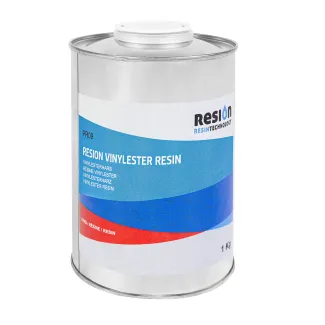
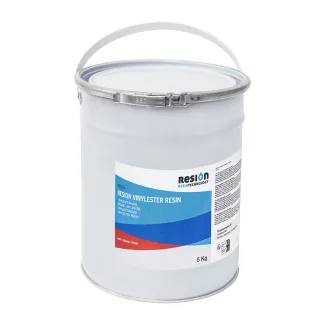
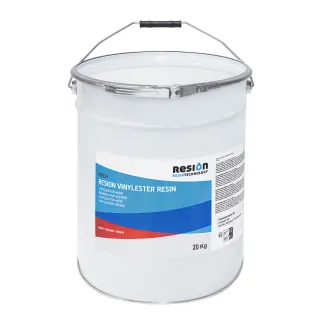
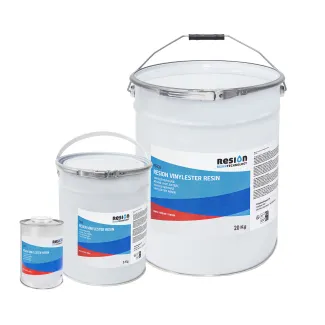
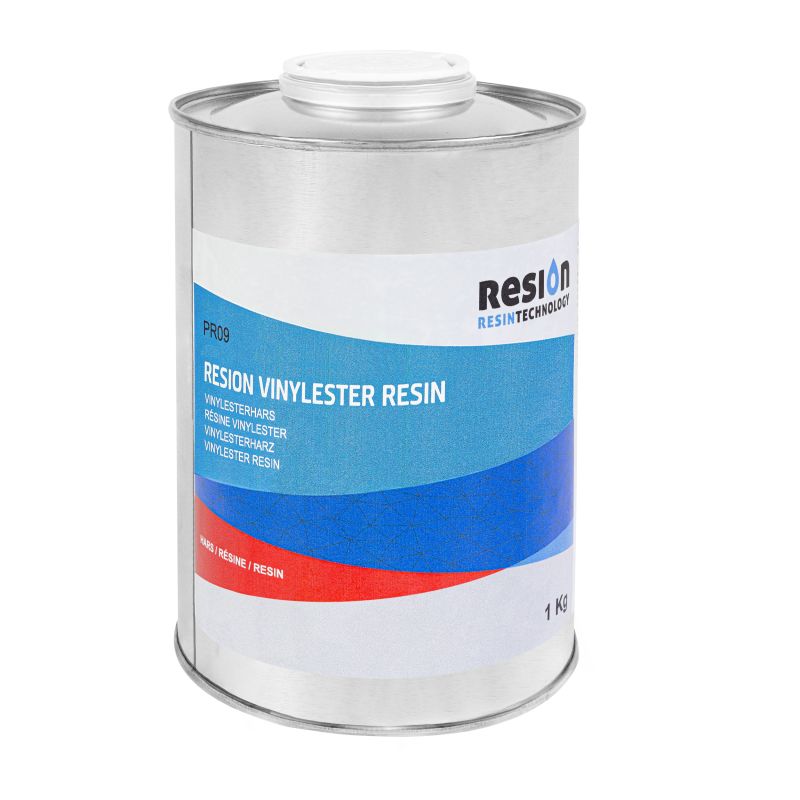
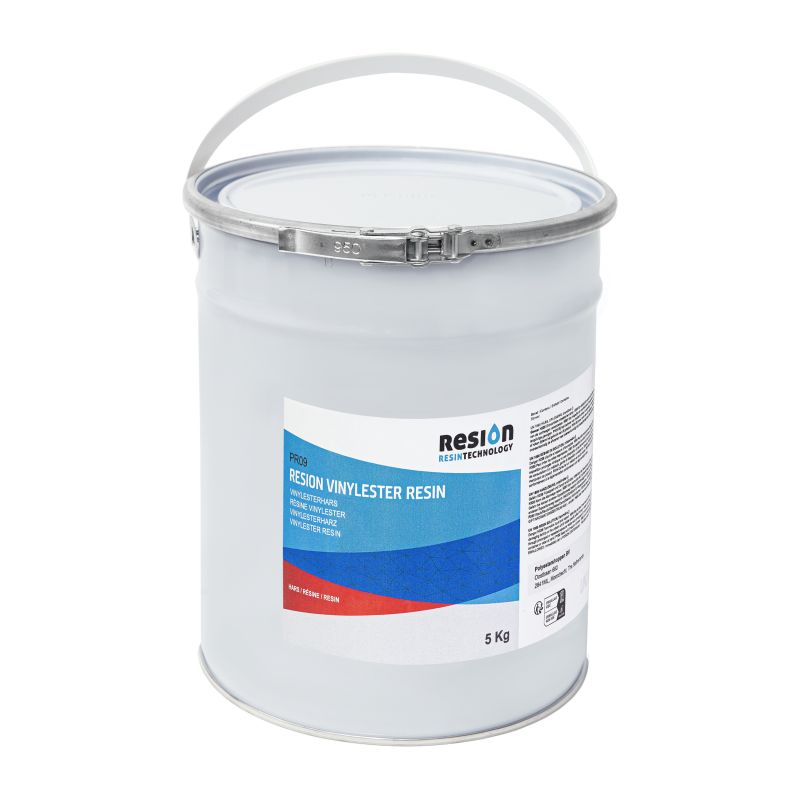
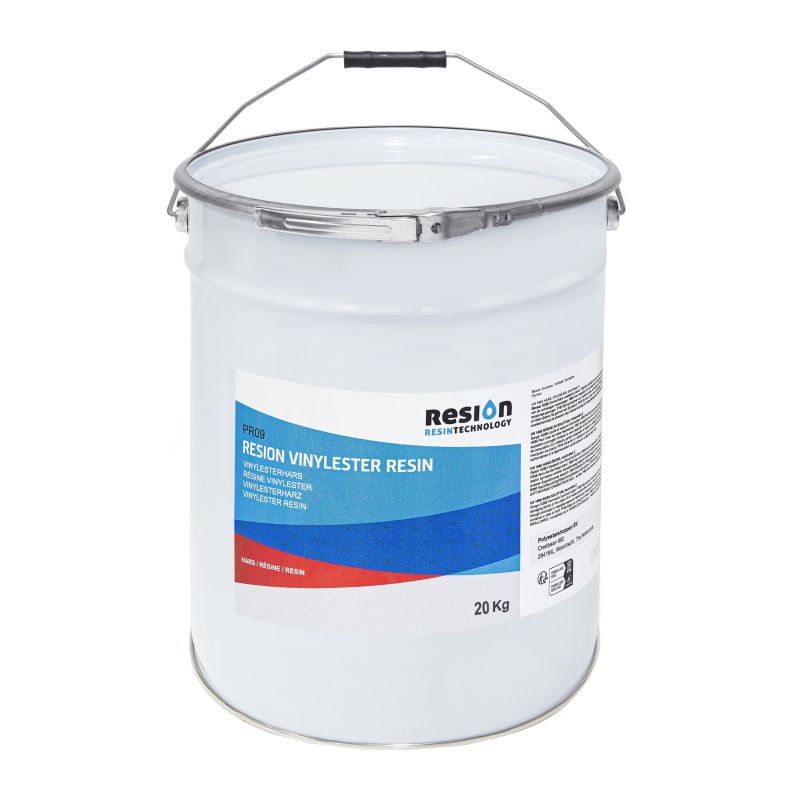
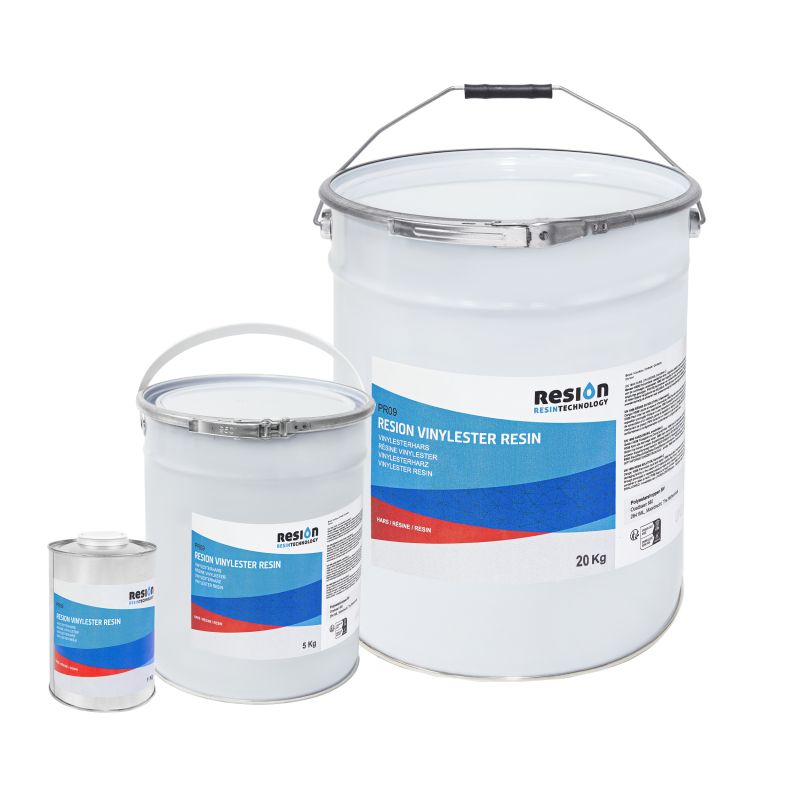

RESION Vinylester Resin
At a glance
- Good chemical resistance
- Osmosis resistant
- High temperature resistance
Not sure about your choice?
Want to know which polyester product you need? Use our selection tool!
Product description
RESION vinylester resin is a very strong, heat-resistant resin with low shrinkage and high resistance to water and chemicals. This makes it highly suitable for mould making, osmosis treatment and the production of heat-resistant products such as hot tubs. The material offers excellent adhesion to various substrates, including old polyester, various plastics and metals.
Vinylester resin is often considered an alternative to epoxy due to its strong resistance to water and chemicals. An advantage of vinylester resin over epoxy is that it cures faster and can be used with various types of glass fibre. While epoxy is typically used in combination with glass fabric, vinylester resin can be used with both glass fabric and the more cost-effective fibreglass chopped strand mat.
Vinylester resin is therefore an excellent alternative to epoxy when you are looking for a strong material with fast curing and high resistance to water and chemicals.
Benefits of vinylester resin
- Faster curing and processing than epoxy.
- Can be used with chopped strand mat (which is more cost-effective than glass fabric).
- Very high resistance to water and chemicals.
- High resistance to osmosis.
- Good adhesion to various substrates, including polyester, aluminium and steel.
Applications
The aforementioned advantages of vinylester resin make it suitable for a number of specific applications.
Osmosis treatment
Vinylester resin can be used to treat and help prevent osmosis in polyester boats. Osmosis formation in the laminate can cause layers to separate (delamination), resulting in a loss of tensile and flexural strength and reducing the overall strength of the hull. Vinylester resin is vapour-tight and therefore highly resistant to osmosis, making it particularly suitable for osmosis repairs and prevention.
Heat resistant projects
Looking to build your own hot tub? Thanks to its high heat resistance, vinylester resin is well suited for manufacturing hot tubs, swimming pools and jacuzzis. It is also suitable for other applications, such as mould making.
How much hardener do you need?
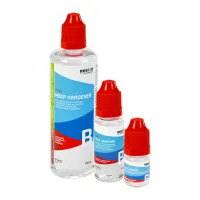
| Weight | MEKP Hardener |
| 1 kg | 20 ml hardener |
| 5 kg | 100 ml hardener |
| 20 kg | 400 ml hardener |
| 200 kg | 4000 ml hardener |
Product properties
The key technical properties clearly listed in one place.
- Article number
- POL000178
-
The technical product category, such as primer, resin, hardener or cleaner. It explains the product's purpose and helps you find other products with a similar function.
- Resin system
-
The tasks a product is intended for, such as laminating, casting, bonding, sealing or protecting. Products intended for the same application can differ considerably in processing, curing time and final properties.
- Laminate
-
Density describes the mass of a material per unit volume. Values may be given in g/cm³, kg/L or kg/m³; 1 g/cm³ equals 1 kg/L. For example, one litre of a liquid with a density of 1.2 kg/L weighs approximately 1.2 kg. Density helps convert between weight and volume, but it can vary with temperature.
- 1.08 kg/L
-
Dosage indicates how much additive, filler or auxiliary material is added to a base product. It is often given as a percentage (%), grams per kilogram (g/kg) or a ratio between components. Check whether the percentage is based on the resin, hardener or total mixture weight. Adding too much or too little can change the product's properties.
- MEKP hardener: 2%
-
Hardener type indicates which component or substance is needed to cure a resin, adhesive or coating. The mechanism varies with the chemical system:
- Epoxy: usually a specific compatible hardener (component B), mixed with the resin at the stated ratio.
- Polyester and vinyl ester: often an MEKP initiator that starts the curing reaction. Dosage is normally given as a percentage.
- Two-component polyurethane: uses a compatible second component, often based on isocyanates, as specified for the system.
Hardeners are not interchangeable. Use only the combination, dosage and safety precautions stated by the manufacturer.
- MEKP hardener
-
Curing time is the period a product needs to reach a specified stage of cure. It is usually given in hours or days, often at a reference temperature such as 20 °C. A product may be tack-free or safe to handle before reaching its full mechanical and chemical resistance. Film thickness and mixed quantity may also affect the time.
- Approximately 2 hours (at 20 °C)
- Net contents
- 1 kg, 20 kg, 5 kg
-
Working time is the period during which a product remains workable after mixing or activation, usually given in minutes at a specified temperature, often 20 °C. With reactive resins, the chemical reaction also continues in the mixing container, and larger quantities or higher temperatures can shorten this time. Working time is different from gel time and full curing time.
- Approximately 20-30 minutes (at 20 °C)
-
Heat resistance describes the temperature a material can withstand after correct processing and curing, usually expressed in degrees Celsius (°C). Continuous exposure is different from a brief temperature peak, and mechanical loading may also affect the limit. Heat resistance is not the same as the temperature at which the product can be applied.
- Up to 115 °C
- Colour
- Lichtgeel
Safety information
Read the warnings and use appropriate protective equipment before handling the product.
Reviews
Frequently bought together
Useful additions for your project.