

Self-adhesive PTFE film
At a glance
- Self releasing PTFE film
- Good chemical resistance
- Low friction
Fast delivery throughout Europe
Secure payment with PayPal, Mastercard, Visa and more
4.7 out of 5 stars on Trusted Shops
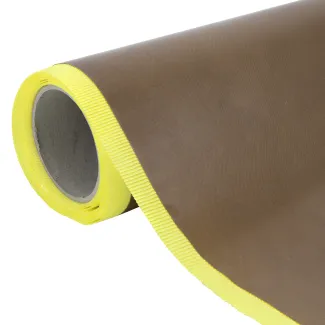
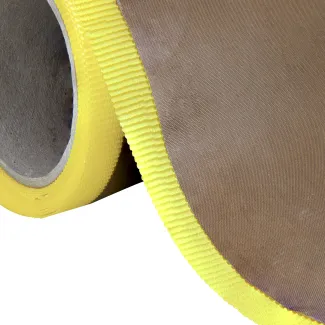
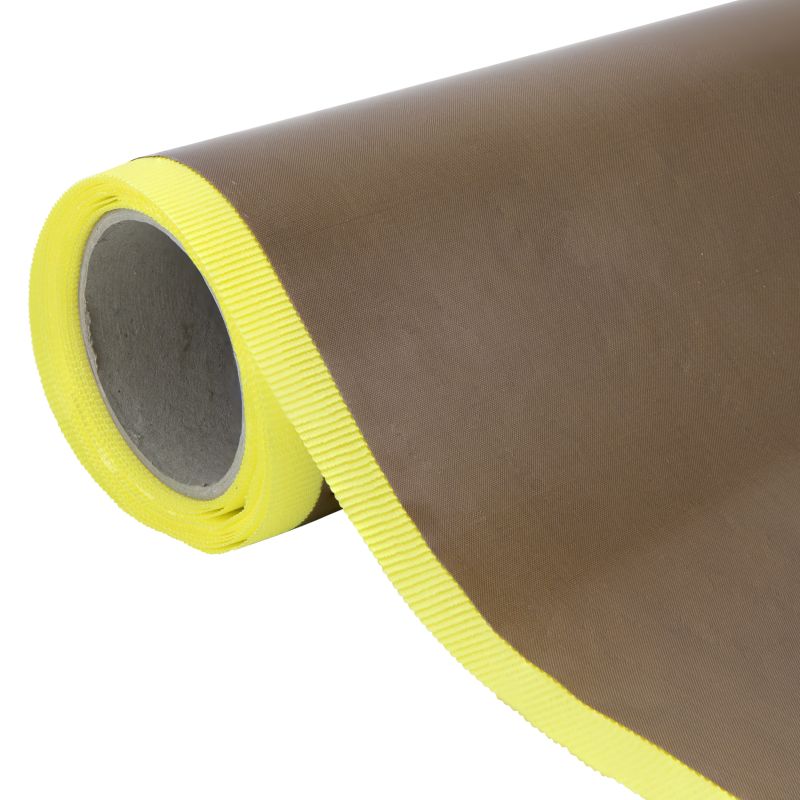
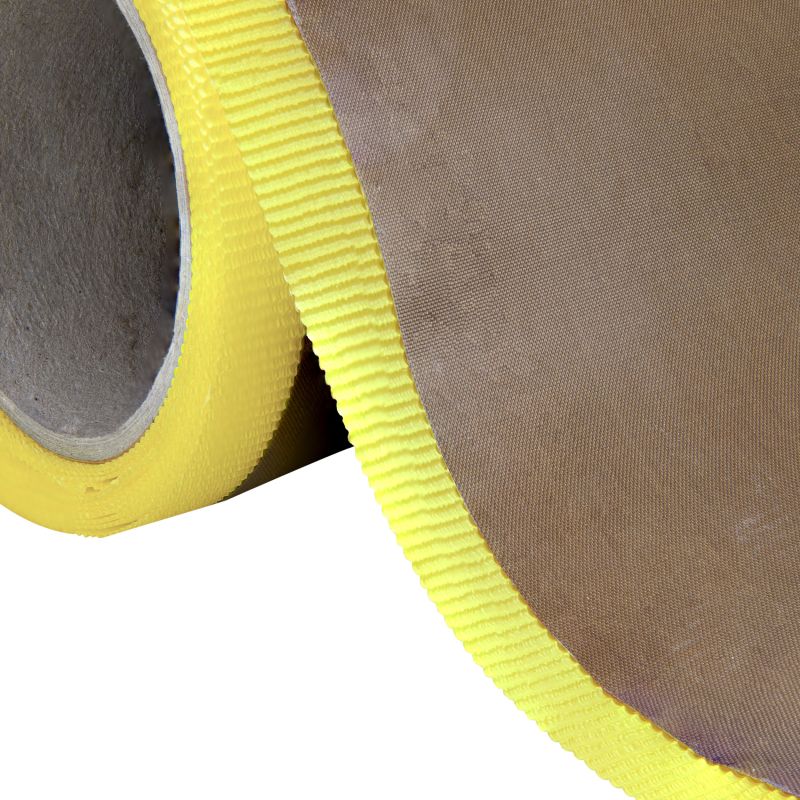
Self-adhesive PTFE film for making and covering moulds, inserts, etc. The PTFE film has a self-adhesive silicone layer on one side. The base material is a glass fabric impregnated with PTFE. The standard silicone adhesive is resistant to a maximum temperature of +250°C. The PTFE-coated glass fabric has excellent chemical resistance and good anti-adhesion properties. In addition, you can easily clean the Teflon foil and it has a low friction coefficient.
Features of self-adhesive PTFE film
- Excellent chemical resistance.
- Good non-stick properties.
- Easy to clean.
- Low coefficient of friction: 0.04-0.10 (depending on load, conveying speed and temperature).
- Excellent electrical, insulating and dielectric properties.
Specifications
Temperature range: -73°C to +250°C
Width: 1 metre
Colour: brown
Nominal thickness: 0.11 mm
Weight: 260 g/m2
Packaging:
- Roll 1 metre x 1 metre (1 m2)
- Roll 1 metre x 5 metres (5 m2)
- Roll 1 metre x 30 metres (30 m2)
- Roll 1 metre x 50 metres (50 m2)
Product properties
The key technical properties clearly listed in one place.
- Article number
- VAC000725
-
The measurement across a product from one side to the other, for example for rolls, panels or fabrics. With rolled materials, the usable width may differ from the overall width.
- 100 cm
-
The physical thickness of the supplied material, such as a panel, pad, film or foam sheet. This differs from the thickness of a liquid coating applied to a surface.
- Nominal: 0.11 mm
-
Areal weight is the weight of one square metre of dry reinforcement, expressed in g/m² (grams per square metre). For example, 200 g/m² glass fabric contains 200 grams of dry fibres per m², without resin. Areal weight helps with reinforcement selection and resin consumption estimates, but it is not the final laminate thickness.
- 260 g/m²
- Net contents
- Roll 1 m x 1 m (1 m²)
-
Heat resistance describes the temperature a material can withstand after correct processing and curing, usually expressed in degrees Celsius (°C). Continuous exposure is different from a brief temperature peak, and mechanical loading may also affect the limit. Heat resistance is not the same as the temperature at which the product can be applied.
- -73 to 250 °C
Reviews
Frequently bought together
Useful additions for your project.

Often chosen

Often chosen

