
Recommended

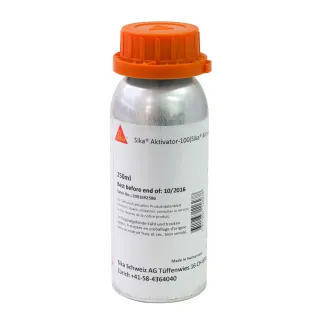
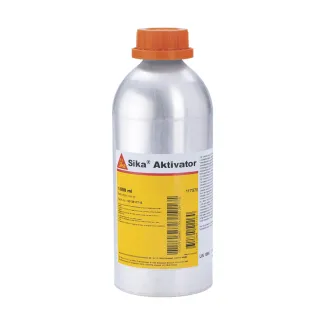
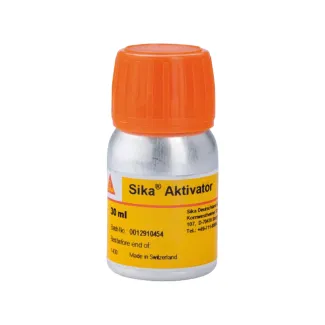
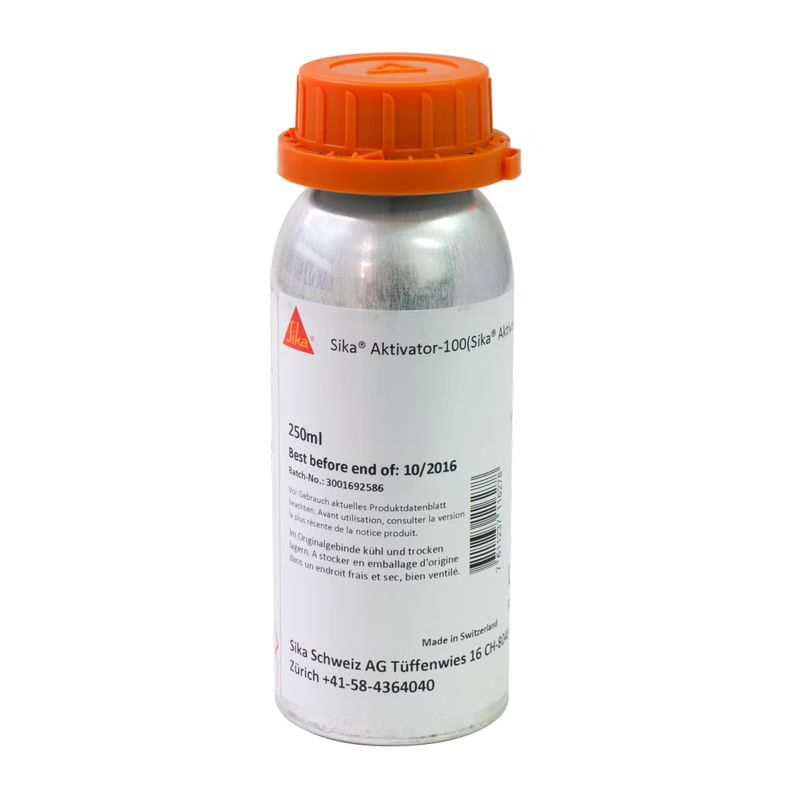
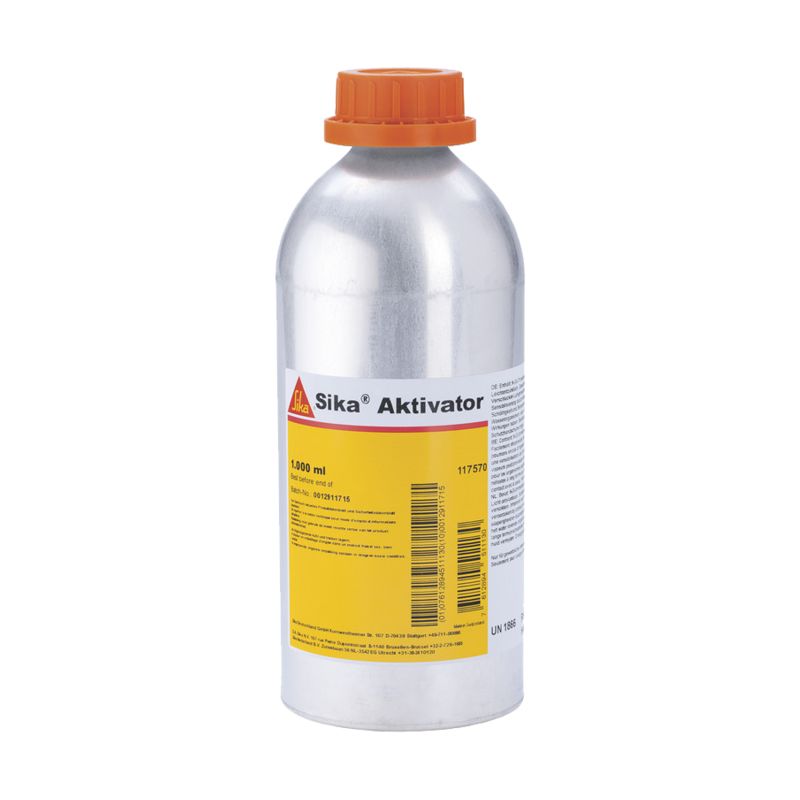
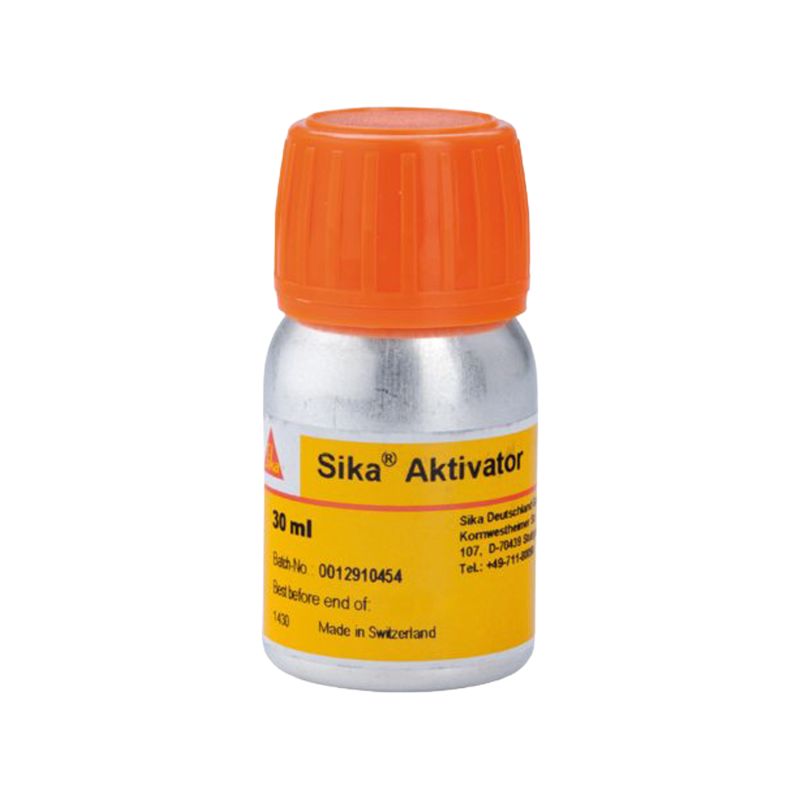
Sika Aktivator-100 is a solvent-based, colourless adhesion promoter which reacts with moisture and deposits active groups on the substrate. These groups act as a link between the substrate and primers, adhesives or sealants. Sika Aktivator-100 is specially formulated for the treatment of bonding surfaces prior to the application of Sikaflex adhesives and sealants.
Sika Aktivator-100 is used to improve adhesion on substrates such as float glass, ceramic screen prints, the cut face of old polyurethane adhesive beads and paint coatings.
Wipe bonding surfaces with a clean, lint-free paper towel lightly moistened with Sika Aktivator-100. Immediately wipe off with a clean, dry, lint-free paper towel. Never dip the towel into the activator. Only wipe the surface with a clean side of the towel. Do not moisten the same paper towel twice and change it frequently. Sika Aktivator-100 should be applied sparingly as excess activator can lead to adhesion failure. If the pre-treated area is not bonded within the maximum flash-off time, the activation process should be repeated (once only). The ideal application and substrate temperature is between 15 °C and 25 °C (59 °F and 77 °F). Consumption and method of application depend on the specific nature of the substrates. Tightly reseal the container immediately after each use.
Contents: 30 ml, 250 ml, 1 L
Chemical base: solvent-based adhesion promoter
Colour: transparent
Curing mechanism: moisture curing
Stability: good
Application temperature: 5-40 °C
Consumption: 20 ml/m2
Flash-off time (min): 10 minutes
Flash-off time (max): 2 hours
Shelf life: 12 months (stored at temperatures below 25 °C)
The key technical properties clearly listed in one place.
The technical product category, such as primer, resin, hardener or cleaner. It explains the product's purpose and helps you find other products with a similar function.
The recommended application temperature range indicates the conditions under which the product can generally be applied and cured properly. Three temperatures matter:
A cold substrate can cause condensation and affect adhesion. At higher temperatures, two-component products may react faster, reducing their working time. Check the dew point and follow the product instructions.
The chemical base describes the chemistry of an adhesive, sealant, resin or coating, such as epoxy, polyester, polyurethane, (methyl)methacrylate or a hybrid polymer. It affects curing, flexibility and adhesion. Products with the same chemical base are not necessarily suitable for the same applications.
The period for which an unopened product remains usable under the specified storage conditions. Check whether the period starts from the manufacturing date or another date. Shelf life may be shorter after opening, especially for products sensitive to air or moisture.
Sag resistance describes how well a paste, sealant or coating stays in place after application without running or slumping. It matters on vertical surfaces, in thick adhesive joints and for overhead repairs.
A product may be thixotropic: it becomes easier to work when stirred or spread, then thickens again at rest. This makes application easier without the material immediately running down the surface. Sag resistance is not the same as viscosity; behaviour after application also matters.
The curing mechanism explains how a product develops its final strength or shape. The main mechanisms are:
Some products use more than one mechanism, so the correct application conditions depend on the particular system.
Consumption or coverage describes how much product is needed for a given surface area. Consumption may be stated in g/m² or kg/m², while coverage is often given in m²/L or m²/kg. A consumption of 0.2 kg/m² means a theoretical 200 grams per square metre. Actual use depends on film thickness, substrate absorbency, application method and waste.
Useful additions for your project.