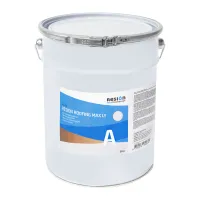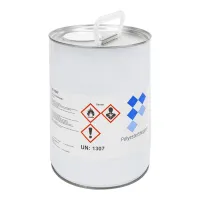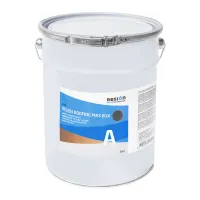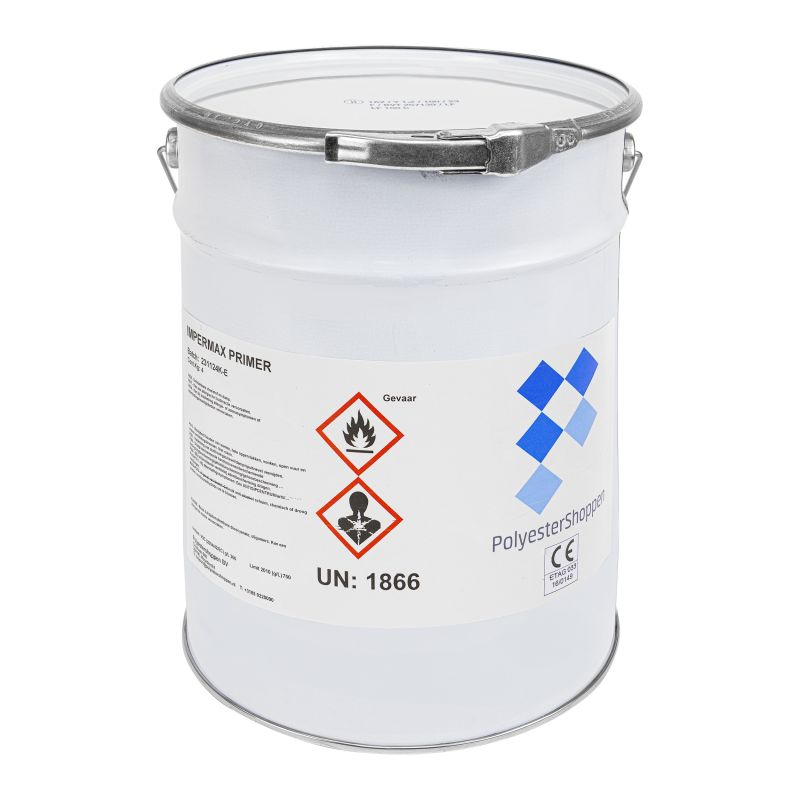

Impermax Primer (Porosity Sealer Flex)
At a glance
- Primer for Impermax
- For EPDM, PVC and Bitumen
- Easy to use
Product description
Porosity Sealer Flex is a 1-component primer specially developed for Impermax roofing. The flexible aromatic, moisture-curing polyurethane resin improves adhesion on EPDM and PVC roofs. In addition, this primer prevents 'bleeding' of bitumen on white roofs. It is an excellent polyurethane primer for repainting old bituminous layers with polyurethane waterproofing systems such as Impermax B1K (black) and Impermax LY (white).
Benefits of Impermax Primer
- Easy to use.
- Suitable as primer for Impermax roofing.
- Improves adhesion on EPDM and PVC roofs.
- Prevents 'bleeding' of bitumen on white roofs.
When do you use Impermax Primer?
You can easily use this primer on EPDM, PVC and bituminous roofs:
EPDM & PVC roofs
To increase adhesion on this type of roof, we recommend applying Porosity Sealer Flex before covering the roof with Impermax liquid roofing.
Bituminous roofs
Are you going to work on a bitumen roof? Then a primer is not always necessary, especially if you use black Impermax B1K, because this hybrid system already contains bitumen and polyurethane. With white roofs, however, the bitumen may stain on the white Impermax coating, because Impermax dissolves part of the old coating. You can prevent this by first treating the roof with this primer or by applying two layers of Impermax LY. The first layer then serves as a primer layer.
Directions for use
Preparation
Impermax Primer (Porosity Sealer Flex) is easy to apply to the surface. Make sure the surface is dry and dust-free for optimal adhesion. Also repair possible roof blisters before applying the primer. Process at a minimum temperature of 0°C and a maximum temperature of 30°C. Higher temperatures may cause blistering under the primer due to the rapid evaporation of the solvent.
Application
Apply the primer with a roller, brush or airless spray equipment. We recommend using the entire contents of the can. If you have any material left over after use, close the container tightly and store it carefully. You can apply Porosity Sealer Flex without any problems. Would you rather dilute it (up to 25%)? Then only use Rayston PU Solvent for this and no other thinners.
Curing
The cure time of the primer strongly depends on the environmental conditions. The higher the temperature and humidity, the faster Porosity Sealer Flex cures. Usually the primer is hand-dry after 5 hours at 25°C and 50% humidity. If the primer is hand-dry, you may apply a second coat up to 48 hours after drying. It is important that all solvents are dissolved before applying a second layer. This will prevent air bubbles from forming under the surface of the primer.
Now allow to cure again before continuing with the application of Impermax B1K or Impermax LY.
Specifications
Contents: 4 kg, 20 kg
Colour: transparent to light yellow
Consumption: 100-300 gr/m2
Processing time: 2 hours
Cure time: 5 hours
Processing temperature: 0-30°C
VOC content: 69%
VOC content: 330 g/l
Viscosity: 350 mPa.s (20°C)
Hardness: Shore 65A (ISO 868)
Temperature resistance: 80°C
Shelf life: until 12 months after production date
Product properties
The key technical properties clearly listed in one place.
- Article number
- DAK001637
-
The recommended application temperature range indicates the conditions under which the product can generally be applied and cured properly. Three temperatures matter:
- Air: the temperature in the workshop or outdoors.
- Substrate: the temperature of the surface being treated.
- Product: the temperature of the resin, adhesive or coating itself.
A cold substrate can cause condensation and affect adhesion. At higher temperatures, two-component products may react faster, reducing their working time. Check the dew point and follow the product instructions.
- 0-30 °C
-
The time needed for an applied layer to dry, for example as water or solvent evaporates. Reactive products may also undergo chemical curing. A surface that feels dry is therefore not necessarily fully cured or ready to be loaded.
- 5 hours
-
Hardness describes a material's resistance to indentation. For silicone rubber and other elastomers, the Shore A scale is commonly used: Shore A 15, for example, is softer than Shore A 40. Harder plastics may be rated on the Shore D scale. The number belongs to its Shore scale and is not a unit like MPa; values on different scales cannot be directly compared.
- Shore A 65
-
Consumption or coverage describes how much product is needed for a given surface area. Consumption may be stated in g/m² or kg/m², while coverage is often given in m²/L or m²/kg. A consumption of 0.2 kg/m² means a theoretical 200 grams per square metre. Actual use depends on film thickness, substrate absorbency, application method and waste.
- 100-300 g/m²
- Net contents
- 20 kg, 4 kg
-
Working time is the period during which a product remains workable after mixing or activation, usually given in minutes at a specified temperature, often 20 °C. With reactive resins, the chemical reaction also continues in the mixing container, and larger quantities or higher temperatures can shorten this time. Working time is different from gel time and full curing time.
- Approximately 120 minutes
-
Viscosity measures how easily a liquid flows, or how thick it is. Dynamic viscosity is usually expressed in mPa·s (millipascal-seconds), sometimes in cP (centipoise); 1 mPa·s = 1 cP. A lower value usually means a more free-flowing liquid, while a higher value indicates a thicker product. Temperature and test method strongly affect the value. Note that mPa·s is different from MPa, which is used to express mechanical strength.
- 350 mPa·s (20 °C)
-
VOC content (volatile organic compounds) indicates the amount of these substances in a product, usually expressed in g/L (grams per litre). They may evaporate during application and drying. The value describes the composition, but actual exposure also depends on how much is used, ventilation and the application method.
- 330 g/L, 69%
Safety information
Read the warnings and use appropriate protective equipment before handling the product.
Reviews
Frequently bought together
Useful additions for your project.