Anyone who wants to keep their boat neat and clean cannot avoid antifouling. However, the way we combat marine growth has changed significantly in recent years. Biocide-free foul-release systems are one of the most interesting developments in this regard. Not only because they are better for the environment, but also because regulations are shifting and manufacturers are looking ahead.
What exactly does such a system entail? And is it a realistic alternative to traditional copper-based antifouling?
Why was (and is) copper used in antifouling?
Copper-based antifouling has been the standard in watersports for decades, and for good reason. Copper is highly effective against marine growth. It acts as a biocide: small amounts of copper ions continuously leach out of the paint film, inhibiting or killing organisms that attempt to settle on the hull.
This has worked exceptionally well for a long time. Copper-based antifouling requires relatively low maintenance, offers reliable protection, and performs well even on boats that remain stationary in harbors for extended periods.
However, this effectiveness comes with a downside.
The downside of copper: environmental impact
The problem with copper-based antifouling is that the copper does not stay on the hull. It slowly but continuously leaks into the water. In marinas and heavily navigated waters, this can lead to an accumulation of copper in the water and seabed.
This has proven negative effects on the ecosystem:
- Damage to algae and aquatic plants.
- Disruption of shellfish and small aquatic organisms.
- Indirect consequences for fish and other wildlife.
The impact is particularly significant in enclosed and freshwater bodies. As a result, governments and environmental organizations view copper with increasing scrutiny. Regulations are being tightened step by step, and this trend is expected to continue in the coming years.
What is a biocide-free foul-release system?
In response to these developments, major paint manufacturers actively sought alternatives to copper. The result: biocide-free foul-release systems.
A foul-release system is a modern form of antifouling that prevents marine growth without using toxic substances such as copper or other biocides. Where traditional antifouling relies on chemistry, foul-release is all about smart surface behavior.
The secret lies in the surface properties. These coatings form an extremely smooth, elastic layer with very low surface tension. Barnacles, algae, and slime struggle to get any grip. If they do attach, they release easily once the boat moves (sometimes even at low speeds). The key difference from traditional antifouling: nothing is killed. Marine growth is simply discouraged from anchoring itself.
Thanks to stricter regulations and technological progress, foul-release systems are being taken more seriously than ever. Major brands are investing heavily in these systems—not as a niche product, but as a future-proof solution for fouling prevention.
Traditional antifouling versus foul-release systems
| Traditional antifouling | Foul release (biocide-free) | |
| Mechanism | Biocides kill or inhibit growth | Mechanically prevents adhesion |
| Environment | Harmful (copper and other biocides) | Environmentally friendly |
Types of biocide-free systems
Polyestershoppen offers two foul-release systems. Both systems perform excellently in freshwater!
- International B-Free
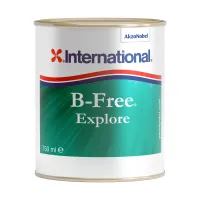
B-Free Explore is the first paint system from International's biocide-free range. This underwater coating is engineered to control marine growth using a slick silicone surface that microorganisms can barely adhere to. Built on a specially developed silicone polymer technology, the coating combines both water-repellent (hydrophobic) and water-attracting (hydrophilic) properties. This creates a highly smooth surface that organisms like barnacles, tube worms, algae, and mussels cannot firmly grip. Should growth occur while the boat is moored for long periods, it simply detaches when underway. The growth can also easily be removed with a cloth or pressure washer. Read more about International B-Free Explore! - Hempel Silic One
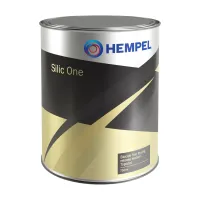
Hempel Silic One was one of the first biocide-free foul-release systems to hit the market and has proven its worth over time. The system is based on silicone hydrogel, a material that organisms struggle to bond with. A major advantage of Silic One is that the coating is easy to clean and reapply. The system is suitable for use below the waterline on fiberglass, steel, and aluminum boats. Read more about Hempel Silic One!