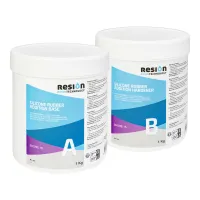
A battery pack in an electric vehicle does not survive vibrations, extreme heat development, and humid driving conditions because its components are inherently indestructible, but because they are properly protected. In modern industry, this critical protection is almost always achieved using high-quality silicone casting rubber.
Potting and battery encapsulation with silicone have become standard technologies within the electronics industry. Nevertheless, the impact of proper material selection is still regularly underestimated. In this article, we dive deeper into the world of electronics potting. You will learn what potting actually entails, why silicone casting rubber is superior to alternatives such as epoxy, and which specific technical properties determine the right material for your application.
What is potting and what is encapsulation?
Although the terms are often used interchangeably in practice, the difference lies mainly in the scale and specific purpose of the protection:
- Potting: this is the process where a complete electronic module or housing is (partially) filled with a liquid protective compound. After curing, the material forms a permanent, protective buffer inside the housing.
- Encapsulation: this is a closely related process where individual components or specific parts, such as individual battery cells in a battery pack, are completely enveloped in a thin layer of compound. The enclosure is often removed from the mold after curing.
Both casting techniques are used to provide long-term protection for fragile electronic components against external influences such as:
- Moisture and condensation: the absolute primary cause of short circuits and corrosion.
- Dust and dirt: crucial for electronics in industrial environments and outdoor applications.
- Vibrations and mechanical shocks: indispensable for vehicles, heavy machinery, and portable equipment.
- Electrical insulation: prevents flashovers and unwanted conductivity between components.
- Thermal load: active heat dissipation or thermal insulation, depending on the material type.
Why silicone casting rubber is the best choice for electronics protection
Three main types of materials are used for potting electronics: epoxy, polyurethane (PU), and silicone. While each material has its own benefits, silicone casting rubber excels in key areas:
Flexibility and vibration damping capacity
Cured silicone casting rubber always retains its elasticity, unlike hard epoxy or brittle polyurethane resins. This flexibility is vital in applications subject to constant vibrations or thermal expansion. Where hard materials can crack or induce micro-cracks in soldered joints due to shrinkage and expansion, silicones absorb these stresses effortlessly.
Exceptionally broad temperature range
Silicones maintain their mechanical and electrical properties at extreme temperatures, typically from -60 °C up to +200 °C. This makes them the perfect choice for demanding environments such as:
- Engine compartments and high-power battery packs in EVs (Electric Vehicles).
- High-output LED lighting systems with high heat generation.
- Aerospace and marine electronics exposed to intense sunlight and severe cold.
Superior moisture and chemical resistance
Silicones are inherently hydrophobic (water-repellent). They form an impenetrable barrier against water and condensation, and are also highly resistant to UV radiation, ozone, mild acids, chemicals, and lubricants.
Silicone versus epoxy for potting: key differences
| Property | Silicone rubber | Epoxy resin |
|---|---|---|
| Flexibility after curing | High, remains permanently elastic | Low, hard material |
| Temperature range | Very broad (-60°C to +200°C) | Limited (usually up to max. ~120°C after post-cure) |
| Vibration damping (shock resistance) | Excellent | Moderate to low |
| Repair & Disassembly | Possible (easy to cut away with RTV) | Nearly impossible without destroying components |
| Shrinkage rate during cure | Very low (< 0.1%) | Noticeable shrinkage (can induce stress) |
| Cost price | Higher (more technically advanced) | Lower |
Technical properties: What to look for when choosing silicone casting rubber?
When selecting the right potting materials for your electronics project, the following parameters are decisive:
1. Viscosity (fluidity)
Viscosity determines how easily the silicone flows into complex geometries and around microscopic components. A very low-viscosity (thin) silicone is essential for printed circuit boards (PCBs) with tightly packed components to prevent air entrapment. Higher viscosity is useful when the casting rubber must not run out of a semi-open housing.
2. Shore hardness
The Shore value indicates how hard or soft the silicone is after full cure:
- Shore A15 (flexible): maximum flexibility. Ideal for extremely fragile electronics and applications with heavy shocks or large thermal fluctuations.
- Shore A25 (medium): the perfect all-rounder offering a good balance between mechanical impact protection and elasticity.
- Shore A40 and higher (hard): provides strong mechanical protection against vandalism or impact, but is less suitable for components with significant thermal expansion.
3. Pot life (working time)
Pot life is the time you have to mix and pour the two components (A and B) before the viscosity becomes too high to flow properly. For manual processing or prototyping, a longer pot life is desirable. Automated production lines often select a shorter pot life to reduce cycle times.
4. Cure type: Addition (Platinum) vs. Condensation (Tin)
For electronics potting, addition-cure (platinum) silicone is the absolute standard. This type cures shrink-free, releases no byproducts (such as alcohol or acetic acid) that could corrode electronics, and cures completely even in enclosed housings.
Common mistakes when potting electronics (and how to avoid them)
- Air bubbles under components: caused by high viscosity or overly fast curing.
Solution: choose a low-viscosity silicone rubber and consider a vacuum method to degas the silicone before or during pouring. - Poor adhesion: moisture or grease on the PCB can cause the silicone to detach from components.
Solution: thoroughly clean and dry the electronics (ideally with isopropyl alcohol) before casting. - Incomplete curing (inhibition): platinum silicones can be 'poisoned' by contact with substances like sulfur, amines, or certain 3D printing resins, causing them to remain liquid or sticky.
Solution: always perform a small adhesion test and avoid contamination during mixing.
B2B Customization and bulk packaging for industry
Whether you are in the prototype phase of an innovative startup or operating an automated production line: Polyestershoppen supplies technical silicone rubber in flexible volumes. From handy sets for R&D departments to bulk containers (drums) suitable for direct connection to industrial dispensing and mixing equipment.
We offer fast delivery throughout Europe. Do you have specific technical requirements, such as custom Shore hardness, exact color coding for visual inspection, or certified flame retardancy according to international standards? Our specialists can work with you to formulate a custom silicone casting rubber recipe.
Questions about silicone casting rubber for electronics?
Feel free to contact our specialists for questions regarding our product range, technical advice, or a tailored quote for your project!