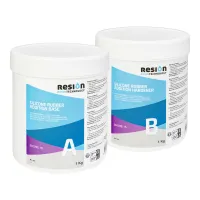
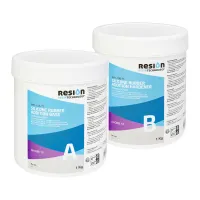
Nothing is more frustrating than a mold that doesn't have the desired properties after hours of curing. A mold that is too hard can damage your original model when demolding. A mold that is too soft deforms as soon as you pour heavier material like concrete into it. It all comes down to Shore hardness. In this blog we explain how to make the right choice and what the causes are of an abnormal hardness.
What is Shore hardness and why is it crucial?
The hardness of silicone rubber is indicated by the Shore A scale. The lower the number, the softer and more stretchable the silicone.
- Shore A 15 (Soft): Very flexible. Perfect for fragile objects or models with many undercuts. You can turn the mold inside out almost like a sock.
- Shore A 25-30 (Medium): The all-rounder. Firm enough to maintain its shape, but flexible enough for most casting projects.
- Shore A 40 (Hard): Stiff silicone. Ideal for flat molds, technical parts or molds that need to bear large amounts of heavy material without bulging. Due to the higher hardness, it is also more resistant to higher temperatures.
Causes of a mold that 'feels wrong'
Sometimes you have bought the right Shore value, but the mold still doesn't feel right after curing. These are the most common causes:
- Silicones curing in a too-cold room may sometimes not reach their maximum hardness or remain 'rubbery'.
- Contact with certain materials (such as 3D prints) can slow curing, causing the silicone to remain soft on the surface (cure inhibition).
Solutions: What if the mold is too soft or too hard?
Is your mold too soft?
If the silicone is dry but bends too much, you can make a support shell. Use plaster bandage or polyester with fiberglass mat to create a hard shell around the soft silicone mold. This way the inside retains its detail while the outside forces the shape.
Is your mold too hard?
If you can't get the original out without force, you can try carefully cutting the mold (a 'split mold') to create more room. To prevent this problem next time, you can adjust the hardness of your liquid silicone in advance with a pro tip: by adding a maximum of 10% RESION Silicone Oil (a compatible PDMS oil) to your addition silicones, you significantly lower the
final Shore A value. This allows you to transform, for example, a Shore A 25 silicone into a more supple Shore A 20, making demolding of complex objects much easier and safer for your model.
The 3 steps for a flawless result
- Analyze your original: Does it have deep holes or fragile protrusions? Always choose a lower Shore (A 15).
- Weigh exactly: Use the 1:1 ratio accurate to the gram.
- Use the 2-cup method: Ensure no unmixed 'soft' silicone from the walls ends up in your mold.
Need help?
View our full silicone rubber troubleshooter for more in-depth information or contact us directly for personal advice by phone, chat or email. Together we will make your project a success!