Recommended

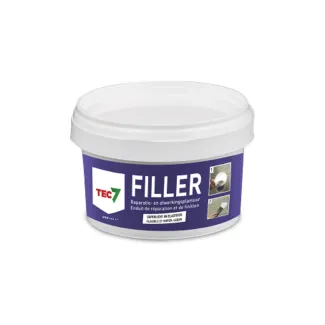
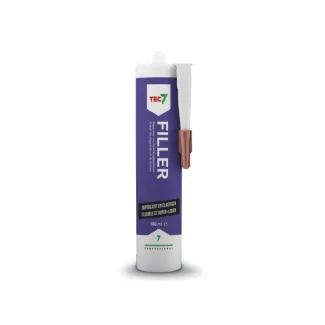
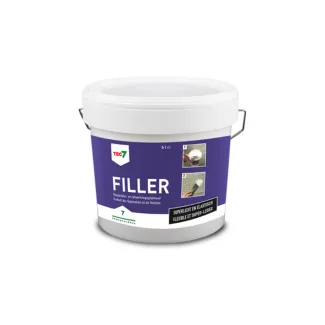
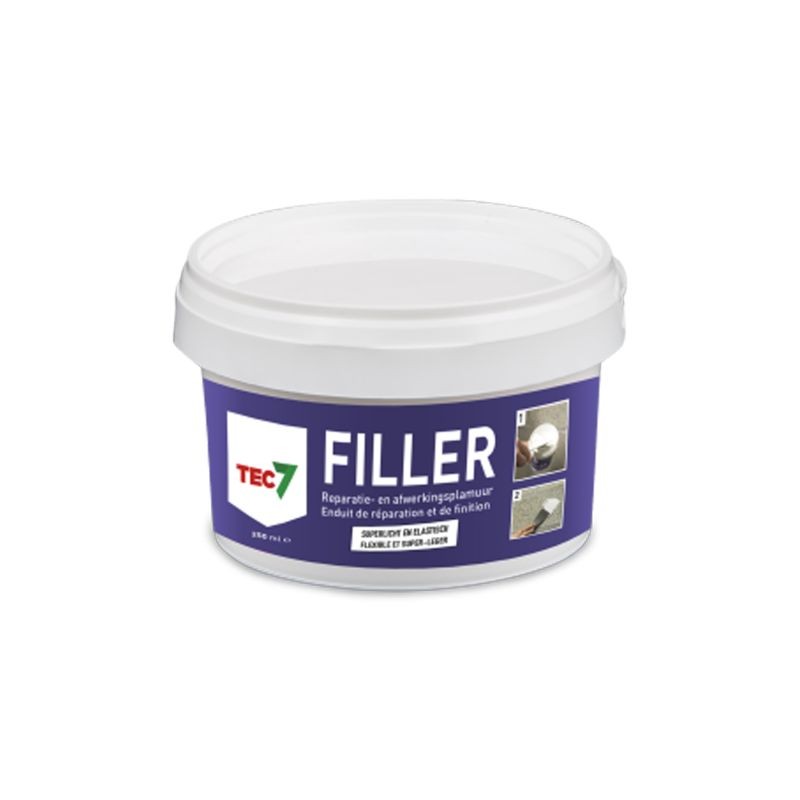
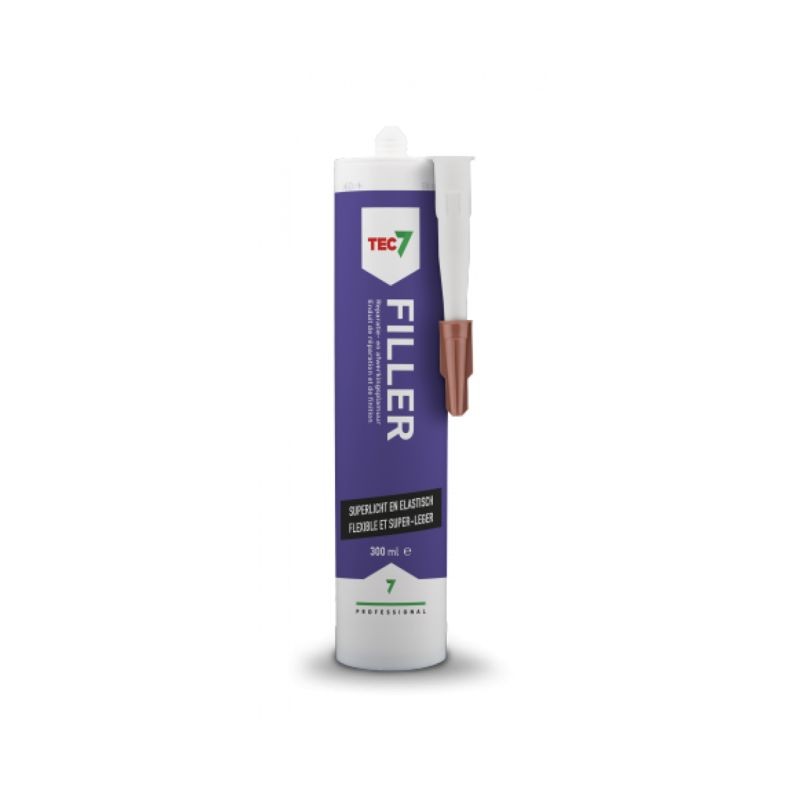
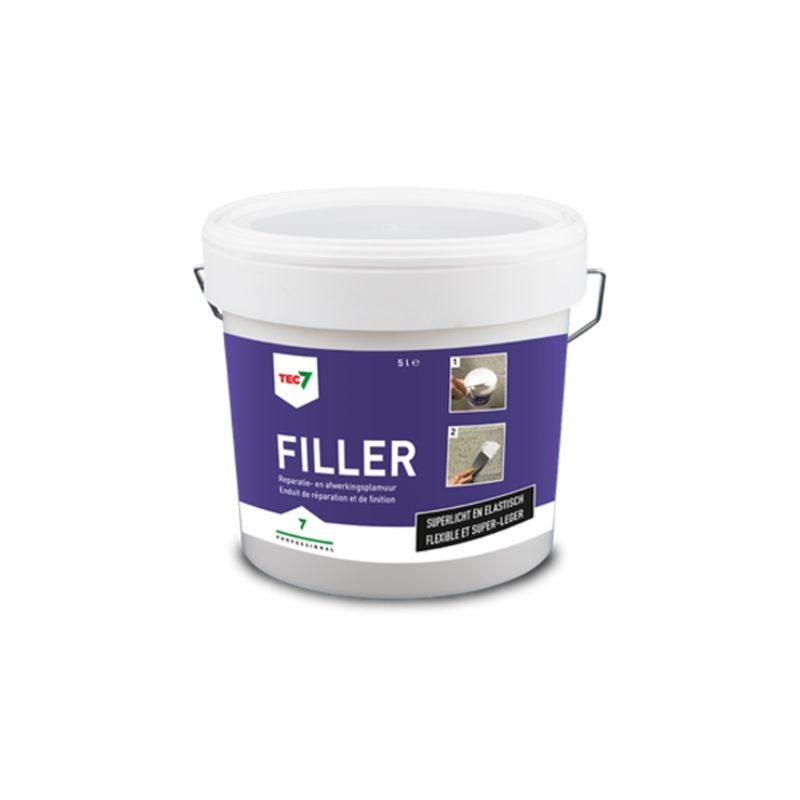
Tec7 Filler is a snow-white elastic repair and finishing compound for filling and repairing various building materials. The ready-to-use filler is super light, easy to use and suitable for indoor and outdoor use.
Apply Tec7 Filler to a dry, dust-free and grease-free surface, free of loose paint, plaster or other contaminants. To strengthen weak and/or loose surfaces, pre-treatment with Tec7 Poxy Primer is recommended.
Viscosity: paste
Density (23°C): 0.420 +/- 0.010 g/cm³
Base: acrylic dispersion
Hardening: shrinkage and tear-free
Skin formation (23°C / 65% RH): < 20 minutes
Can be painted over: after 1 hour
Transport temperature: -15°C to +40°C.
Application temperature: +5°C to +30°C.
Temperature resistance after curing: -20°C to +100°C.
Shelf life: 36 months, when stored dry at temperatures between +5°C and +35°C.
Safety measures: please consult the safety data sheet
Available packages:
The key technical properties clearly listed in one place.
The recommended application temperature range indicates the conditions under which the product can generally be applied and cured properly. Three temperatures matter:
A cold substrate can cause condensation and affect adhesion. At higher temperatures, two-component products may react faster, reducing their working time. Check the dew point and follow the product instructions.
The chemical base describes the chemistry of an adhesive, sealant, resin or coating, such as epoxy, polyester, polyurethane, (methyl)methacrylate or a hybrid polymer. It affects curing, flexibility and adhesion. Products with the same chemical base are not necessarily suitable for the same applications.
The period for which an unopened product remains usable under the specified storage conditions. Check whether the period starts from the manufacturing date or another date. Shelf life may be shorter after opening, especially for products sensitive to air or moisture.
The parts and accessories supplied as standard, such as a complete set of components, separate accessories or a machine with attachments. Product photographs may also show items that are not included.
The overcoating interval tells you when the next layer of paint, varnish or coating may be applied. Many multi-coat systems specify both a minimum and a maximum interval:
Overcoating too early can affect drying or the finish. Once the maximum interval has passed, cleaning and sanding may be needed to ensure adhesion between coats. Temperature and film thickness affect the waiting times.
Viscosity measures how easily a liquid flows, or how thick it is. Dynamic viscosity is usually expressed in mPa·s (millipascal-seconds), sometimes in cP (centipoise); 1 mPa·s = 1 cP. A lower value usually means a more free-flowing liquid, while a higher value indicates a thicker product. Temperature and test method strongly affect the value. Note that mPa·s is different from MPa, which is used to express mechanical strength.
Heat resistance describes the temperature a material can withstand after correct processing and curing, usually expressed in degrees Celsius (°C). Continuous exposure is different from a brief temperature peak, and mechanical loading may also affect the limit. Heat resistance is not the same as the temperature at which the product can be applied.
Useful additions for your project.