
UFI: P410-C0AS-T004-9MAG
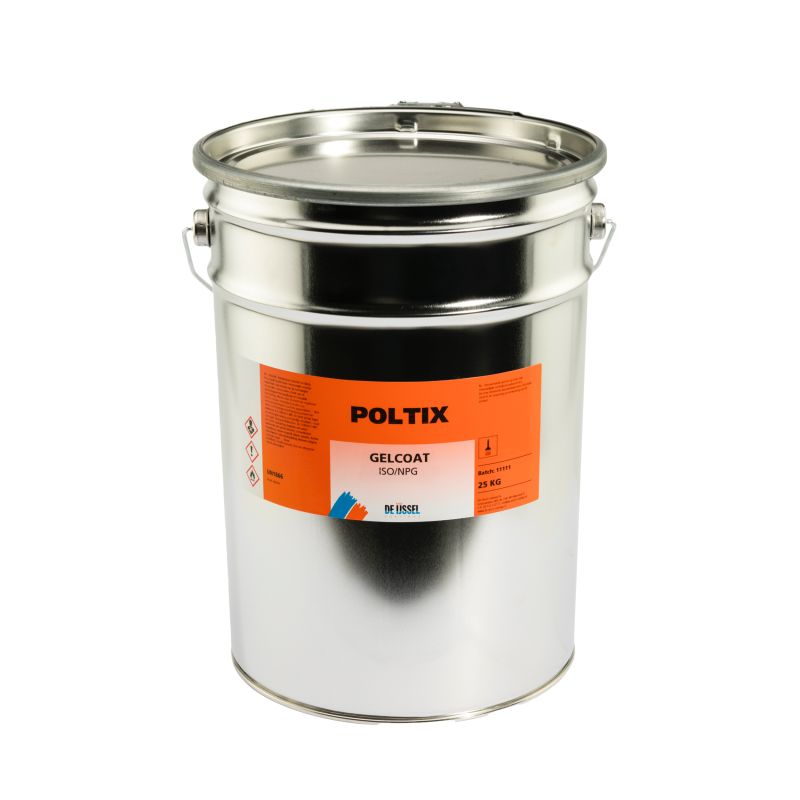
Poltix Gelcoat ISO/NPG Airless
At a glance
- Gelcoat for airless application
- Fast curing
- ISO-NPG quality
Poltix Gelcoat ISO/NPG Airless is a gelcoat specially designed for application with an airless spray system. The gelcoat is based on a pre-accelerated combination of unsaturated polyester resins derived from isophthalic acid and neopentyl glycol (ISO/NPG).
Features of Poltix Gelcoat
- Specifically developed for airless application.
- Thixotropic (prevents sagging on vertical surfaces).
- Fast curing.
- Excellent scratch, impact, and shock resistance.
- Provides a protective layer for polyester laminates such as boats, automotive parts, decorative panels, tubs, sanitary items, etc.
- Resistant to various chemicals and highly resistant to osmotic blistering.
Product properties
The key technical properties clearly listed in one place.
- Article number
- POL002217
-
The technical product category, such as primer, resin, hardener or cleaner. It explains the product's purpose and helps you find other products with a similar function.
- Gelcoat & Topcoat
-
The recommended layer thickness is the thickness at which you apply each coat of paint, coating or resin. It is usually given in micrometres (µm) or millimetres (mm).
- Wet film thickness: the thickness immediately after application.
- Dry film thickness: the thickness after drying or curing.
For a coating with 60% solids by volume, a wet film of 100 µm will theoretically produce a dry film of approximately 60 µm. Film thickness affects coverage, protection and drying. Always check whether the manufacturer specifies wet or dry film thickness.
- 350-450 µm (dry)
-
Density describes the mass of a material per unit volume. Values may be given in g/cm³, kg/L or kg/m³; 1 g/cm³ equals 1 kg/L. For example, one litre of a liquid with a density of 1.2 kg/L weighs approximately 1.2 kg. Density helps convert between weight and volume, but it can vary with temperature.
- 1.1-1.3 kg/L
-
Mixing ratio indicates how much of each component is needed, for example resin (A) and hardener (B). A ratio of 100:50 by weight means 100 grams of A to 50 grams of B; by volume you might use millilitres. Weight and volume ratios are not necessarily the same because the components may have different densities. Accurate measuring is important for proper curing.
- 100:2 (by weight)
-
The overcoating interval tells you when the next layer of paint, varnish or coating may be applied. Many multi-coat systems specify both a minimum and a maximum interval:
- Minimum overcoating time: the previous layer is dry or cured enough to accept another coat.
- Maximum overcoating time: the period during which the next coat can bond without extra surface preparation under the stated conditions.
Overcoating too early can affect drying or the finish. Once the maximum interval has passed, cleaning and sanding may be needed to ensure adhesion between coats. Temperature and film thickness affect the waiting times.
- At least 3 hours, at most 24 hours
-
A paint or varnish layer is dust-dry when settling dust is less likely to stick to the surface. It may not yet be touch-dry, ready for overcoating or suitable for loading; these are different stages of drying and curing.
- 15 minutes
-
Hardener type indicates which component or substance is needed to cure a resin, adhesive or coating. The mechanism varies with the chemical system:
- Epoxy: usually a specific compatible hardener (component B), mixed with the resin at the stated ratio.
- Polyester and vinyl ester: often an MEKP initiator that starts the curing reaction. Dosage is normally given as a percentage.
- Two-component polyurethane: uses a compatible second component, often based on isocyanates, as specified for the system.
Hardeners are not interchangeable. Use only the combination, dosage and safety precautions stated by the manufacturer.
- MEKP hardener
-
Curing time is the period a product needs to reach a specified stage of cure. It is usually given in hours or days, often at a reference temperature such as 20 °C. A product may be tack-free or safe to handle before reaching its full mechanical and chemical resistance. Film thickness and mixed quantity may also affect the time.
- 2 hours
-
Solids content is the proportion of material remaining after volatile components have evaporated from a coating. It is stated as a percentage by weight or by volume (%); these are not interchangeable. Volume solids content helps estimate dry film thickness: with 60% volume solids, a 100 µm wet film will theoretically produce approximately 60 µm of dry film.
- Approximately: 100%
-
Consumption or coverage describes how much product is needed for a given surface area. Consumption may be stated in g/m² or kg/m², while coverage is often given in m²/L or m²/kg. A consumption of 0.2 kg/m² means a theoretical 200 grams per square metre. Actual use depends on film thickness, substrate absorbency, application method and waste.
- Approximately 2.4 m²/kg (350 µm)
- Net contents
- 5 kg
-
Working time is the period during which a product remains workable after mixing or activation, usually given in minutes at a specified temperature, often 20 °C. With reactive resins, the chemical reaction also continues in the mixing container, and larger quantities or higher temperatures can shorten this time. Working time is different from gel time and full curing time.
- Approximately 10 minutes (at 20 °C)
- Colour
- Transparant
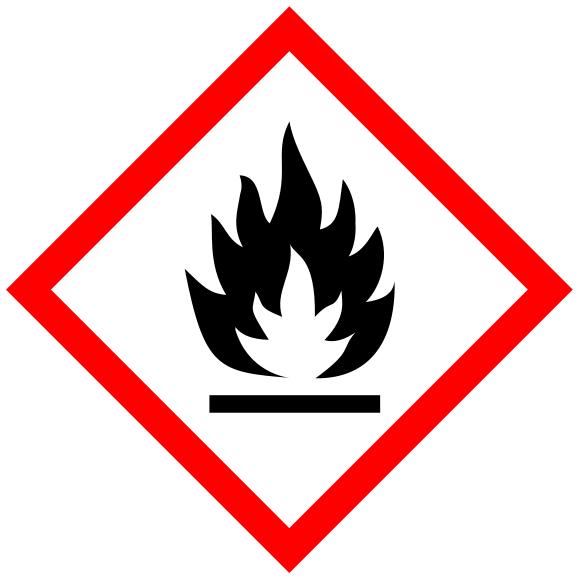
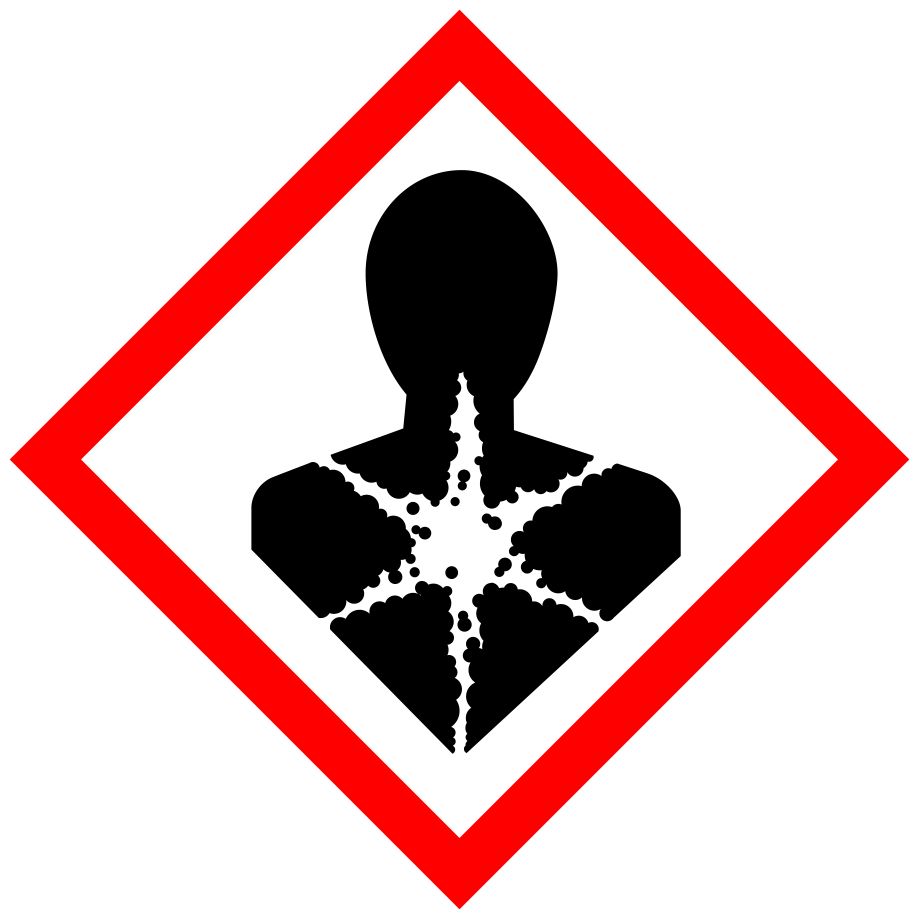
Safety information
Read the warnings and use appropriate protective equipment before handling the product.
Reviews
Frequently bought together
Useful additions for your project.