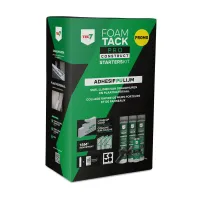

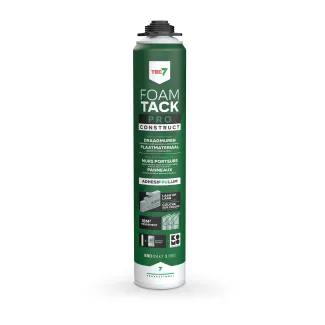
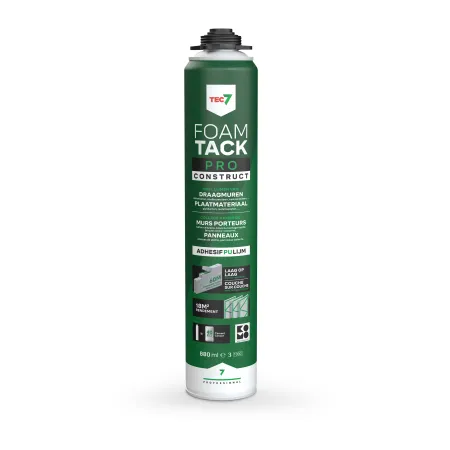
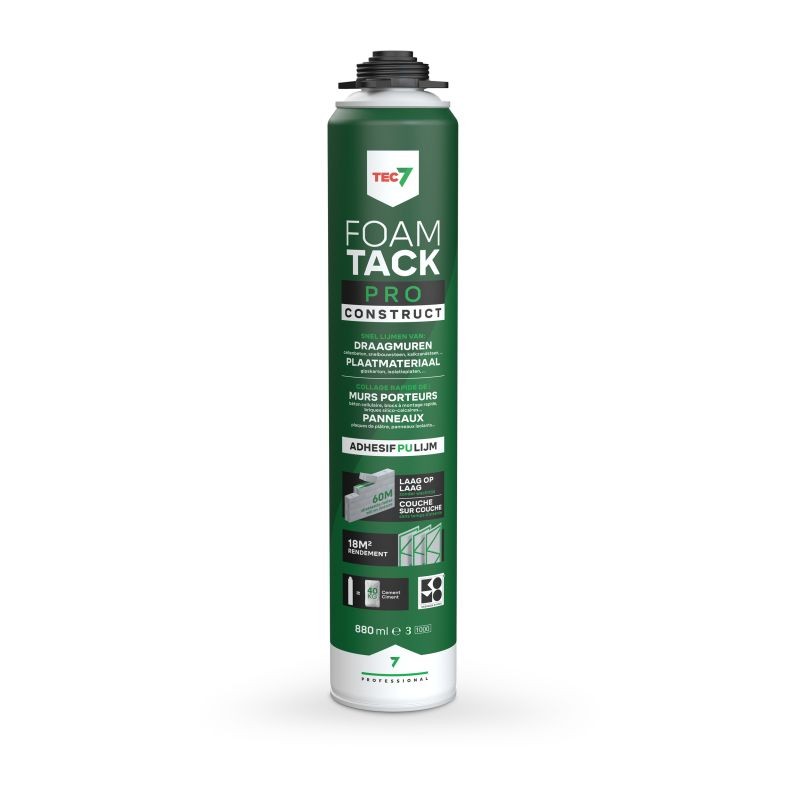
Tec7 FoamTack Pro Construct
New

At a glance
- Replaces heavy mortar bags
- Fast curing (60 min.)
- KOMO certified
Fast delivery throughout Europe
Secure payment with PayPal, Mastercard, Visa and more
4.7 out of 5 stars on Trusted Shops
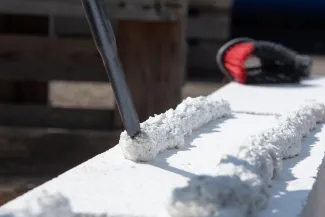
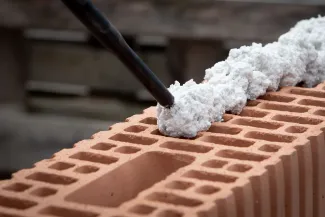
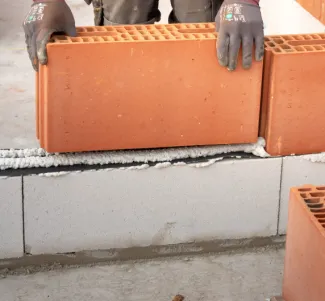
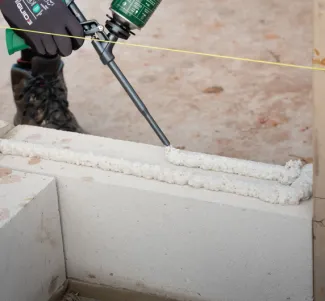
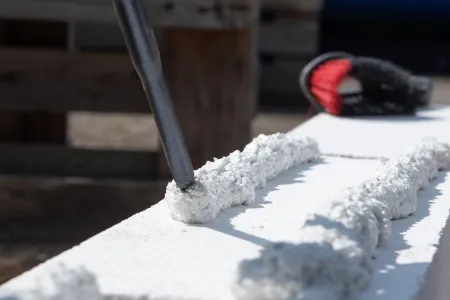
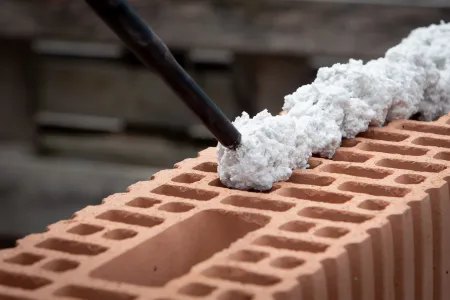
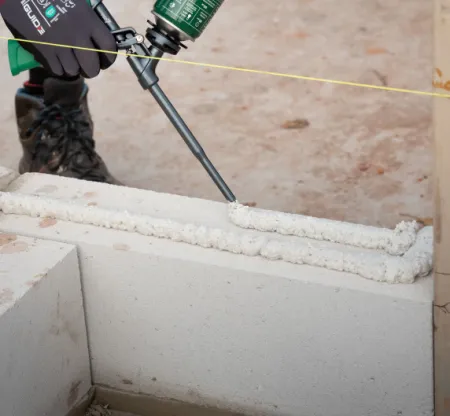
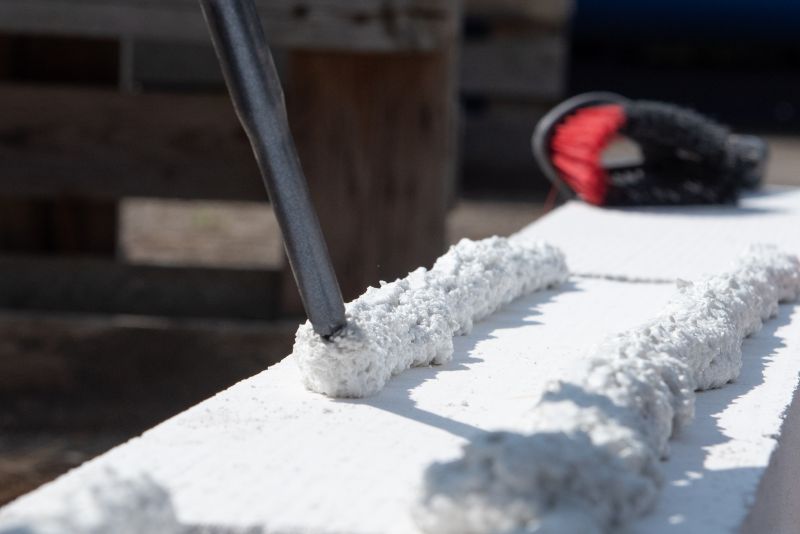
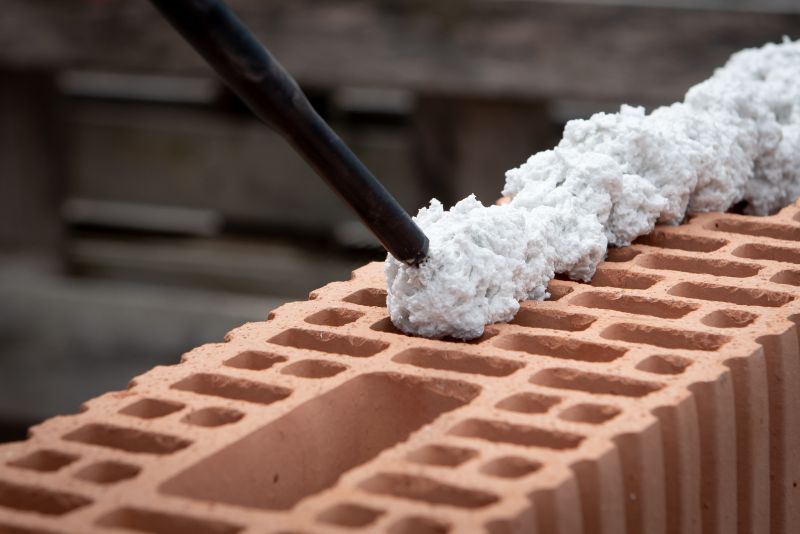
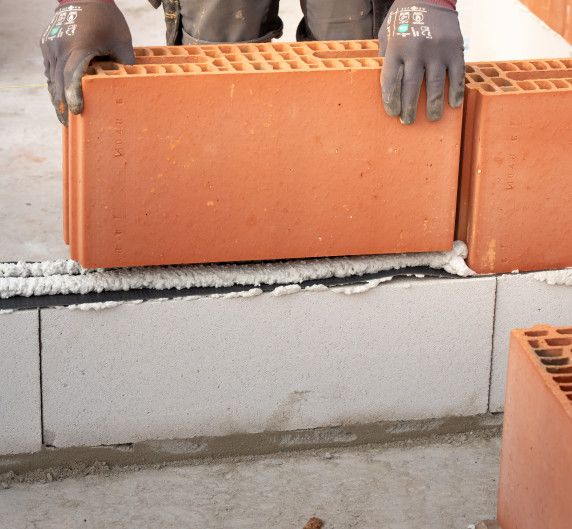
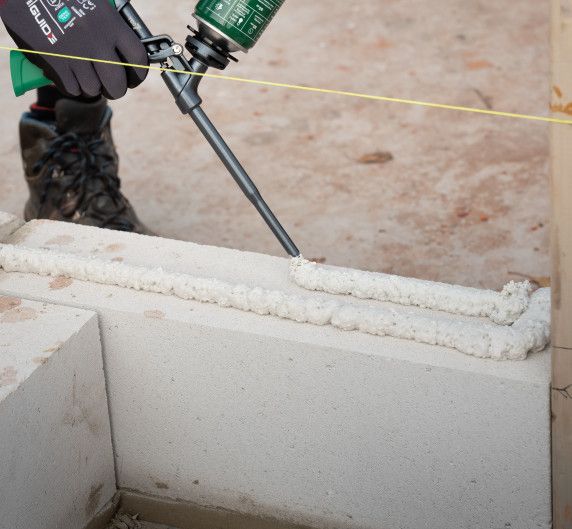
FoamTack Pro Construct is a KOMO-certified PU adhesive foam, ideal for bonding aerated concrete, sand-lime bricks and dimensionally stable building blocks. This product offers a modern approach to masonry. No heavy bags, no mixing and no waiting times. One can is sufficient for 6–8 m² of wall surface.
Thanks to its rapid curing, the wall can be finished almost immediately, for example by plastering or installing windows. The non-shrinking foam ensures optimal contact between the blocks, even when using hollow building blocks. Suitable for use at temperatures ranging from -10 °C to +35 °C.
This PU adhesive foam increases productivity on the construction site and reduces physical strain on workers. It replaces heavy bags of mortar with a lightweight can, significantly improving working conditions and efficiency on site.
Coverage: one can of FoamTack Pro Construct replaces approximately 40 kg of cement and covers 5 m² of aerated concrete blocks!
Benefits of FoamTack Pro Construct
- KOMO certification for load-bearing walls.
- Ready for loading in just 60 minutes.
- No mixing or water required.
- No waiting time between courses of blocks.
- Suitable for indoor and outdoor use.
- Stronger than mortar.
- Minimum application temperature: -10 °C.
Applications
- Masonry with dimensionally stable materials.
- Bonding insulation boards.
- Installing panel materials.
- Securing technical installations.
Consult the technical documentation for detailed application instructions and additional information about FoamTack Pro Construct.
Specifications
Base technology: polyurethane
Curing mechanism: moisture-curing polymerisation
Colour: grey
Skin formation (23 °C, 50% RH): 6 minutes
Time until load-bearing (23 °C, 50% RH): 60 minutes
Dimensional stability (FEICA TM 1004): <3% deformation
Curing time: 30 minutes
Yield: 60 m (2 cm diameter)
Density: 22 kg/m³
Thermal conductivity (FEICA TM 1020): 0.036 W/(m·K)
Sound insulation: 60 dB
Shear strength: >0.9 N/mm² (concrete)
Ambient application temperature: -10 °C to +35 °C
Product application temperature: +10 °C to +35 °C
Temperature resistance: -40 °C to +90 °C (peak temperatures from -60 °C to +130 °C)
Product properties
The key technical properties clearly listed in one place.
- Article number
- POL002251
-
The recommended application temperature range indicates the conditions under which the product can generally be applied and cured properly. Three temperatures matter:
- Air: the temperature in the workshop or outdoors.
- Substrate: the temperature of the surface being treated.
- Product: the temperature of the resin, adhesive or coating itself.
A cold substrate can cause condensation and affect adhesion. At higher temperatures, two-component products may react faster, reducing their working time. Check the dew point and follow the product instructions.
- 10-35 °C
-
Shear strength indicates how much stress a bonded joint can withstand when forces try to slide the joined parts parallel to the bond line. It is usually expressed in MPa (megapascals) or N/mm² (newtons per square millimetre): 1 MPa = 1 N/mm². A value of 20 MPa therefore represents a test stress of 20 N/mm². Substrate, overlap, adhesive thickness and test conditions affect the measured strength.
- >0.9 MPa (concrete)
-
Density describes the mass of a material per unit volume. Values may be given in g/cm³, kg/L or kg/m³; 1 g/cm³ equals 1 kg/L. For example, one litre of a liquid with a density of 1.2 kg/L weighs approximately 1.2 kg. Density helps convert between weight and volume, but it can vary with temperature.
- 22 kg/m³
-
Curing time is the period a product needs to reach a specified stage of cure. It is usually given in hours or days, often at a reference temperature such as 20 °C. A product may be tack-free or safe to handle before reaching its full mechanical and chemical resistance. Film thickness and mixed quantity may also affect the time.
- 30 minutes
-
Consumption or coverage describes how much product is needed for a given surface area. Consumption may be stated in g/m² or kg/m², while coverage is often given in m²/L or m²/kg. A consumption of 0.2 kg/m² means a theoretical 200 grams per square metre. Actual use depends on film thickness, substrate absorbency, application method and waste.
- 60 m (diameter 2 cm)
-
Heat resistance describes the temperature a material can withstand after correct processing and curing, usually expressed in degrees Celsius (°C). Continuous exposure is different from a brief temperature peak, and mechanical loading may also affect the limit. Heat resistance is not the same as the temperature at which the product can be applied.
- -40 to 90 °C (short-term: -60 to 130 °C)
Reviews
Frequently bought together
Useful additions for your project.