Recommended

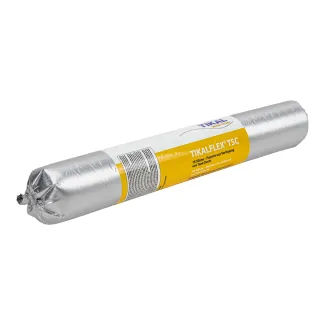
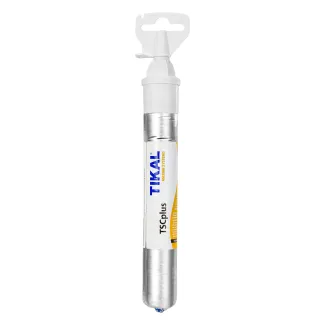
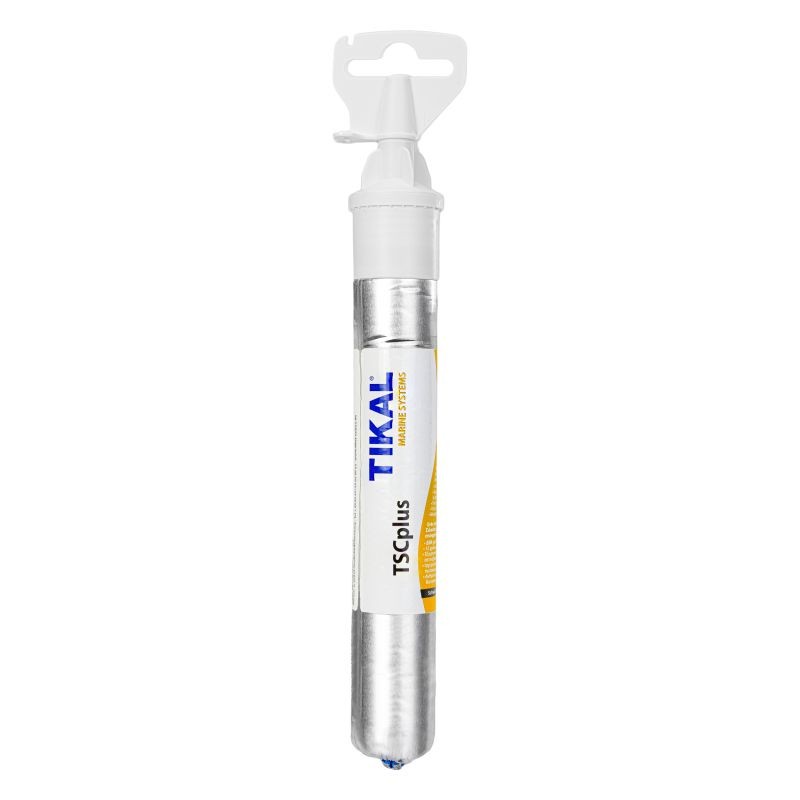
Tikalflex TSCplus is a high-quality one-component deck seam sealant for sealing and caulking teak decks. This product is regarded as one of the absolute top solutions on the market and has been used successfully for over 25 years in professional yacht building and refit projects, including mega- and superyachts.
The deck seam sealant forms a strong, permanently flexible seal without air bubbles or unsightly voids. Thanks to its excellent flexibility, TSCplus moves with the teak and will not shrink, crack, crumble or dry out. Tikalflex TSCplus is non-corrosive and offers outstanding resistance to UV radiation, sunlight and salt water. In addition, the sealant is resistant to chemicals, staining, mould and discolouration, ensuring a clean, long-lasting finish.
Once cured, the deck seam sealant can easily be sanded. It is not suitable for painting. The fast curing time allows the deck to be walked on again the very next day.
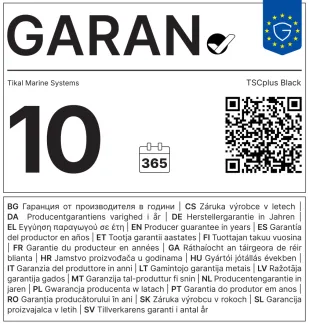
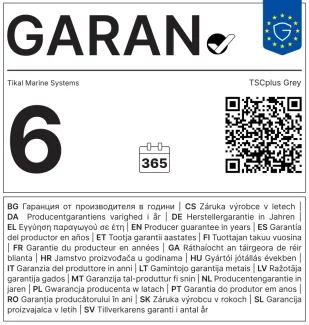
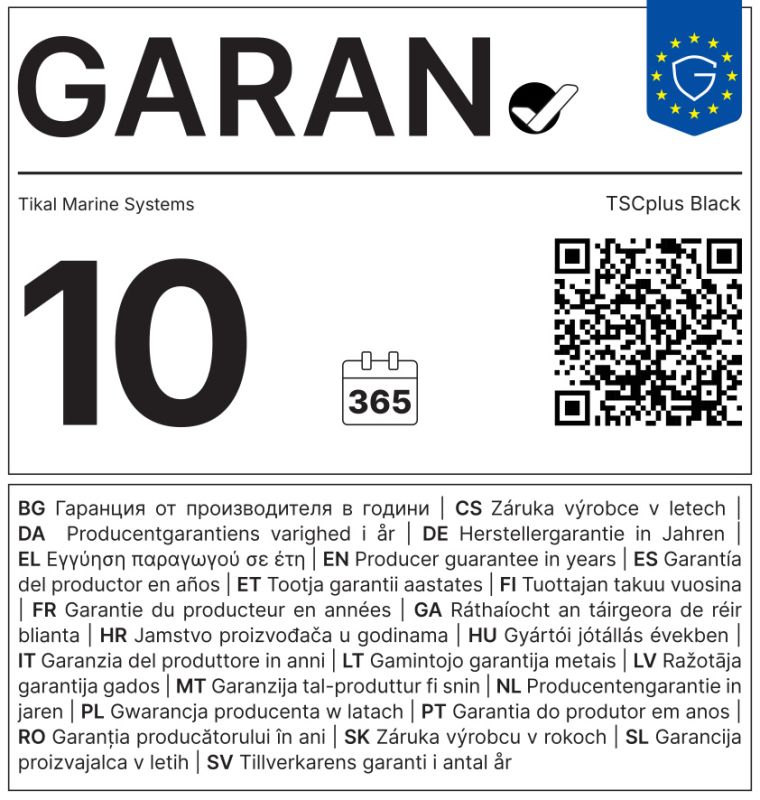
Tikalflex TSCplus is supplied as standard with a 10-year warranty. After registering via the Tikal website, you will receive a warranty certificate.
Read the detailed Tikalflex TSCplus application instructions before starting your project. These provide all the necessary steps to achieve the best result.
| Contents | Packaging |
| 100 ml | Mini sausage |
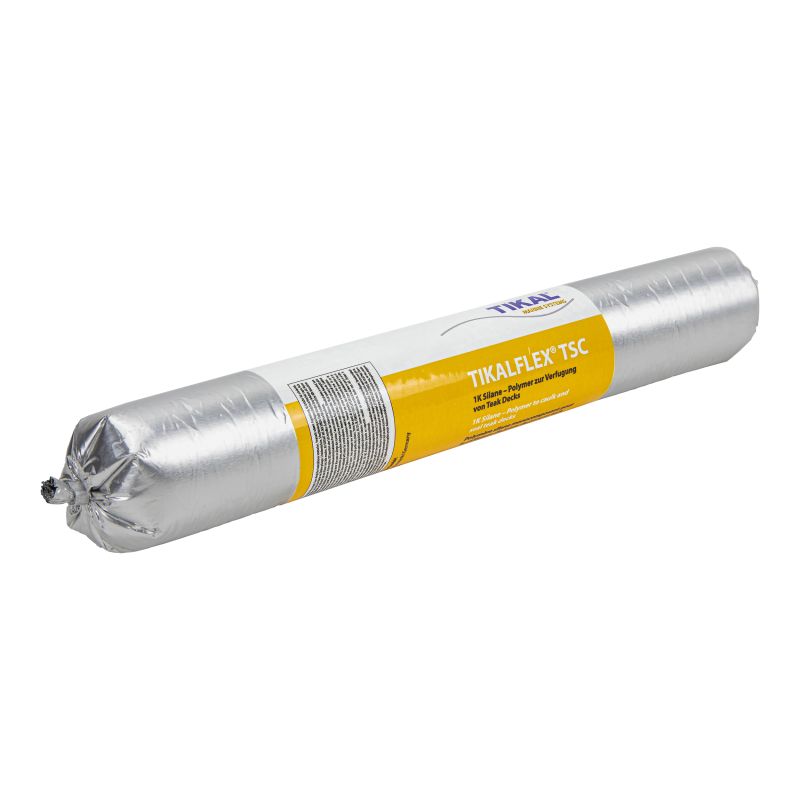
| 600 ml | Sausage |
Colour: black
Base: silane polymer
Skin formation time: 5 minutes
Tack-free after: 25 minutes
Sandable: yes
Curing: 3 mm/24 hours
Hardness: Shore A39
Density: 1.25 g/ml
Tensile strength: 1.7 N/mm2
Adhesion to teak: 3.00 N/mm2
Elongation at break: 670 %
Temperature resistance: - 30°C to +150°C
Application temperature: +5°C to +45°C
Application gun: caulk gun for 600 ml sausages
Shelf life: 18 months
The key technical properties clearly listed in one place.
The recommended application temperature range indicates the conditions under which the product can generally be applied and cured properly. Three temperatures matter:
A cold substrate can cause condensation and affect adhesion. At higher temperatures, two-component products may react faster, reducing their working time. Check the dew point and follow the product instructions.
The chemical base describes the chemistry of an adhesive, sealant, resin or coating, such as epoxy, polyester, polyurethane, (methyl)methacrylate or a hybrid polymer. It affects curing, flexibility and adhesion. Products with the same chemical base are not necessarily suitable for the same applications.
Density describes the mass of a material per unit volume. Values may be given in g/cm³, kg/L or kg/m³; 1 g/cm³ equals 1 kg/L. For example, one litre of a liquid with a density of 1.2 kg/L weighs approximately 1.2 kg. Density helps convert between weight and volume, but it can vary with temperature.
Hardness describes a material's resistance to indentation. For silicone rubber and other elastomers, the Shore A scale is commonly used: Shore A 15, for example, is softer than Shore A 40. Harder plastics may be rated on the Shore D scale. The number belongs to its Shore scale and is not a unit like MPa; values on different scales cannot be directly compared.
The period for which an unopened product remains usable under the specified storage conditions. Check whether the period starts from the manufacturing date or another date. Shelf life may be shorter after opening, especially for products sensitive to air or moisture.
The time after application during which a skin forms on the surface of a sealant. Tool the joint before the skin develops, as adjusting it afterwards can affect the finish or adhesion. Temperature and humidity influence this time.
The time until the surface no longer feels tacky to a light touch. The material underneath may still be soft, so tack-free does not mean fully cured or ready for heavy loading.
Elongation at break indicates how much a material can stretch during a tensile test before it breaks. It is expressed as a percentage (%) of the original length. At 100% elongation, the material has doubled in length just before breaking. A high value indicates a high ability to deform, but not how much force is needed.
Tensile strength is the maximum tensile stress a material can withstand during a tensile test before failure. It is usually expressed in MPa (megapascals) or N/mm² (newtons per square millimetre); 1 MPa = 1 N/mm². Under comparable test conditions, a higher value means greater resistance to tension. In composites, fibre orientation also affects the result.
Heat resistance describes the temperature a material can withstand after correct processing and curing, usually expressed in degrees Celsius (°C). Continuous exposure is different from a brief temperature peak, and mechanical loading may also affect the limit. Heat resistance is not the same as the temperature at which the product can be applied.
Useful additions for your project.