Recommended

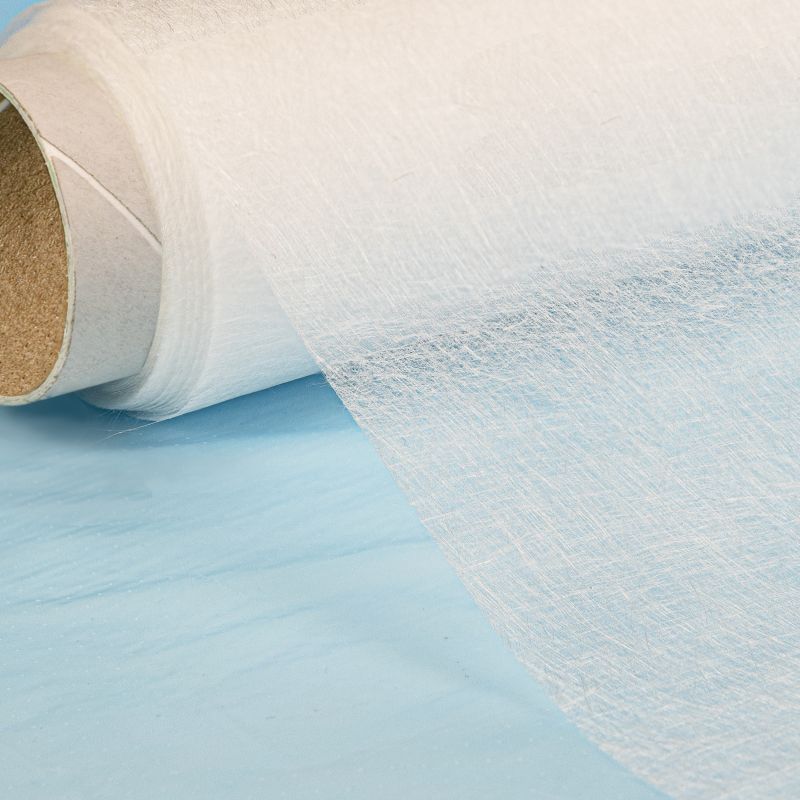
Glass veil, also known as fine surface tissue, is applied directly behind the gelcoat to create a resin-rich barrier. This prevents the fiber structure from becoming visible on the surface. This phenomenon is known as "print-through," where the fiber pattern shows through the gelcoat and causes a light relief. This is often undesirable for products with a high-quality surface finish, such as molds.
Additionally, glass veil is frequently used as the final layer in lamination to achieve a smoother and more even surface. Finally, the veil serves to build a resin-rich protective layer that enhances the product's chemical resistance. In such applications, vinyl ester resin is typically used. Glass veil is also excellently suited for use with polyester and epoxy resin.
| Application method | Layer thickness | Resin consumption |
| Hand lay-up | 0.10 mm | approx. 85 gr/m2 |
| Wet Bagging | 0.05 mm | approx. 35 gr/m2 |
| Vacuum injection | 0.04 mm | approx. 27 gr/m2 |
Weight: 30 gr/m2
Weave type: spunbond
Weave width: 100 cm
Compatible with: polyester resin, vinylester resin, epoxy resin
Packaging:
Delivery: folded in a bag or roll-packed
The key technical properties clearly listed in one place.
Useful additions for your project.