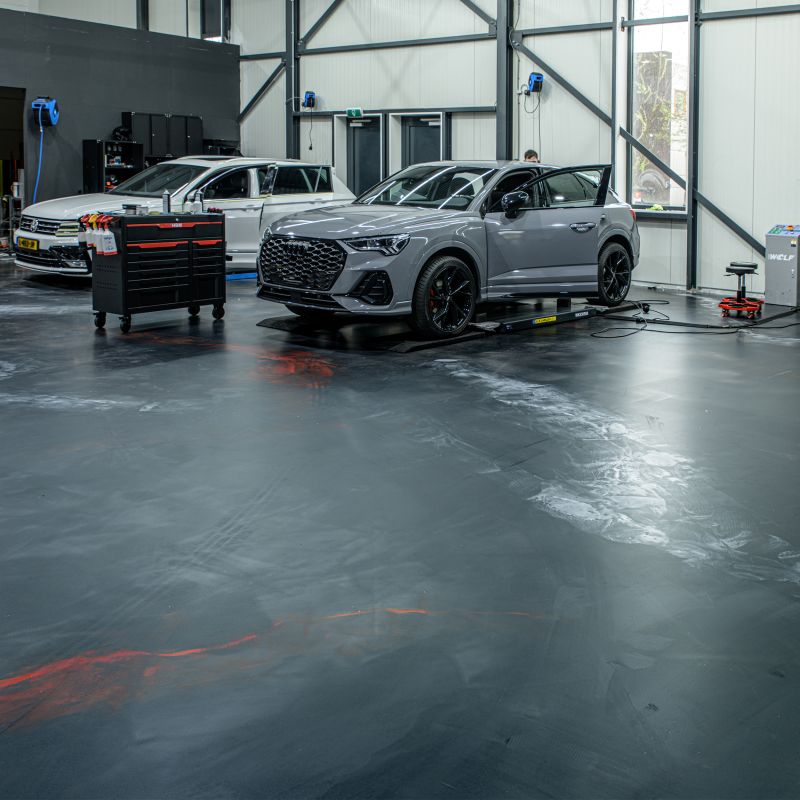

RESION Epoxy cast floor
- High mechanical resistance
- Resistant to heavy loading
- Including instructional video
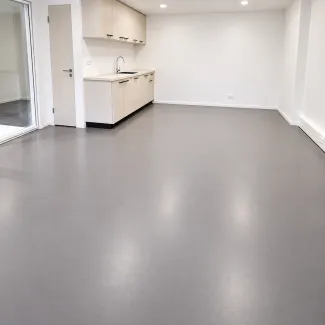
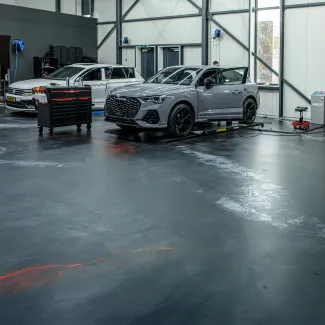
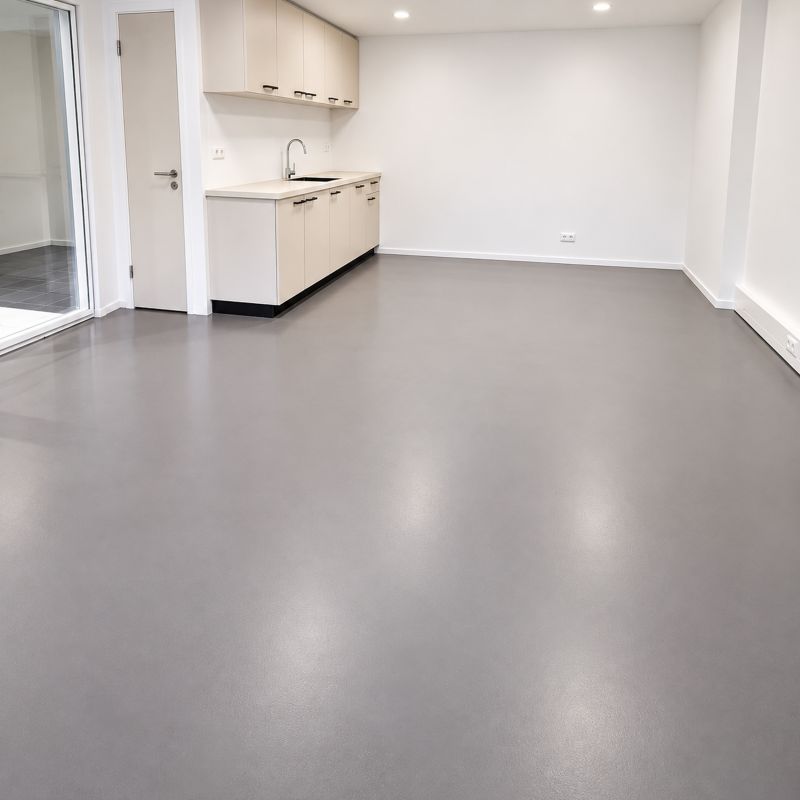
An epoxy screed is the ideal product for creating a smooth and elegant floor. An epoxy floor is suitable for a garage, shed, or workshop floor, for example. It's no coincidence that this type of floor is resistant to high loads, acids, and chemicals, and is available in almost any RAL colour. A self-leveling epoxy floor therefore always blends in perfectly and is easy to apply. A single layer already creates a hard-wearing floor with a thickness of roughly 1.4 millimetres. For everyday use, a second layer is therefore not necessary.
Benefits of RESION epoxy cast floors
- Easy to apply in any room.
- Seamless and available in all RAL colours.
- Strong and impact resistant.
- High resistance to acids and chemicals.
- Resistant to heavy loads.
Quantity needed
Before you start working on your screed, it's really important that you have enough material. The average consumption of this product is approximately 2.3 kg/m² (layer thickness of approximately 1.4 mm). This may vary depending on the substrate. Check the product properties for consumption on a rough and leveled surface. The table below shows you the packaging required for your new self-leveling screed.
| Packaging | Surface |
| 11.6 kg | 5 m2 |
| 26.5 kg | 11,5 m2 |
How to lay a self-leveling epoxy screed
Applying epoxy flooring to a garage, workspace, or living space is easier than it might seem at first glance. First, make sure the floor has been properly pre-treated with a primer. For tile and wood floors, we've written special guides to help you prepare properly. Is the floor pre-treated? Watch the video or follow the quick instructions below.
Directions for use
- Make sure the surface is free from dirt and dust.
- Apply the RESION Epoxy floor primer with a fleece roller and let it cure for about 20 hours.
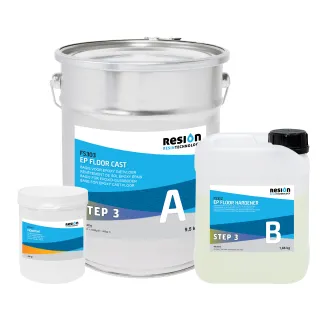
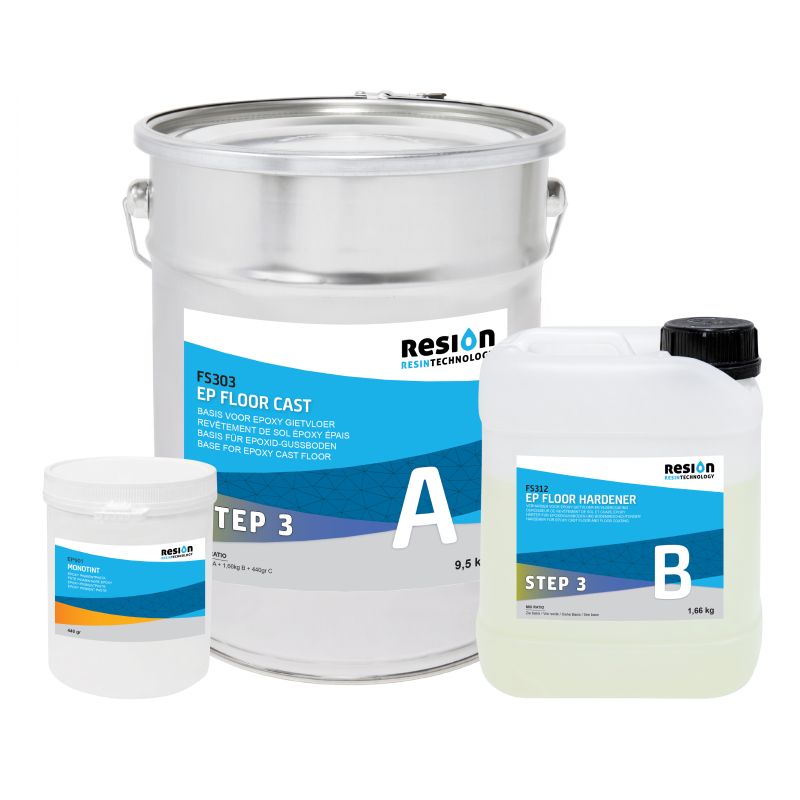
- Mix the pigment paste with the screed (A) and add the hardener (B). Mix everything well with a spiral mixer.
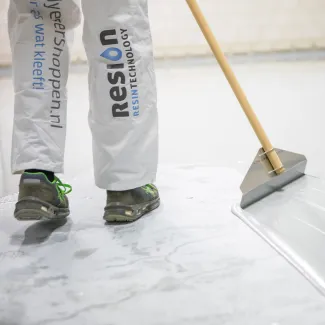
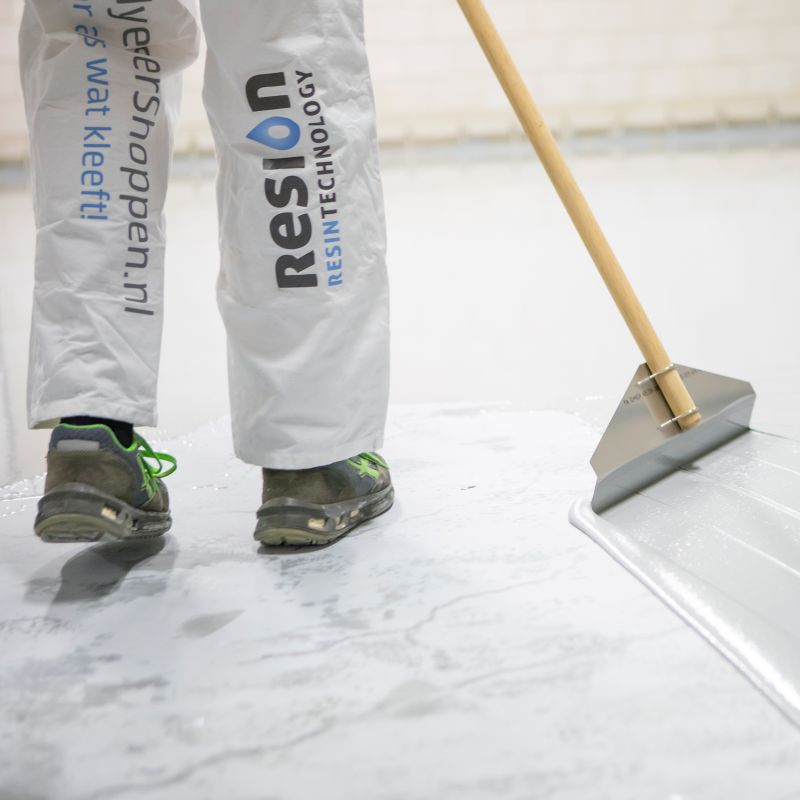
- Once the epoxy is well mixed, you can start pouring. Pour sections onto the floor and spread the casting compound with a squeegee.
- Let it cure for at least 48 hours before the floor is walkable. After 72 hours, the floor can be heavily loaded. After at least 7 days, the system is chemically resistant and
moisture resistant.
Specifications
| Packaging | Basis (FS303) | Hardener (FS312) | Pigment |
| 11.6 kg (5 m2) | 9.5 kg | 1.66 kg | 440 gr |
| 26.5 kg (11.5 m2) | 21.7 kg | 3.8 kg | 1 kg |
Minimum processing temperature: 10 ℃
Consumption on a levelled floor: 2.3 kg/m2 (layer thickness approx. 1.4 mm)
Layer thickness: 1.4 mm per layer applied with the BILTEC squeeguee for screeds
Surface texture: smooth
Get cracking!
Now that you know everything about epoxy flooring for the garage, bathroom and living room, it's time to realise your own epoxy floor. Simply order the package in the desired colour online and you can start asap. Do you have any questions before you get started? Please check our information centre, where we provide answers to frequently asked questions. Our subject specialists are also happy to help. So feel free to call us at +3185 0220090.
We have a number of recommendations for working safely with polymers. At Polyestershoppen you will not only find the polymers themselves, but you can also purchase all the protective equipment you need from us. If you have any doubts or questions, please contact our customer service. We can give you advice on how to work safely with polymers.
- Installing a Plastic Floor? Everything About Epoxy and Polyurethane Flooring Systems
- Epoxy Tips for a Perfect Bathroom Finish
- What is the Difference Between Epoxy Floor Coating and an Epoxy Cast Floor?
- 5 Benefits of an Epoxy Resin Floor
- DIY Epoxy Pour Floor? Follow Our Step-by-Step Guide!
- Problem Solver: Flooring Systems
- What Are the Differences Between a PU Cast Floor and an Epoxy Cast Floor?