
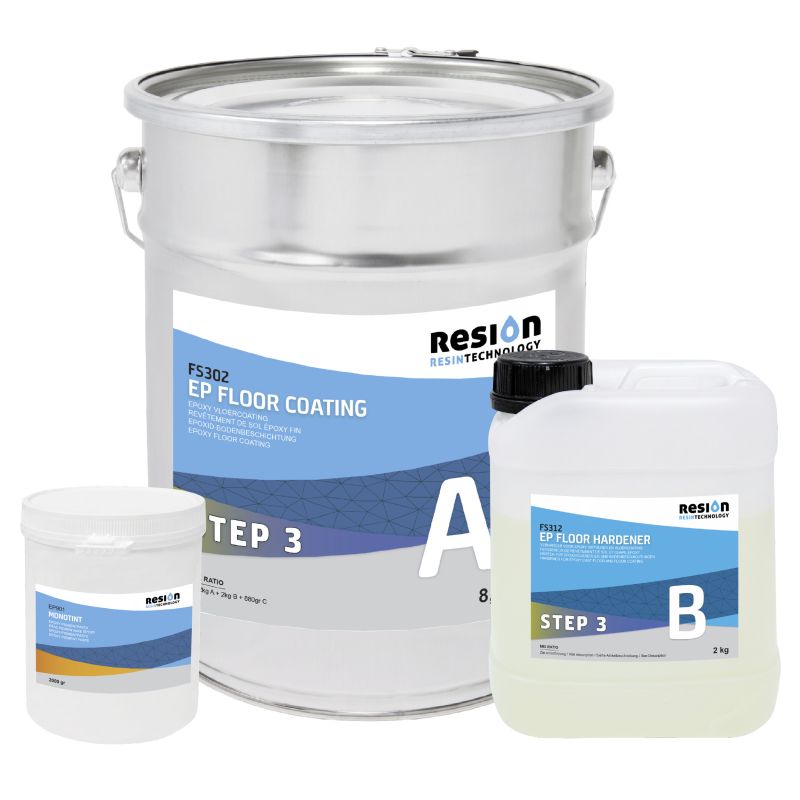


Epoxypigment RAL 1000 groenbeige - 300 gr
UFI: 3A50-5057-T00D-QAVN
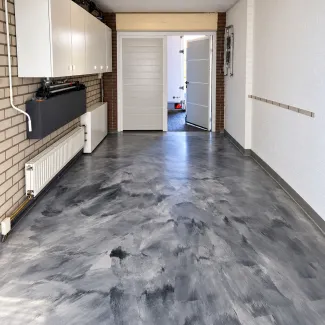
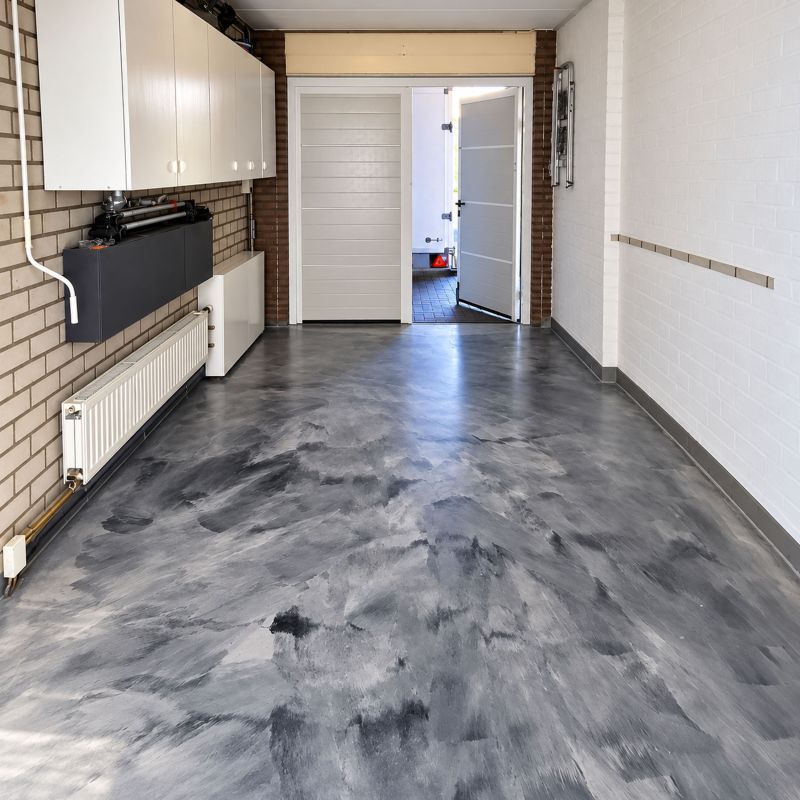
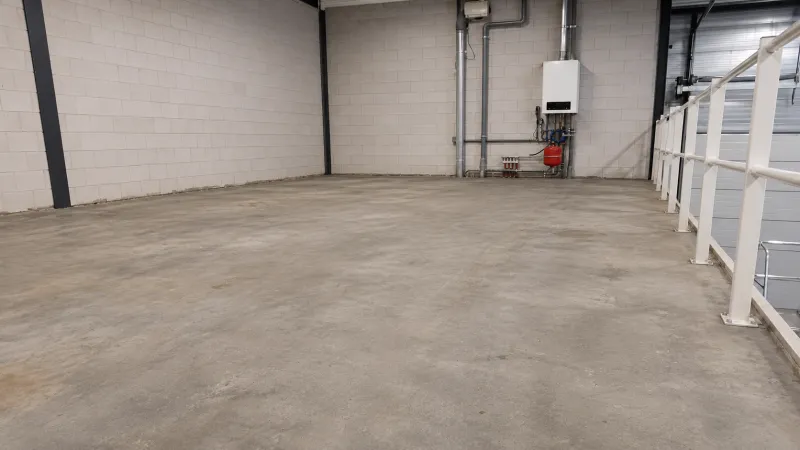
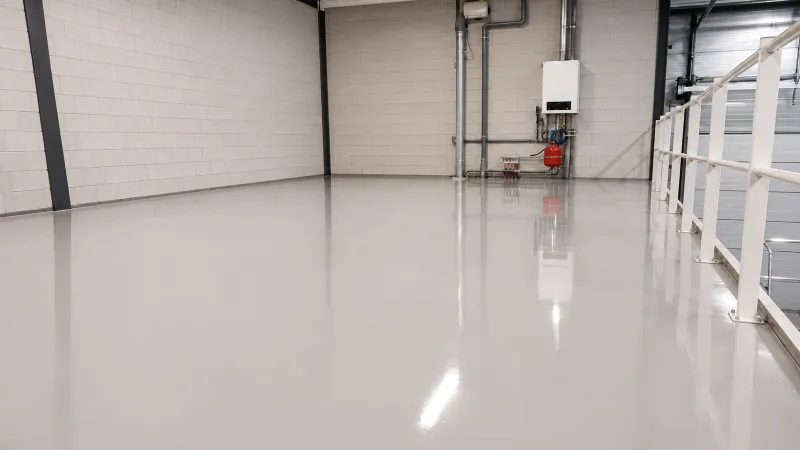
Would you like to apply an epoxy floor coating to your garage, shed or industrial floor? RESION's seamless epoxy floor coating provides a sleek appearance and optimal protection for your industrial floor. RESION Epoxy floor coating is available in virtually every RAL colour and is easy to apply. At Polyestershoppen you will find all the raw materials and auxiliary materials you need to lay your own floor coating!
An epoxy floor coating has a robust appearance, provides optimal protection for the company's floor and is also durable. A single coat of RESION floor coating produces a hard-wearing epoxy floor that is approximately 0.5 mm thick and suitable for heavy-duty use. The application of a two-coat system is therefore not necessary. The floor is scratch and impact resistant, and is highly resistant to acids and chemicals.
Benefits of an Epoxy floor coating:
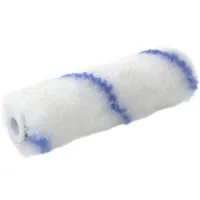
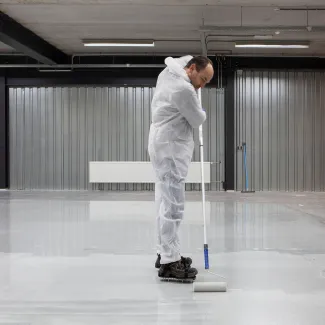
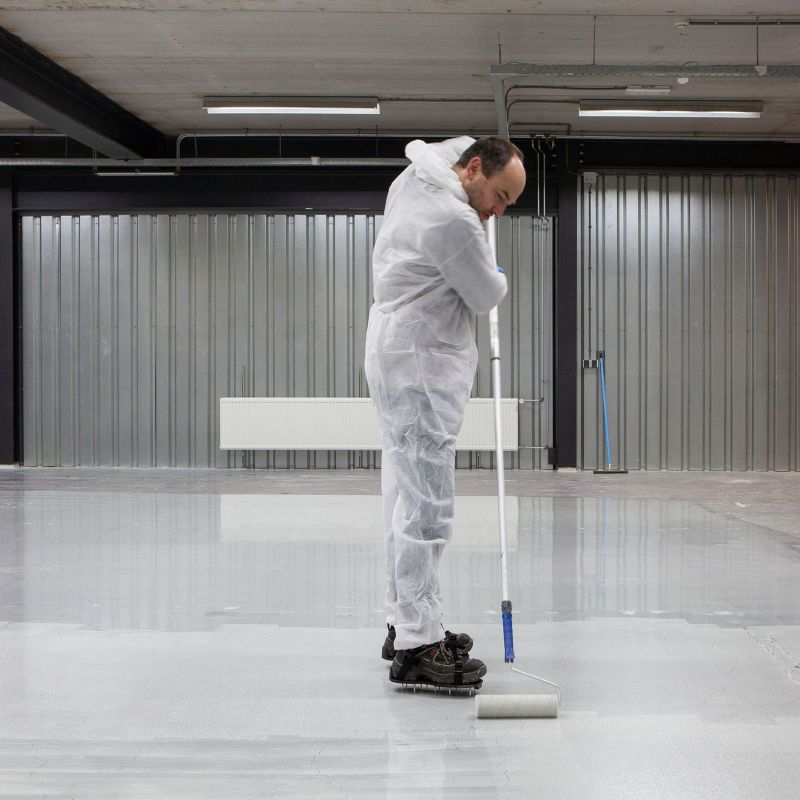
Applying an epoxy floor coating is not complicated and is also easy to do for a do-it-yourselfer! You can easily apply an epoxy floor coating using the following steps. Watch the video below in which Arne shows you how easy it is to apply an epoxy floor coating.
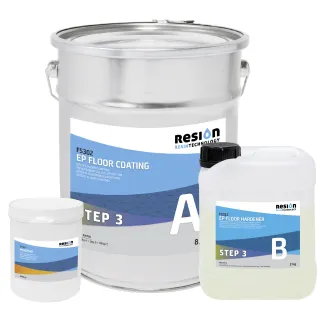
| Packaging | Basis (FS302) |
Hardener (FS312) |
Pigment (EP901) |
| 3,75 kg (4-6 m2) | 2.78 kg | 675 grams | 300 grams |
| 11 kg (15-20 m2) | 8.22 kg | 2 kg | 880 grams |
| 25 kg (33-50 m2) | 18.5 kg | 4.5 kg | 2 kg |
Mixing ratio: 74:8:18 based on weight (floor coating base, pigment paste and hardener)
Minimum processing temperature: 6 ℃
Consumption on a levelled floor: 500 gr/m2
Consumption on rough concrete/cement: 750 gr/m2
Layer thickness: 0.5 mm per applied layer
Processing time: 35 minutes (at 20°C)
Surface structure: roller structure
At Polyestershoppen.com you can easily order all materials for an epoxy floor coating. If you order before 5:00 PM CET (Central European Time), your order will be shipped the same day!
Do you have any questions about floor construction or repair? We are experts in epoxy and epoxy flooring and are happy to advise you. View the frequently asked questions in our information centre or call one of our specialists free of charge on +3185 0220090.
The key technical properties clearly listed in one place.
The resin family or system that a hardener, additive or reinforcement material can be combined with, such as epoxy, polyester or vinyl ester. Compatibility depends on the complete system, not just the general resin type.
The recommended layer thickness is the thickness at which you apply each coat of paint, coating or resin. It is usually given in micrometres (µm) or millimetres (mm).
For a coating with 60% solids by volume, a wet film of 100 µm will theoretically produce a dry film of approximately 60 µm. Film thickness affects coverage, protection and drying. Always check whether the manufacturer specifies wet or dry film thickness.
Mixing ratio indicates how much of each component is needed, for example resin (A) and hardener (B). A ratio of 100:50 by weight means 100 grams of A to 50 grams of B; by volume you might use millilitres. Weight and volume ratios are not necessarily the same because the components may have different densities. Accurate measuring is important for proper curing.
Minimum application temperature is the lowest temperature at which a product may be used according to the manufacturer. The limit can apply to the air, substrate and product itself.
At lower temperatures, resins and coatings can become thicker and cure more slowly. Moisture can also condense on a cold substrate and reduce adhesion. Check the dew point and measure the surface temperature before starting. A longer drying time does not automatically make application below the specified minimum acceptable.
The visible or tactile texture of a surface, such as smooth, rough or patterned. Surface texture can affect grip, appearance and preparation for a subsequent layer.
Working time is the period during which a product remains workable after mixing or activation, usually given in minutes at a specified temperature, often 20 °C. With reactive resins, the chemical reaction also continues in the mixing container, and larger quantities or higher temperatures can shorten this time. Working time is different from gel time and full curing time.
Read the warnings and use appropriate protective equipment before handling the product.
UFI: 3A50-5057-T00D-QAVN
UFI: SH60-70TT-300A-Y41J
UFI: QS60-R0W0-000T-X4SR
Useful additions for your project.