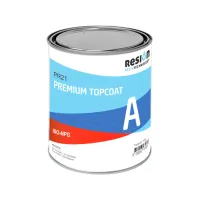
A sleek, glossy finish is not only great to look at, but also extremely important for protecting your boat. Polyestershoppen has recently added vinylester topcoat to its product range. Naturally, this is supplied quickly from stock in all RAL colors. But what is actually the difference between a polyester topcoat and a vinylester topcoat? What types of topcoat exist? And above all: which one do you use when?
Quality above all
Polyester gelcoats and topcoats are available in various quality grades. In large production environments, the cheapest option that just meets technical requirements is often chosen. At Polyestershoppen, we make a different choice. Because we don't always know exactly what a product will be used for, we supply high quality as standard, suitable for use on boats. That way, you can be sure you are making the right choice, whether it's a repair, refit, or new project.
Different types of gelcoat and topcoat
There are quality differences in gelcoat and topcoat: Orthophthalic, Isophthalic, and Iso-NPG.
- Orthophthalic
An entry-level variant. Attractive in terms of price, but with basic performance. Heat resistance, gloss, color fastness, and chemical resistance are at an average level. Suitable for applications where price is more important than maximum performance. - Isophthalic
The mid-tier option. This variant has better chemical resistance than orthophthalic and is therefore more commonly used in boats and swimming pools. A good balance between price and performance. - Iso-NPG
The absolute top tier within polyester! These gelcoats and topcoats score extremely high on:- Gloss level.
- UV and color fastness.
- Water and chemical resistance.
- Impact resistance.
Iso-NPG topcoat is ideal for boats, swimming pools, hot tubs, ponds, and other applications where appearance and durability count.
And where does vinylester fit in?
Vinylester is actually a hybrid resin: it combines properties of polyester with those of epoxy or novolac structures. That offers distinct advantages along with a few points to consider.
Advantages of vinylester
- Very high chemical resistance.
Even acids and aggressive substances hardly affect vinylester. - High temperature resistance.
Temperatures up to 120 °C are no problem. - Excellent impact resistance.
Even better than Iso-NPG polyester. Ideal for heavily loaded components.
Disadvantage of vinylester
- Less colorfast and UV-resistant.
Due to the presence of epoxy groups, vinylester can yellow faster under the influence of sunlight. Are color and appearance important? Then Iso-NPG polyester is the better choice.
What do you use vinylester topcoat/gelcoat for?
Vinylester is mainly used where technical performance is more important than color. Think of:
- Underwater hulls of boats.
- Bilges and engine rooms.
- Storage tanks for chemicals or animal feed.
- Concrete protection in acidic environments (e.g., feeding passages in barns).
- Chemically resistant floors in factories and laboratories.
| Polyester (Iso-NPG) | Vinylester |
|
| Adhesion | Excellent | Excellent |
| Curing | Fast | Fast |
| Gloss | High | High |
| Temperature | ● | ●● (up to 120°C) |
| Chemical resistance | ●● | ●●● |
| UV & color | ●●● | ● |
| Impact resistance | ●● | ●●● |
Legend: ● = good, ●● = very good, ●●● = excellent
Conclusion: which topcoat do you choose?
- Sleek appearance and long-lasting color retention?
→ Choose polyester topcoat (Iso-NPG) - Maximum chemical resistance and impact strength?
→ Go for vinylester topcoat
Need advice on the right products? Our specialists are happy to think along with you and help you make the right choice. So your boat not only looks great, but is also optimally protected.