Recommended

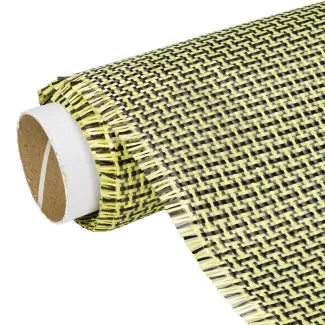
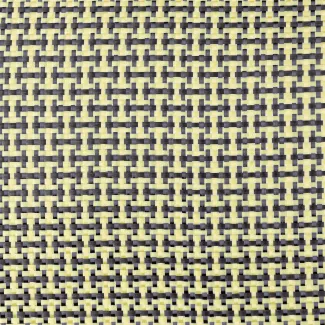
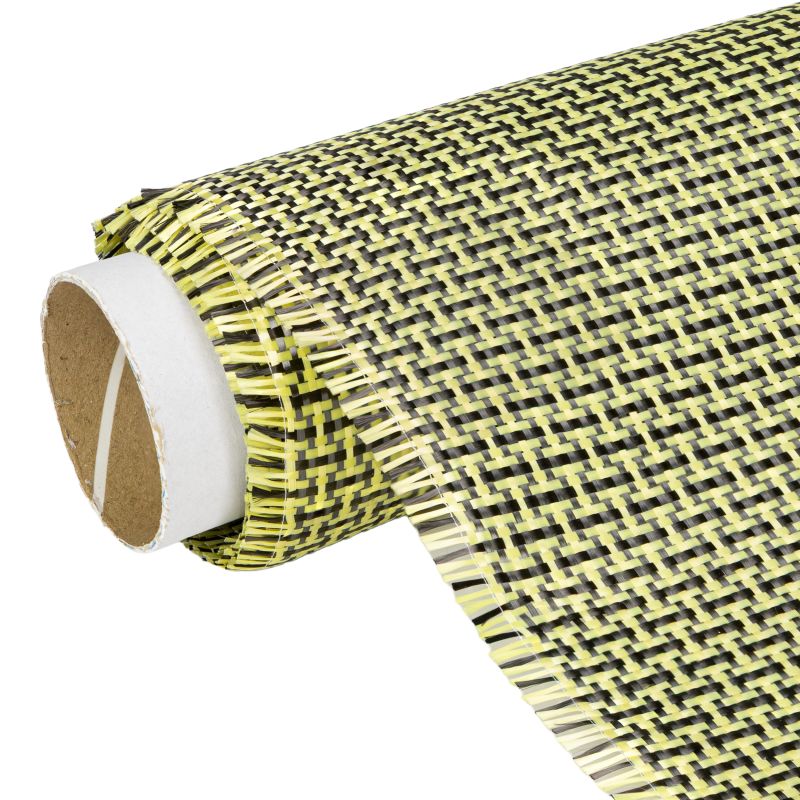
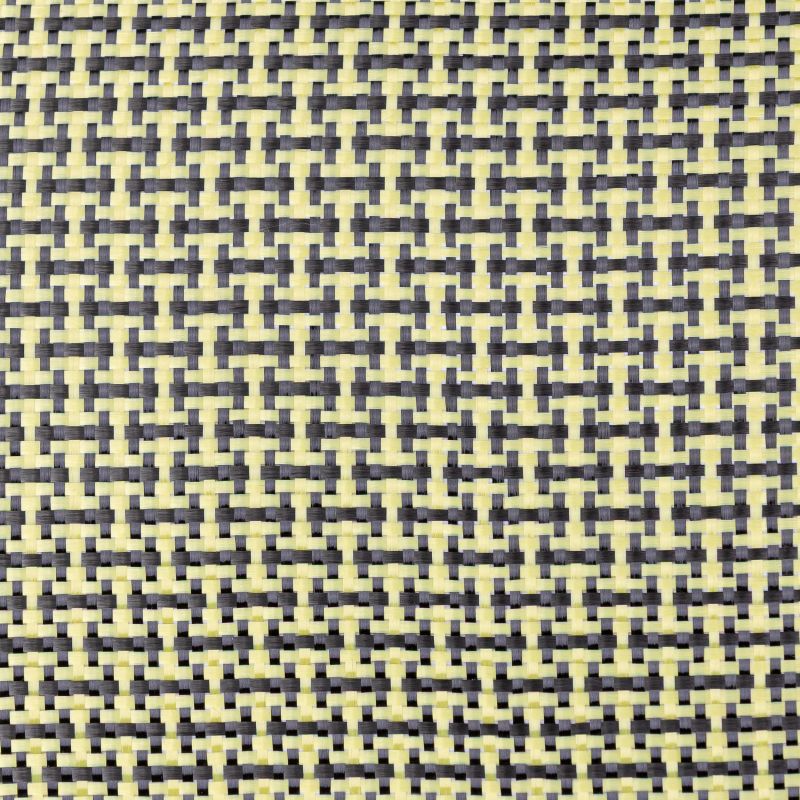
This hybrid fabric combines the advantages of both carbon and aramid, so it has better stiffness and better residual resistance to point loads. As a result, it is often used in tanks, for example. You can also laminate one or more layers of kevlar between glass fabrics or carbon fabrics. You can easily cut the carbon aramid fabric with special aramid shears.
The black carbon and yellow aramid give this fabric a unique look!
| Application method | Layer thickness | Resin consumption |
| Hand lay-up | 0.37 mm | approx. 256 gr/m2 |
| Wet Bagging | 0.29 mm | approx. 179 gr/m2 |
| Resin Infusion | 0.27 mm | approx. 165 gr/m2 |
The key technical properties clearly listed in one place.
Fibre type affects a composite's strength, stiffness, toughness and weight. Common reinforcement fibres include:
Final properties also depend on fibre orientation, fabric type, resin content and laminate quality.
The technical product category, such as primer, resin, hardener or cleaner. It explains the product's purpose and helps you find other products with a similar function.
The product's dimensions, usually shown as length × width × height or another product-specific order. Check whether the measurements describe the outside, inside or usable space, especially for containers and moulds.
The measurement across a product from one side to the other, for example for rolls, panels or fabrics. With rolled materials, the usable width may differ from the overall width.
Areal weight is the weight of one square metre of dry reinforcement, expressed in g/m² (grams per square metre). For example, 200 g/m² glass fabric contains 200 grams of dry fibres per m², without resin. Areal weight helps with reinforcement selection and resin consumption estimates, but it is not the final laminate thickness.
Useful additions for your project.