
Polyester fibre putty
At a glance
- Fills holes and cracks
- Easy to process
- Powerful result
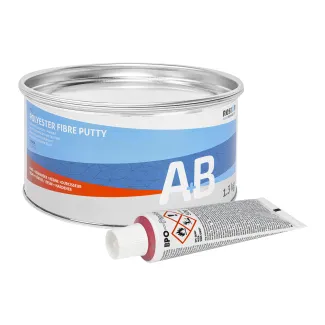
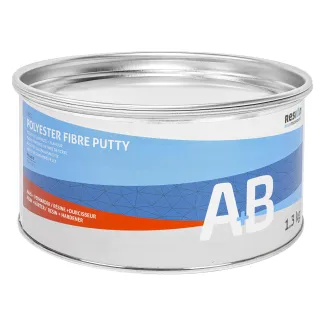
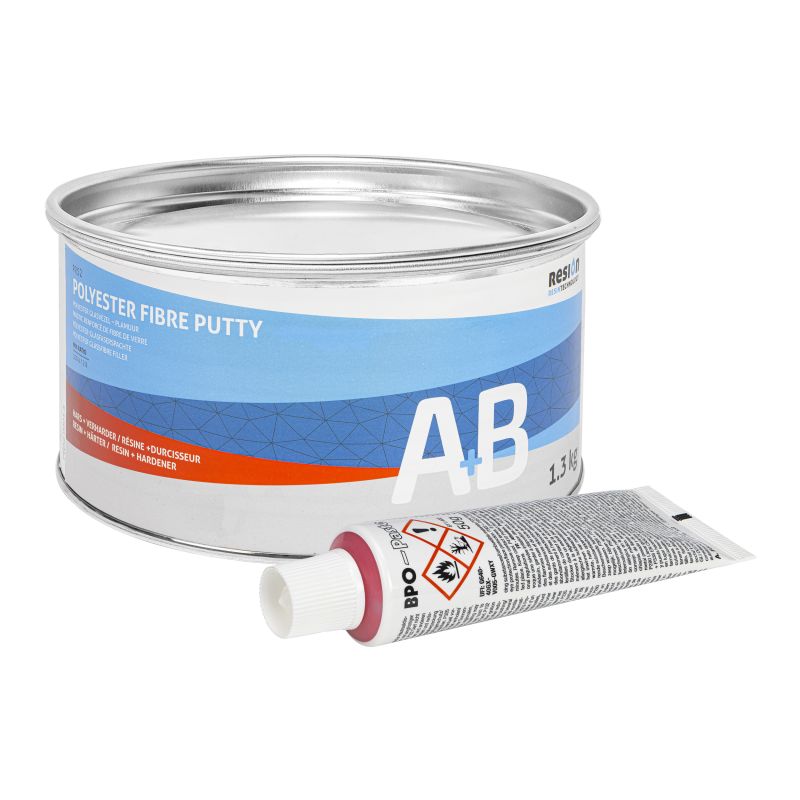
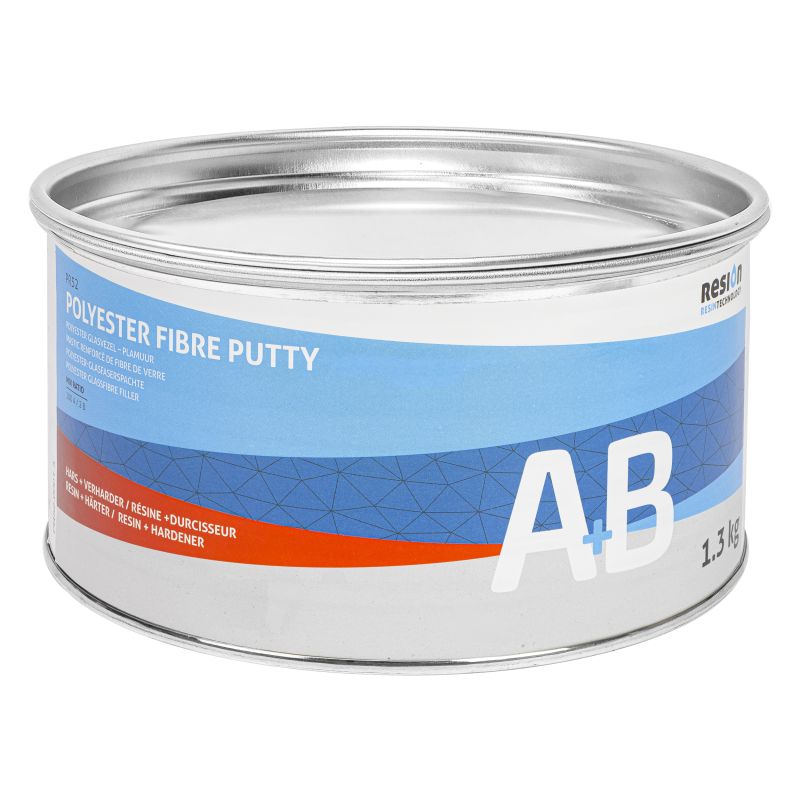
Polyester fibre putty consists of polyester resin mixed with glass fibres. The two-component glass fibre filled polyester putty is ideal as reinforcement or filling of rust affected metal sheets. Bonding of wood, polyester and stone. Due to the fibres, the fibre putty is highly resistant to cracking and is sandable after only 20 minutes.
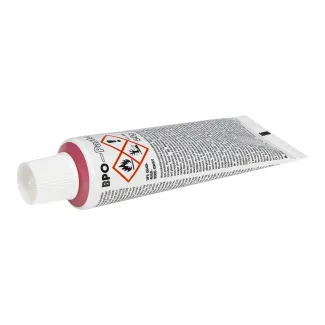
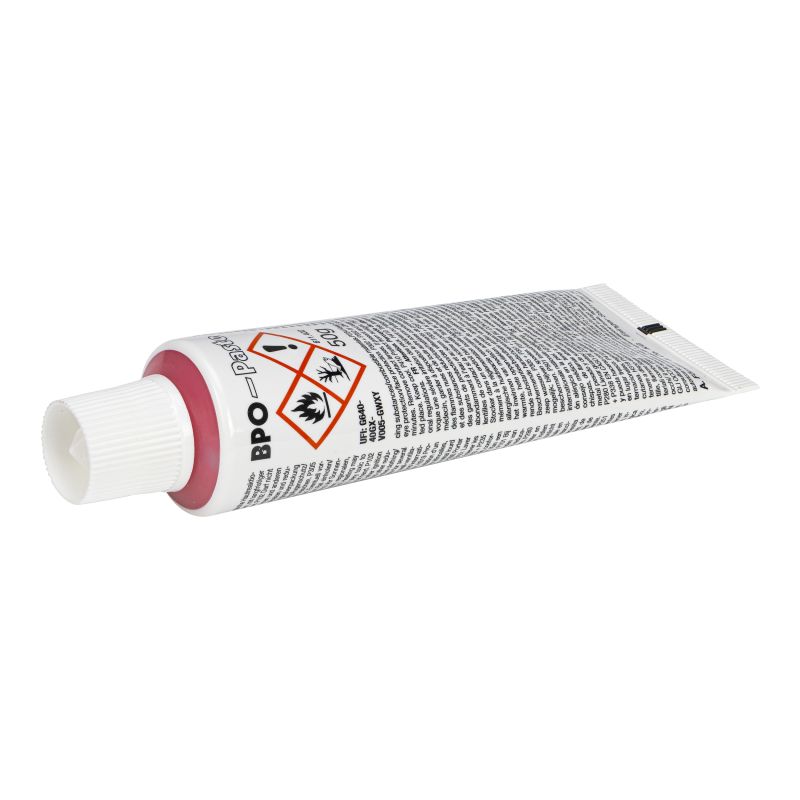
Polyester fibre putty comes with a tube of BPO hardener to process the putty. Prepare the polyester fibre putty on a putty mixing board and process it with a putty knife or a Japanese spatula.
Directions for use of 2K polyester fibre putty
Polyester fibre putty is easy to use.
- The substrate must be dry and free from dust and grease.
- Mix the paste with 2-3% BPO hardener.
- Apply the putty with a spatula or a putty knife.
- After 20 minutes, the putty can be sanded off.
Fibreglass filler remains slightly tacky on the surface to improve adhesion of the finishing filler. Once cured, the filler is resistant to temperatures up to 80°C.
Product properties
The key technical properties clearly listed in one place.
- Article number
- POL000024
-
The technical product category, such as primer, resin, hardener or cleaner. It explains the product's purpose and helps you find other products with a similar function.
- Putty
-
The tasks a product is intended for, such as laminating, casting, bonding, sealing or protecting. Products intended for the same application can differ considerably in processing, curing time and final properties.
- Putty
-
The recommended application temperature range indicates the conditions under which the product can generally be applied and cured properly. Three temperatures matter:
- Air: the temperature in the workshop or outdoors.
- Substrate: the temperature of the surface being treated.
- Product: the temperature of the resin, adhesive or coating itself.
A cold substrate can cause condensation and affect adhesion. At higher temperatures, two-component products may react faster, reducing their working time. Check the dew point and follow the product instructions.
- 5-20 °C
-
Density describes the mass of a material per unit volume. Values may be given in g/cm³, kg/L or kg/m³; 1 g/cm³ equals 1 kg/L. For example, one litre of a liquid with a density of 1.2 kg/L weighs approximately 1.2 kg. Density helps convert between weight and volume, but it can vary with temperature.
- Approximately 1.3 kg/L
-
The period for which an unopened product remains usable under the specified storage conditions. Check whether the period starts from the manufacturing date or another date. Shelf life may be shorter after opening, especially for products sensitive to air or moisture.
- 6-8 months
-
Hardener type indicates which component or substance is needed to cure a resin, adhesive or coating. The mechanism varies with the chemical system:
- Epoxy: usually a specific compatible hardener (component B), mixed with the resin at the stated ratio.
- Polyester and vinyl ester: often an MEKP initiator that starts the curing reaction. Dosage is normally given as a percentage.
- Two-component polyurethane: uses a compatible second component, often based on isocyanates, as specified for the system.
Hardeners are not interchangeable. Use only the combination, dosage and safety precautions stated by the manufacturer.
- BPO (benzoyl peroxide)
- Net contents
- 1.3 kg
-
Working time is the period during which a product remains workable after mixing or activation, usually given in minutes at a specified temperature, often 20 °C. With reactive resins, the chemical reaction also continues in the mixing container, and larger quantities or higher temperatures can shorten this time. Working time is different from gel time and full curing time.
- Approximately 5-15 minutes (at 20 °C)
-
Viscosity measures how easily a liquid flows, or how thick it is. Dynamic viscosity is usually expressed in mPa·s (millipascal-seconds), sometimes in cP (centipoise); 1 mPa·s = 1 cP. A lower value usually means a more free-flowing liquid, while a higher value indicates a thicker product. Temperature and test method strongly affect the value. Note that mPa·s is different from MPa, which is used to express mechanical strength.
- 40.000 mPa·s
- Colour
- Overig
Safety information
Read the warnings and use appropriate protective equipment before handling the product.
Vezelplamuur verharder | tube 50gr
Recommended protective equipment
Hazard pictograms
Warnings and precautions
Reviews
Frequently bought together
Useful additions for your project.