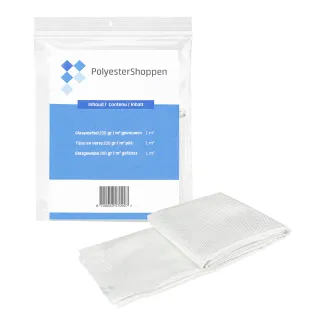
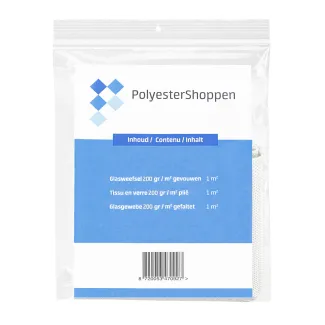
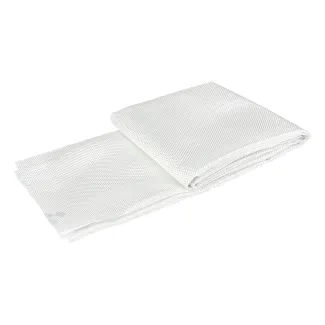
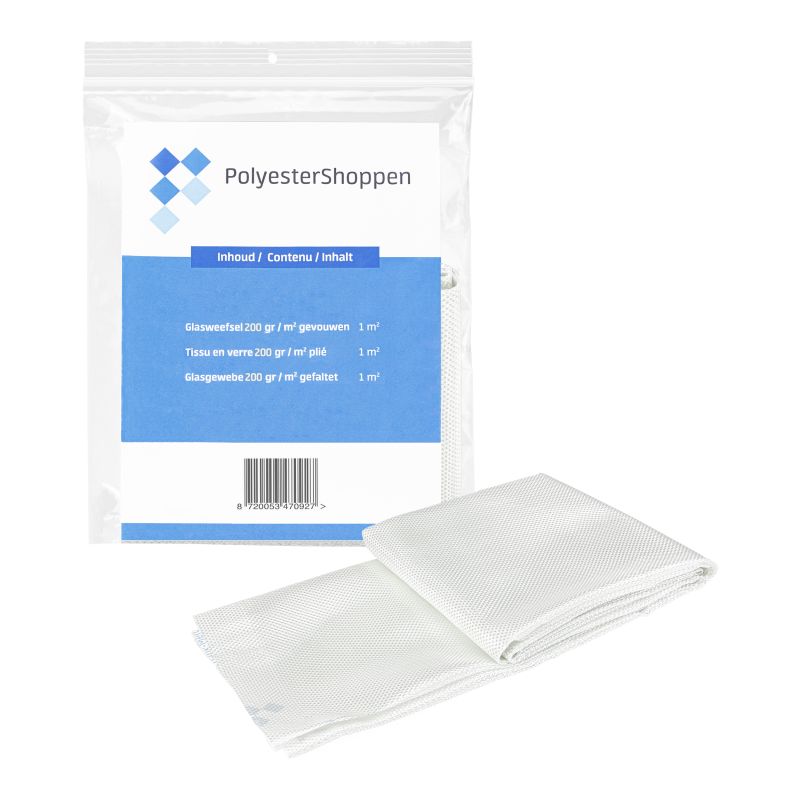
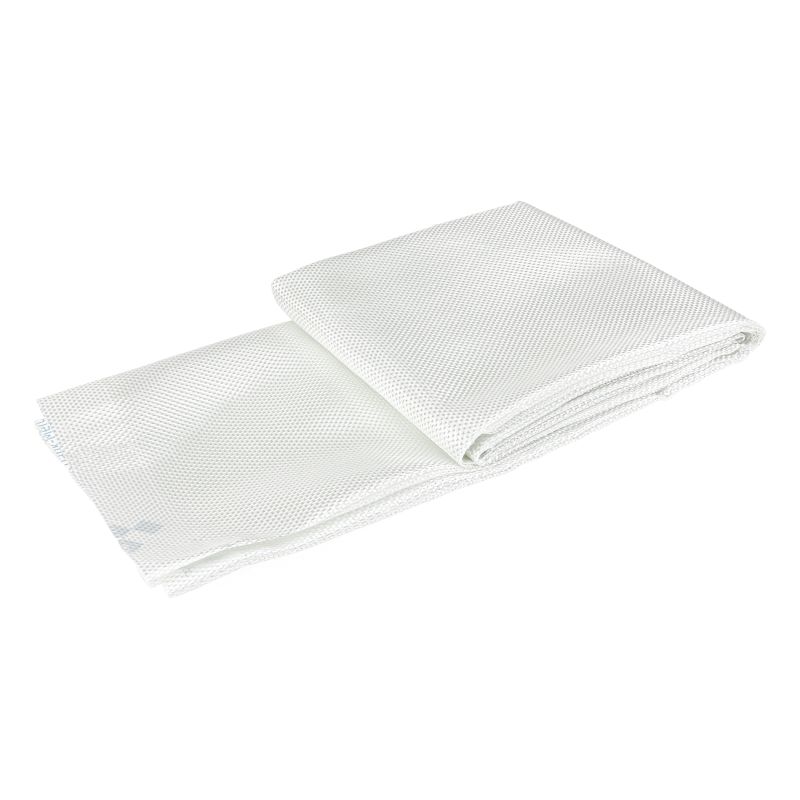

Glass Fibre Fabric 200 gr/m2 (square)
At a glance
- For epoxy and polyester
- Very low resin absorption
- Does not crease, smooth finish
Glass fibre fabric 200 g/m2 is the most commonly used type of glass fibre fabric and offers high tensile strength. Due to the structure of the universal fabric, this type of glass fibre fabric has a higher tensile strength compared to glass fibre mats (CSM). In addition, glass tissue absorbs significantly less resin. This results in a light and solid construction.
The resin absorption is about one and a half times the total weight. So with glass fibre fabric 200 gr/m2 you need around 300 grams of resin per square metre. The square fabric is excellent for use with both polyester resin, vinylester resin and epoxy resin. Use a velor roller to apply the resin to the glass fibre fabric.
Product features Glass fibre fabric 200 gr/m²
- Most commonly used glass fibre fabric.
- Lower resin absorption than glass fiber mat (lightweight result).
- Suitable for straight surfaces.
- Fabric does not crease.
- High tensile strength.
- Available in 80 gr/m2 and 200 gr/m2.
Applications
Glass fibre fabric 200 grams is often used for cladding wooden objects, such as plywood. In addition, you can also use this type of fabric for waterproofing wet rooms. Due to the way the fabric is woven, glass fabric is particularly suitable for straight surfaces. As a result, the square weave does not crease and can be tightly laminated.
Specifications
| Application method | Layer thickness | Resin consumption |
| Hand lay-up | 0.35 mm | approx. 273 gr/m2 |
| Wet Bagging | 0.21 mm | approx. 131 gr/m2 |
| Vacuum injection | 0.20 mm | approx. 120 gr/m2 |
Weight: 200 gr/m2
Weave type: square weave
Width: 100 cm
Compatible with: polyester resin, vinylester resin, epoxy resin
Packaging:
- 1 lm: 100 cm x 1 lm (1 m2)
- 5 lm: 100 cm x 5 lm (5 m2)
- 20 lm folded: 100 cm x 5 lm (4 pieces) (20 m2)
- 20 lm roll-packed:100 cm x 20 lm (20 m2)
- Roll: 100 cm x 100 lm (100 m2)
Suitable for: model making, floors, panels, straight shapes.
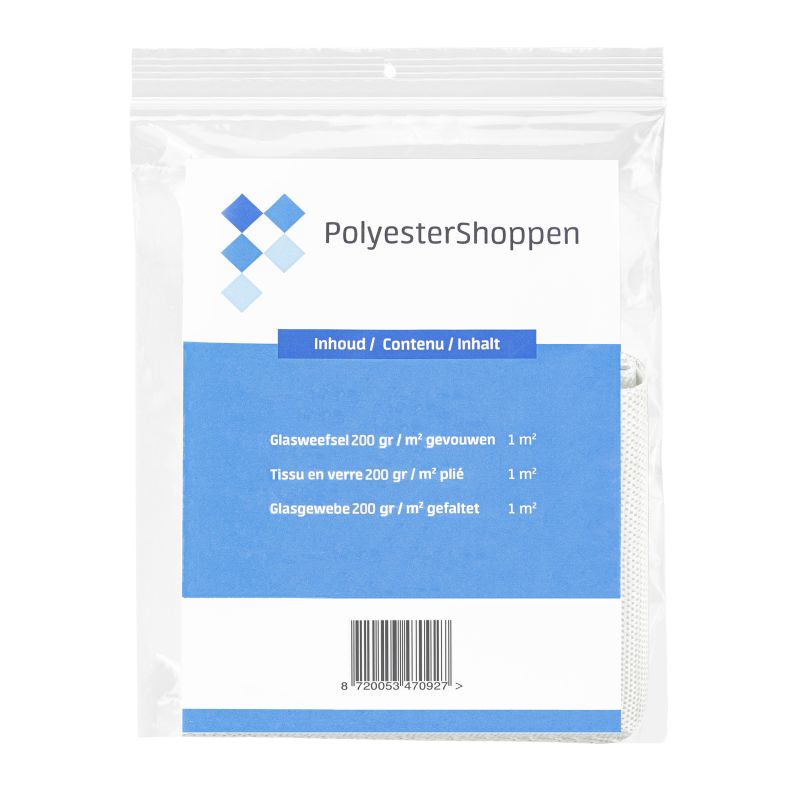
Delivery: folded in a bag or rolled in a tube.
Product properties
The key technical properties clearly listed in one place.
- Article number
- GLA000054
-
The materials, substrates or tasks a product is intended for. A general claim such as 'suitable for plastics' does not mean it works with every type of plastic; the specific substrate and its preparation still matter.
- Polyester, Epoxy, Vinylester
-
Fabric or reinforcement type describes how the fibres are arranged. This affects how easily the material drapes over a shape and which directions it mainly reinforces.
- Plain weave (square weave): the yarns pass alternately over and under each other. The fabric is stable and works well on flat or gently curved surfaces.
- Twill weave: recognisable by its diagonal pattern. It is more flexible than plain weave and drapes more easily over curves.
- Unidirectional reinforcement (UD): the fibres run mainly in one direction, usually marked 0°. It provides reinforcement primarily along that direction.
- Multiaxial reinforcement: fibres are arranged in several directions, for example biaxial (+45°/-45°), Square (0°/90°) or triaxial (0°/+45°/-45°). Fibre bundles are normally held together by stitching rather than a conventional weave.
Note: a Square reinforcement (0°/90°) is not the same as a plain-woven square fabric. Also consider fibre type and areal weight (g/m²).
- Plain
-
The technical product category, such as primer, resin, hardener or cleaner. It explains the product's purpose and helps you find other products with a similar function.
- Glass fabric
-
The measurement across a product from one side to the other, for example for rolls, panels or fabrics. With rolled materials, the usable width may differ from the overall width.
- 100 cm
-
The parts and accessories supplied as standard, such as a complete set of components, separate accessories or a machine with attachments. Product photographs may also show items that are not included.
- Folded in a bag or rolled in a tube
-
Areal weight is the weight of one square metre of dry reinforcement, expressed in g/m² (grams per square metre). For example, 200 g/m² glass fabric contains 200 grams of dry fibres per m², without resin. Areal weight helps with reinforcement selection and resin consumption estimates, but it is not the final laminate thickness.
- 200 g/m²
Safety information
Read the warnings and use appropriate protective equipment before handling the product.
Reviews
Frequently bought together
Useful additions for your project.