You have prepared your boat neatly for the season. Sanded it properly, applied a few coats of antifouling. But after just a few weeks in the water you see the first patches coming loose. Or worse: you brush it on and it fails to bond even during application. That is frustrating, because antifouling is not cheap and you just want a full season without problems.
The good news: antifouling that does not bond or peels off always has a cause. And that cause can almost always be found, fixed, and prevented next time. In this article we list the most common causes together with the steps you need to take to get it right.
The most common cause: insufficient surface preparation
By far the majority of adhesion problems arise from poor surface preparation. Antifouling will not bond to grease, wax, old loose material or a surface that is too smooth. It sounds straightforward, but this is where things most often go wrong in practice.
Always check that the hull is completely degreased before you start. Use a suitable water-based or solvent-based degreaser and work it thoroughly into all corners. Then sand: use abrasive paper in the correct grit (typically P80-P120 grit when removing old layers, 120-180 grit as preparation for new antifouling). The goal is a matt, rough surface that gives the paint film something to grip. Skip this step or do it halfway, and you will pay the price.
Use the most suitable antifouling
It is essential to check in advance that the antifouling you choose is suitable for the hull material. Note: most standard antifoulings contain copper and are therefore absolutely unsuitable for aluminium surfaces; these require specific products (such as biocide-free variants or systems specifically designed for aluminium).
In addition, compatibility between the existing coat and the new coat is crucial:
-
System integrity: For ease and safety it is strongly recommended to use a complete antifouling system (primer + antifouling) from one brand. This guarantees that the chemical compositions are matched to each other.
-
Adhesion: Not all types of antifouling work well on top of each other. If you apply a hard antifouling over an existing coat specifically designed for self-polishing systems, you can expect adhesion problems.
-
Brand combinations: Combining antifouling from one brand with a primer from another? Always check the product data sheets to confirm that these systems are technically compatible. When in doubt, it is wiser to stick to one product line.
Always consult the technical data sheet of the antifouling you are going to use. It states which primer is recommended and which existing systems can be underneath. Not sure? Use a system that comes entirely from the same manufacturer. International and Hempel both have complete systems where primer and antifouling are matched to each other, which takes a lot of the guesswork out.
Always use an antifouling primer on a new or bare surface
On a new boat or after completely removing old antifouling you will almost always need a primer. Applying antifouling directly to gelcoat, epoxy or polyester without a primer is a recipe for problems. The primer provides adhesion between the substrate and the antifouling, and when dealing with an osmosis treatment it also protects the epoxy filler.
Which primer you need depends on your substrate and the type of antifouling. On GRP or gelcoat use a primer such as International Primocon or equivalent. On an epoxy osmosis treatment a two-component epoxy primer, such as International Interprotect, is the appropriate choice. Read the product specifications carefully: there is more difference here than you might think at first glance.
Wrong conditions during application
Applying antifouling in temperatures that are too low, high humidity or direct sunlight is asking for trouble. Most antifoulings have a minimum application temperature of 5 or 10 degrees Celsius and a maximum relative humidity of 85%. Outside those limits the paint does not dry properly, the film cannot form correctly and adhesion is poor.
Work preferably in the morning or on overcast days, when the temperature is stable and the boat is not sitting hot in the sun. Also pay attention to the drying time between coats: this is stated in the data sheet for good reason. Applying the next coat too quickly leads to insufficient adhesion of the underlying coat.
Old, loose antifouling not fully removed
When there are already multiple layers of antifouling on the hull, it is tempting to simply paint a new coat on top. But if the existing layers are already loose, cracked or flaking, you are sticking new paint onto an unstable surface. The result: sooner or later the entire stack comes off.
Look critically at the existing antifouling before you start. Carefully pry a bit loose and look at how many layers are underneath. If there are more than three or four layers, or if you can see the paint is already lifting or flaking, it is wise to strip everything back to bare substrate first. That costs an extra half day of work but saves you weeks of frustration later.
Osmosis: a cause that runs deeper
If antifouling keeps coming loose in the same spots and you also see blisters or bubbles on the hull, osmosis may be to blame. With osmosis, water penetrates through the gelcoat layer and accumulates beneath the surface. This builds up pressure, causing any coating applied over it to come loose, no matter how well you have sanded and primed.
You recognise osmosis by small bubbles in the gelcoat, often filled with an acidic-smelling liquid. If you see this, stop painting and treat the osmosis first. That means cutting open the blisters, cleaning, drying and sealing with an epoxy filler, followed by a barrier coating. Only then does it make sense to apply new antifouling.
Paint not stirred properly before use
This sounds like a minor point, but it is not. Antifouling contains heavy active substances, pigments and biocidal components that sink quickly to the bottom of the tin. A quick stir with a stick is not enough. Stir the paint thoroughly for at least three minutes and keep stirring regularly while painting so the composition remains consistent.
Using a paint mixer? Fine, but also check the bottom and sides of the tin carefully. That is where most of the sediment collects. Antifouling that has not been stirred will bond, but will barely protect because the active substances are unevenly distributed.
How to do it right, step by step
-
Remove loose layers completely with a Gelplane vacuum scraper. Check how many layers are already there and decide whether you can build on top or need to strip back.
-
Sand the surface with the correct grit until you have a matt and even texture.
-
Degrease thoroughly with a suitable degreaser. Allow to evaporate completely before continuing.
-
Apply the correct primer, matched to your substrate and the antifouling system.
-
Stir the antifouling well before use and maintain consistency throughout painting.
-
Work in the right conditions: minimum 10 degrees, less than 85% relative humidity, no direct bright sunlight.
-
Respect the drying times between coats as stated on the data sheet.
Which products are suitable?
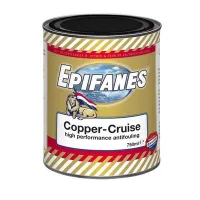
At Polyestershoppen you will find the complete range for a correct antifouling system. Think of International Primocon as a primer on GRP and steel, International Micron LZ or Epifanes Copper-Cruise Antifouling for the topcoat, and degreaser and abrasive paper to prepare the surface properly. Not sure which system suits your boat? Feel free to contact us via WhatsApp or give us a call. We are happy to help you choose the right system so you can get on the water this season without problems.