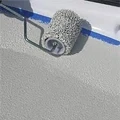
Treadmaster anti-slip mats are the gold standard for a safe, durable, and non-slip deck on your boat. For a strong bond on a polyester deck, the manufacturer recommends using a two-component epoxy adhesive. Epoxy perfectly fills the spaces beneath the profile, is highly resistant to chemicals, and is completely waterproof.
In this article, you will read step-by-step how to easily bond Treadmaster using epoxy adhesive, which adhesive system best suits your project, how much material you need, and what to keep in mind for a professional result.
Which epoxy adhesive should you choose? Variobond or your own mixture?
Before you get started, it is wise to determine which adhesive system you will use. At Polyestershoppen, there are two good options in practice.
Option 1: Variobond Epoxy Adhesive (ready-to-use)
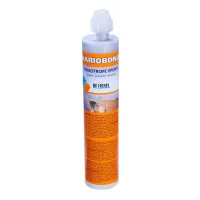
Variobond is a two-component drip-free epoxy adhesive suitable for bonding various materials such as wood, stone, aluminum, polyester, and epoxy laminate. The product is solvent-free, has excellent adhesion, is easy to apply, and has high water resistance, making it ideally suited for a Treadmaster deck installation.
Practical specifications to consider:
- Mix ratio: 2 parts base, 1 part hardener (by weight)
- Coverage: approximately 1 to 3 m2 per kg
- Pot life: approx. 40 minutes at 20°C
- Curing: tack-free after 24 hours, fully cured after 48 hours
- Packaging: available in cartridge (150 ml), tin (1 kg), or bulk packaging (7.5 kg)
The advantage of Variobond is its ease of use. You do not need a separate thickener, and you do not have to mix it yourself. When using the cartridge packaging, it dispenses directly in the correct, non-sagging consistency for vertical or sloped deck sections.
Option 2: Own mixture of epoxy + Stewathix (budget solution)
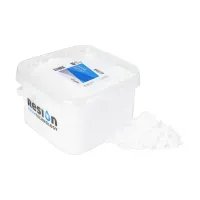
Do you want to save on material costs, or do you already have epoxy resin and hardener at home? Then you can create an adhesive paste yourself by thickening universal epoxy resin with Stewathix. Stewathix is a fine, lightweight thickening agent that transforms epoxy and polyester resins into a stable, thixotropic paste, ideal for strong adhesive pastes, fillet joints, and structural bonding.
Key features of Stewathix:
- Comparable to Aerosil or colloidal silica, but resistant to moisture, making it suitable for changing conditions on a boat.
- Dose approximately 5% by weight for a non-sagging epoxy mass.
- Stewathix thickens epoxy faster than Aerosil and generates less dust, making it cleaner and more pleasant to work with in the workshop.
- Procedure: mix Stewathix with the resin first, before adding the hardener, and adjust the quantity to the desired thickness. For bonding Treadmaster, aim for a consistency similar to ketchup – thick enough not to run, but still easy to spread with a notched trowel.
Materials and coverage
Regardless of which adhesive system you choose, the general coverage and tool list remain the same.
Coverage
- Calculate an average of 300 grams of adhesive per m2 (enough for a standard Treadmaster sheet of 1200 x 900 mm).
- Always allow for a 10% extra margin to account for waste during mixing and application.
Tools
- Notched trowel – use a trowel with fine triangular notches (type A1 or A2, teeth 1.5 to 2 mm deep). Larger notches create a layer of adhesive that is too thick, forcing adhesive out along the edges when pressed down.
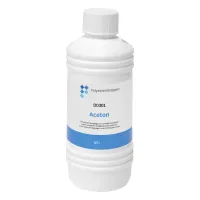
- Degreasing agent (acetone).
- Sandpaper (P80 grit).
- Installation tools (caulking gun, utility knife, pressure roller, etc.)
Bonding Treadmaster to polyester (step-by-step guide)
Follow these four steps carefully for a bond that will last for decades.
Step 1: Preparation and cutting to size
Lay out the Treadmaster sheets on the deck and cut them to size using a sharp utility knife, preferably along a steel ruler. Replace the blade regularly, as Treadmaster is a tough material that dulls blades quickly. Trace the outlines of the sheet with a pencil onto the polyester deck so you know exactly where to apply the adhesive.
Step 2: Thorough surface preparation (crucial!)
Epoxy requires a rough, clean surface for proper mechanical adhesion.
- Sanding: thoroughly sand the polyester deck within the marked lines using P80 grit until the glossy gelcoat layer is completely matte.
- Degreasing: make both the sanded deck and the back of the Treadmaster sheet completely free of dust and grease using acetone.
Step 3: Mixing and applying the epoxy adhesive
- Mixing: mix the two components strictly according to the mix ratio on the packaging (for Variobond: 2 parts base to 1 part hardener). If working with your own mixture, mix the Stewathix into the resin before adding the hardener. Stir gently to avoid air bubbles, ensuring a homogeneous mass.
- Spreading adhesive: apply the adhesive evenly to the polyester deck using the fine notched trowel (A1/A2). The triangular ridges ensure that the adhesive will flow together into a smooth layer under 1 mm thick.
Step 4: Positioning and weighting
- Placement: carefully place the Treadmaster sheet onto the adhesive layer, aligning it within the pencil lines.
- Rolling: roll the sheet firmly with a pressure roller, working from the center toward the outer edges. This forces trapped air out to the sides.
- Weighting: distribute weights (such as sandbags or tiles with a protective cloth underneath) evenly over the sheet. Leave them in place until the epoxy is fully cured (at least 24 hours at 15-20°C).
- Cleaning: immediately remove excess adhesive that squeezes out along the edges using a cloth and a small amount of acetone, before the epoxy hardens.
Important application tips
- Temperature: apply epoxy adhesive preferably at a constant temperature between 15°C and 22°C. Never work in direct sunlight or high humidity (such as evening condensation), as this negatively affects curing.
- Pot life: take the working time of the mixed epoxy into account. For Variobond, this is approximately 40 minutes at 20°C. Therefore, do not mix more adhesive than you can process within that timeframe.
- Consistency when self-mixing: too little Stewathix creates an adhesive that is too thin and will run; too much makes the mixture difficult to comb out. Gradually build up the thickness to a ketchup-like consistency.
Need more information on bonding Treadmaster anti-slip mats?
If you have any questions after reading this article about bonding Treadmaster anti-slip mats, or if you are unsure about the right materials, feel free to contact our specialists.