
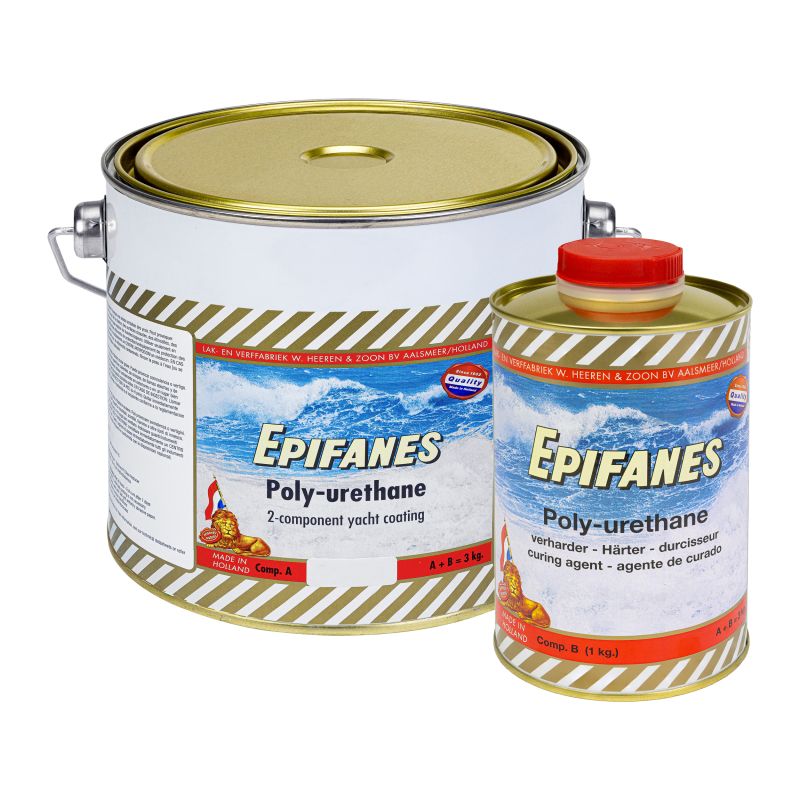
Epifanes Polyurethane Yacht Paint (high-gloss)
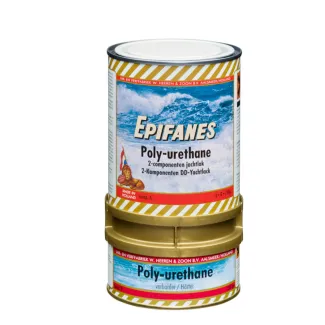
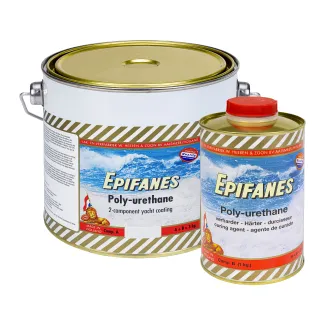
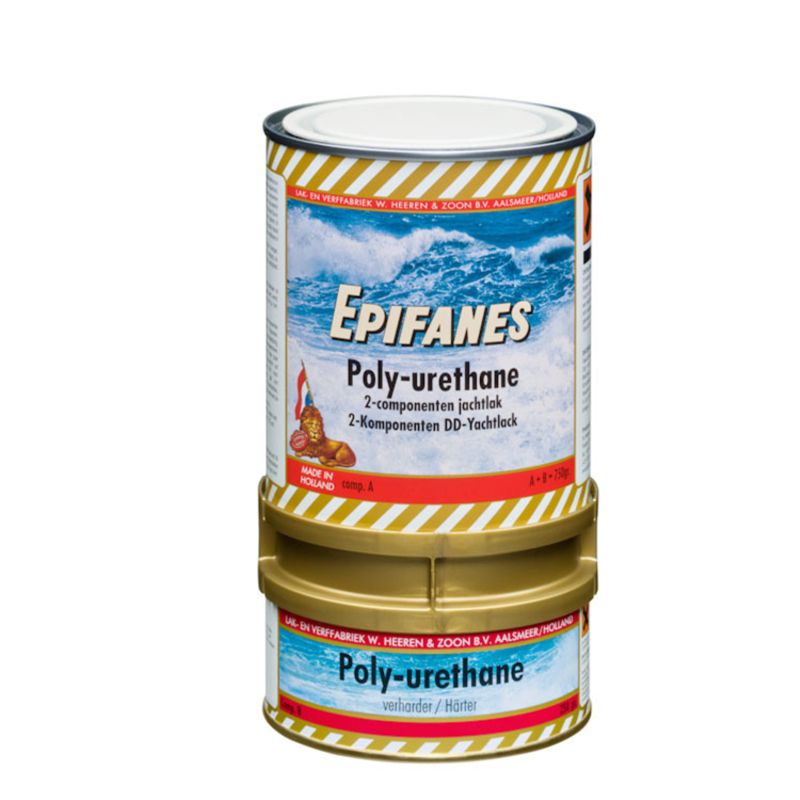
At a glance
- UV-resistant PU yacht varnish
- Scratch, impact, wear resistant
- Built-in UV filters
Fast delivery throughout Europe
Secure payment with PayPal, Mastercard, Visa and more
4.7 out of 5 stars on Trusted Shops
Epifanes Polyurethane is a two-component high-gloss yacht varnish with a very high outdoor durability. This varnish is scratch, impact and wear resistant and offers excellent protection against water and weather influences. Due to the built-in UV filter, the wood remains protected against discolouration for a long time.
Benefits of Epifanes Polyurethane Yacht Paint
- High performance two-component high-gloss varnish.
- Built-in UV filters for optimal protection against discolouration.
- Excellent resistance to scratches, impacts and wear.
- Weather- and water-resistant.
Applications
Epifanes Polyurethane clear paint is suited for:
- Suited for topcoating two-component primer systems above the waterline.
- UV protection over Epifanes PP Vernis Extra, epoxy resin an epoxy sealer/bonding coat.
- Maintenance of existing two-component paint systems, regardless of brand.
- Use as a clearcoat over degreased and sanded Epifanes Polyurethane 2K Yacht Paint High Gloss.
Specifications
| Packaging | Base | Hardener |
| 750 gr (suitable for approx. 9 m2) | 500 gr | 250 gr |
| 3 kg (suitable for approx. 36 m2) | 2 kg | 1 kg |
Gloss: high-gloss
Colour: transparent
Mixing ratio: 100:50 (2 to 1)
Pot life: 3-4 hours (20°C)
Recommended film thickness: 60-70 µm wet = 30 - 35 µm dry
Minimum processing temperature: 8°C - 30°C
Relative humidity: 50% - 75%
Coverage: 12m2 per kg
Dust dry: 2 hours (20°C)
Sandable/recoatable: 24 hours (20°C)
Density: 1,007 gr/dm3
VOC-level: 569 grams/litre
Thinner: Epifanes Polyurethane Brush Thinner
Product properties
The key technical properties clearly listed in one place.
- Article number
- LAK002121
-
Gloss level indicates how much light a dry paint or coating reflects and how the finished surface looks.
- Matt: little reflection and a subdued appearance.
- Satin: a gentle sheen between matt and high gloss.
- High gloss: stronger reflections and a more pronounced colour, although surface imperfections may become more visible.
Gloss can be measured in gloss units (GU) at a specified angle. Terms such as matt and satin do not necessarily mean exactly the same thing across manufacturers. Substrate condition and application also affect the final appearance.
- High gloss
-
The technical product category, such as primer, resin, hardener or cleaner. It explains the product's purpose and helps you find other products with a similar function.
- 2K clear coat
-
The recommended layer thickness is the thickness at which you apply each coat of paint, coating or resin. It is usually given in micrometres (µm) or millimetres (mm).
- Wet film thickness: the thickness immediately after application.
- Dry film thickness: the thickness after drying or curing.
For a coating with 60% solids by volume, a wet film of 100 µm will theoretically produce a dry film of approximately 60 µm. Film thickness affects coverage, protection and drying. Always check whether the manufacturer specifies wet or dry film thickness.
- 60-70 µm wet (= 30-35 µm dry)
-
Density describes the mass of a material per unit volume. Values may be given in g/cm³, kg/L or kg/m³; 1 g/cm³ equals 1 kg/L. For example, one litre of a liquid with a density of 1.2 kg/L weighs approximately 1.2 kg. Density helps convert between weight and volume, but it can vary with temperature.
- 1.007 g/dm³
-
Humidity during application is given as relative humidity, usually in percent (% RH). It indicates how much water vapour the air contains compared with the maximum it can hold at that temperature. Excessive humidity can interfere with drying or adhesion of some coatings. Also check that the substrate is dry enough and free from condensation.
- 50% - 75%
-
Minimum application temperature is the lowest temperature at which a product may be used according to the manufacturer. The limit can apply to the air, substrate and product itself.
At lower temperatures, resins and coatings can become thicker and cure more slowly. Moisture can also condense on a cold substrate and reduce adhesion. Check the dew point and measure the surface temperature before starting. A longer drying time does not automatically make application below the specified minimum acceptable.
- 8 °C
-
The overcoating interval tells you when the next layer of paint, varnish or coating may be applied. Many multi-coat systems specify both a minimum and a maximum interval:
- Minimum overcoating time: the previous layer is dry or cured enough to accept another coat.
- Maximum overcoating time: the period during which the next coat can bond without extra surface preparation under the stated conditions.
Overcoating too early can affect drying or the finish. Once the maximum interval has passed, cleaning and sanding may be needed to ensure adhesion between coats. Temperature and film thickness affect the waiting times.
- 1 day (20 °C)
-
A paint or varnish layer is dust-dry when settling dust is less likely to stick to the surface. It may not yet be touch-dry, ready for overcoating or suitable for loading; these are different stages of drying and curing.
- 2 hours (20 °C)
-
Consumption or coverage describes how much product is needed for a given surface area. Consumption may be stated in g/m² or kg/m², while coverage is often given in m²/L or m²/kg. A consumption of 0.2 kg/m² means a theoretical 200 grams per square metre. Actual use depends on film thickness, substrate absorbency, application method and waste.
- 12 m²/kg
-
A specific thinner that can be used, where permitted, to adjust a product's application properties or viscosity. The correct thinner and maximum quantity depend on the product. Incorrect thinning can affect coverage, drying and curing.
- Epifanes Polyurethane Brush Thinner
- Net contents
- 3 kg, 750 g
-
Working time is the period during which a product remains workable after mixing or activation, usually given in minutes at a specified temperature, often 20 °C. With reactive resins, the chemical reaction also continues in the mixing container, and larger quantities or higher temperatures can shorten this time. Working time is different from gel time and full curing time.
- Approximately 180-240 minutes (at 20 °C)
-
VOC content (volatile organic compounds) indicates the amount of these substances in a product, usually expressed in g/L (grams per litre). They may evaporate during application and drying. The value describes the composition, but actual exposure also depends on how much is used, ventilation and the application method.
- 569 g/L
Reviews
Frequently bought together
Useful additions for your project.
Often chosen
Popular

Often chosen