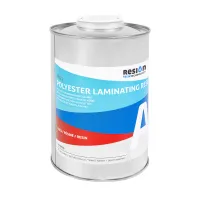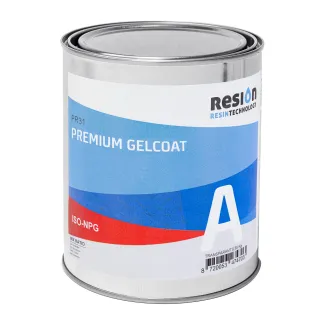
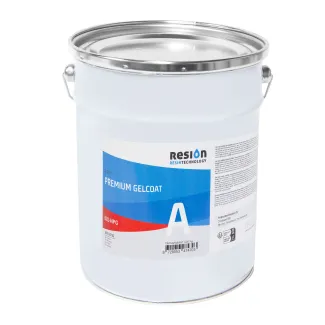
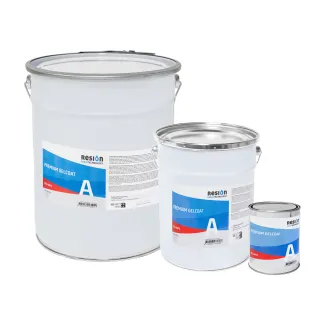
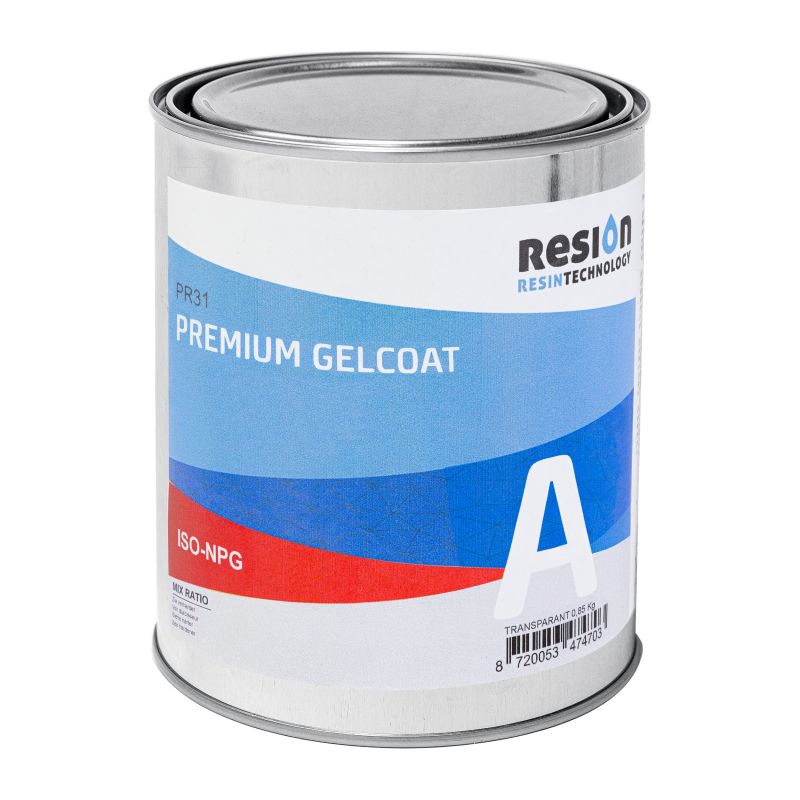
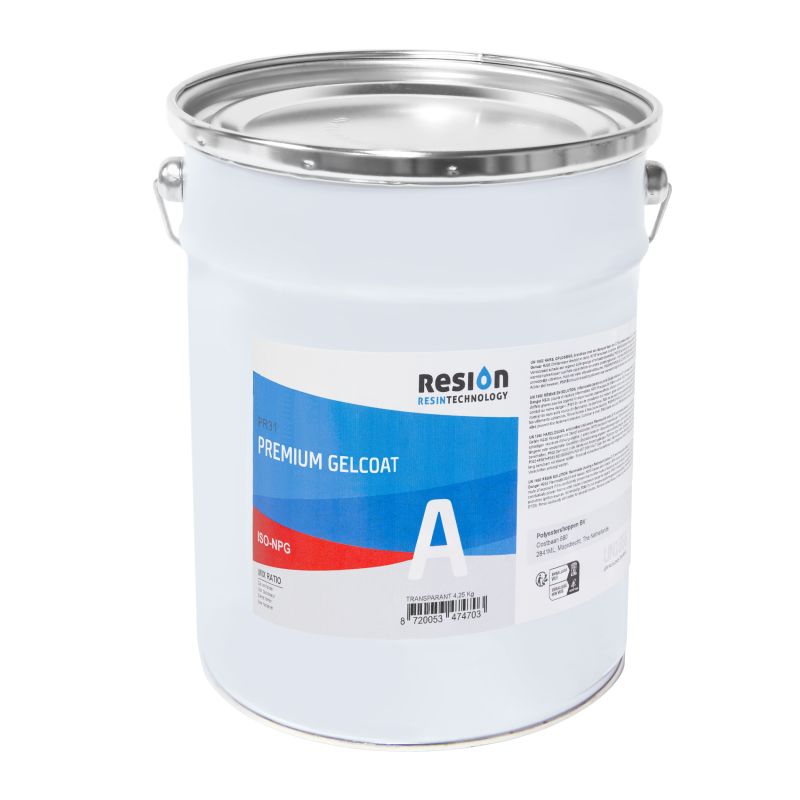
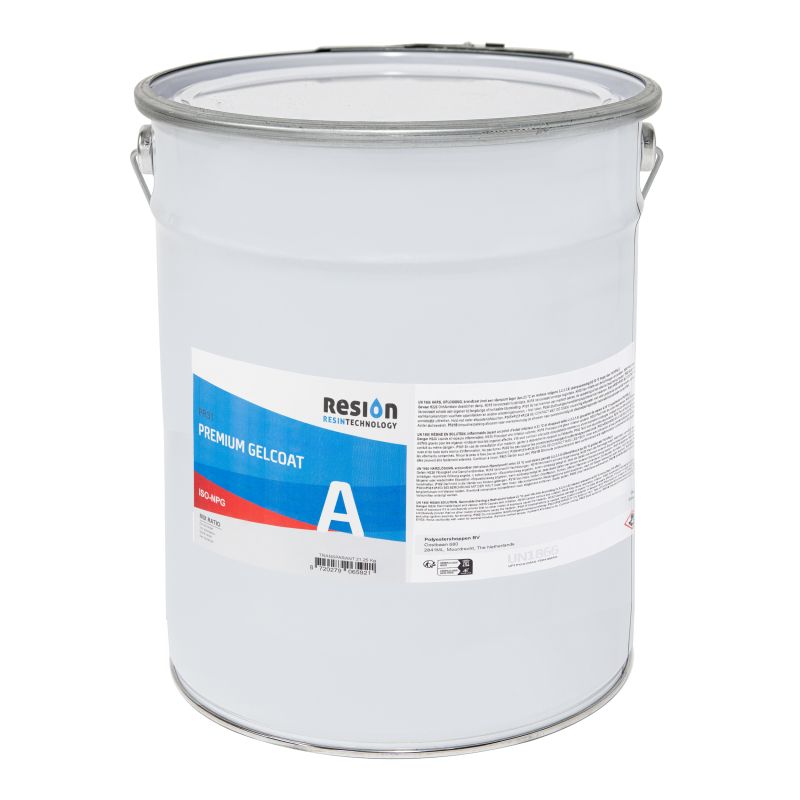
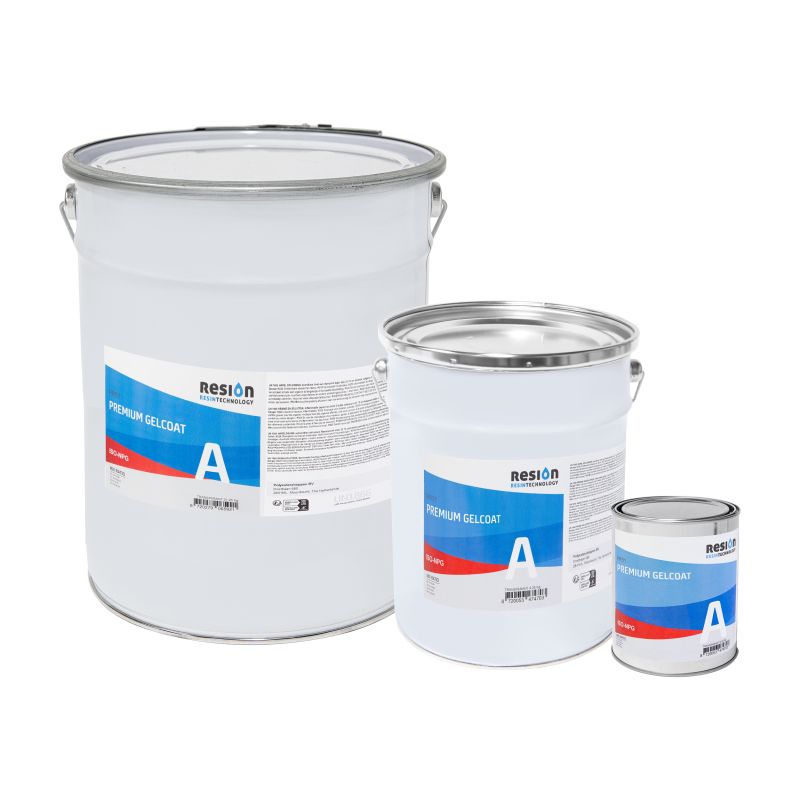

RESION transparent gelcoat
At a glance
- For use in moulds
- Can be coloured with pigments
- Water-resistant and UV-stable
Not sure about your choice?
Want to know which polyester product you need? Use our selection tool!
Product description
Transparent polyester precoat protects the glass fibres against moisture and provides a high gloss and easy-to-work-with surface. RESION gelcoat is used in molds. It evens out relief and makes the glass fibres stick.
This iso-npg gelcoat offers excellent resistance to water, chemicals and heat. The polyester gelcoat is compatible with all polyester laminating resins and topcoats. The gelcoat is supplied transparent and can be coloured with a polyester pigment paste of your choice.
Gelcoat will always stick to the the side exposed to evaporation. To prevent this you can use polyester topcoat instead.
How much hardener do you need?
In the table below you can find the required amount of hardener. The amount of pigment paste depends on the chosen colour.
| Amount of topcoat | 10% pigment paste | 15% pigment paste | Hardener |
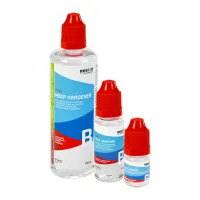
| 0.85 kg | 85 grams | 127.5 grams | 20 ml hardener |
| 4.25 kg | 425 grams | 637.5 grams | 100 ml hardener |
| 20 kg | 2000 grams | 3000 grams | 400 ml hardener |
Product properties
The key technical properties clearly listed in one place.
- Article number
- POL000082
-
The technical product category, such as primer, resin, hardener or cleaner. It explains the product's purpose and helps you find other products with a similar function.
- Gelcoat & Topcoat
-
The period for which an unopened product remains usable under the specified storage conditions. Check whether the period starts from the manufacturing date or another date. Shelf life may be shorter after opening, especially for products sensitive to air or moisture.
- 3-6 months
-
Minimum application temperature is the lowest temperature at which a product may be used according to the manufacturer. The limit can apply to the air, substrate and product itself.
At lower temperatures, resins and coatings can become thicker and cure more slowly. Moisture can also condense on a cold substrate and reduce adhesion. Check the dew point and measure the surface temperature before starting. A longer drying time does not automatically make application below the specified minimum acceptable.
- 15 °C
-
Consumption or coverage describes how much product is needed for a given surface area. Consumption may be stated in g/m² or kg/m², while coverage is often given in m²/L or m²/kg. A consumption of 0.2 kg/m² means a theoretical 200 grams per square metre. Actual use depends on film thickness, substrate absorbency, application method and waste.
- Approximately 400 g/m²
- Net contents
- 20 kg, 4.25 kg, 850 g
-
Working time is the period during which a product remains workable after mixing or activation, usually given in minutes at a specified temperature, often 20 °C. With reactive resins, the chemical reaction also continues in the mixing container, and larger quantities or higher temperatures can shorten this time. Working time is different from gel time and full curing time.
- Approximately 20 minutes (at 20 °C)
-
Mixing ratio indicates how much of each component is needed, for example resin (A) and hardener (B). A ratio of 100:50 by weight means 100 grams of A to 50 grams of B; by volume you might use millilitres. Weight and volume ratios are not necessarily the same because the components may have different densities. Accurate measuring is important for proper curing.
- 100:2 (by weight)
-
Curing time is the period a product needs to reach a specified stage of cure. It is usually given in hours or days, often at a reference temperature such as 20 °C. A product may be tack-free or safe to handle before reaching its full mechanical and chemical resistance. Film thickness and mixed quantity may also affect the time.
- 2 hours
Safety information
Read the warnings and use appropriate protective equipment before handling the product.
Reviews
Frequently bought together
Useful additions for your project.