Recommended

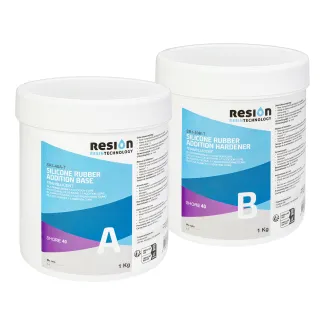
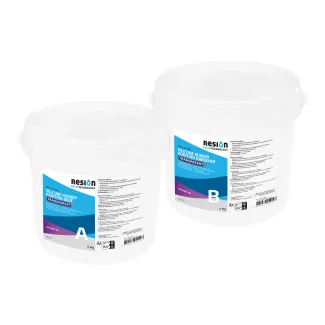
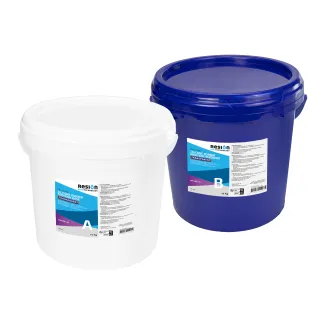
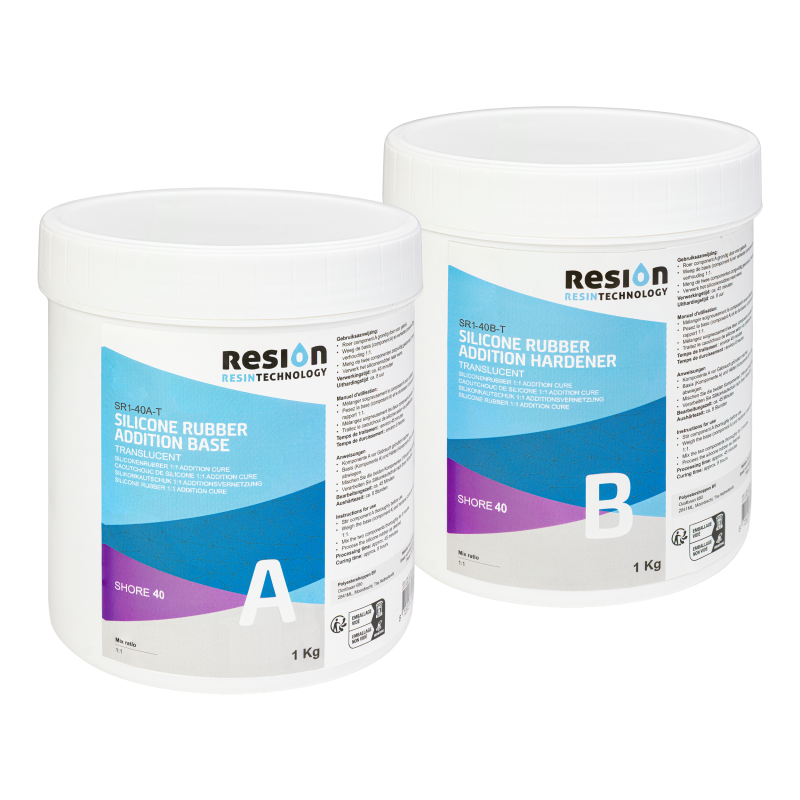
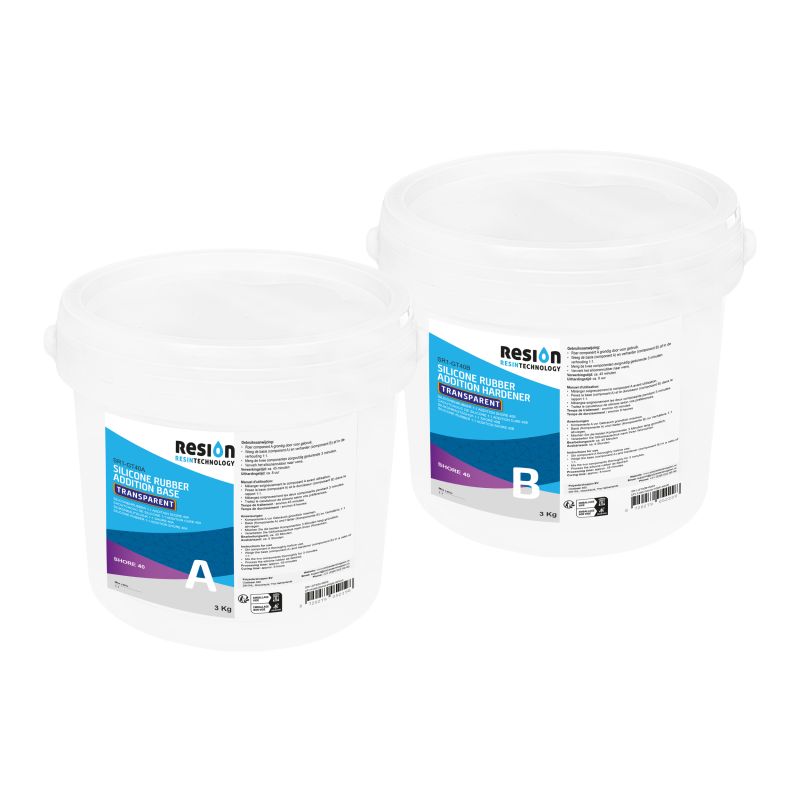
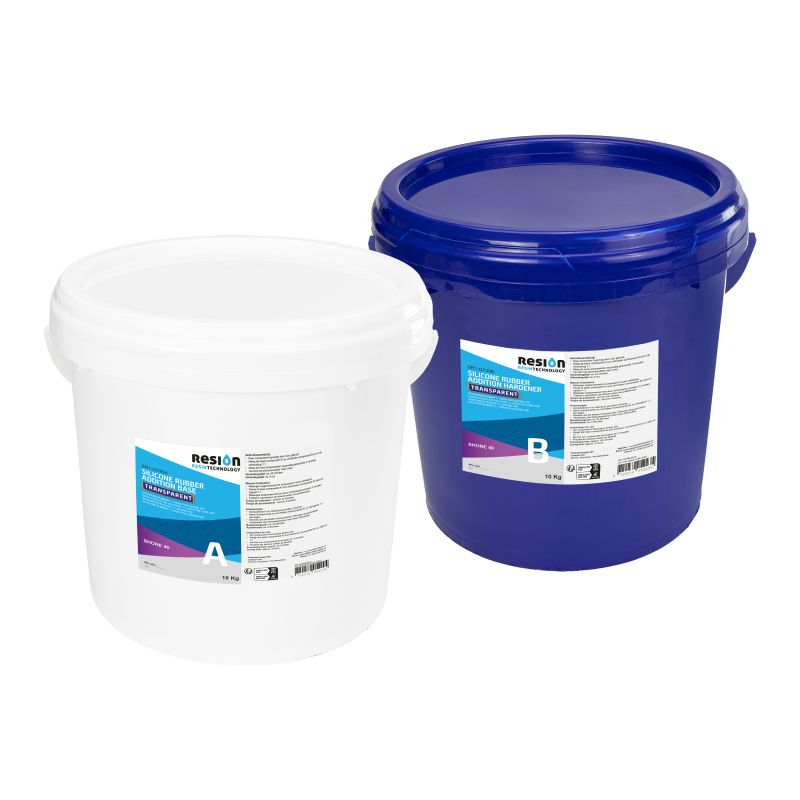
Transparent silicone casting rubber (Shore 40) is a fully clear casting rubber that is ideal for applications where optical transparency is required. This silicone casting rubber is particularly suitable for potting and protecting electronics, sensors and printed circuit boards, as it forms a clear, flexible and insulating layer after curing. It is also widely used for prototyping, technical components, LED encapsulation and other applications where visibility of the encapsulated object is important.
Silicone casting rubber is easy to use thanks to its 1:1 mixing ratio. Follow the steps below for perfect results.
After approximately 8 hours, the silicone casting rubber will be tack-free.
| Set | Base (SR1-40A-T) | Curing agent (SR1-40B-T) |
| 2 kg | 1 kg | 1 kg |
| 6 kg | 3 kg | 3 kg |
| 20 kg | 10 kg | 10 kg |
| 200 kg | 100 kg (10 x 10 kg) | 100 kg (10 x 10 kg) |
| 400 kg | 200 kg (drum) | 200 kg (drum) |
Hardness: Shore 40 (hard)
Specific gravity: 1.02 kg/dm3
Volume: 1 litre of silicone rubber equals 1 kilo
Colour: transparent
Temperature resistance: 200 ℃ continuous, 300 ℃ short-term
Working time: 45 minutes
Curing time: 8 hours (tack-free)
Shelf life: 2 years (in unopened packaging)
Food-safe: yes
The key technical properties clearly listed in one place.
The technical product category, such as primer, resin, hardener or cleaner. It explains the product's purpose and helps you find other products with a similar function.
Mixing ratio indicates how much of each component is needed, for example resin (A) and hardener (B). A ratio of 100:50 by weight means 100 grams of A to 50 grams of B; by volume you might use millilitres. Weight and volume ratios are not necessarily the same because the components may have different densities. Accurate measuring is important for proper curing.
Hardness describes a material's resistance to indentation. For silicone rubber and other elastomers, the Shore A scale is commonly used: Shore A 15, for example, is softer than Shore A 40. Harder plastics may be rated on the Shore D scale. The number belongs to its Shore scale and is not a unit like MPa; values on different scales cannot be directly compared.
Density describes the mass of a material per unit volume. Values may be given in g/cm³, kg/L or kg/m³; 1 g/cm³ equals 1 kg/L. For example, one litre of a liquid with a density of 1.2 kg/L weighs approximately 1.2 kg. Density helps convert between weight and volume, but it can vary with temperature.
The period for which an unopened product remains usable under the specified storage conditions. Check whether the period starts from the manufacturing date or another date. Shelf life may be shorter after opening, especially for products sensitive to air or moisture.
Working time is the period during which a product remains workable after mixing or activation, usually given in minutes at a specified temperature, often 20 °C. With reactive resins, the chemical reaction also continues in the mixing container, and larger quantities or higher temperatures can shorten this time. Working time is different from gel time and full curing time.
Food contact suitability means that a material may come into contact with food under specific, defined conditions. This suitability does not automatically extend to every application.
A fully cured or odourless product is not automatically food-safe. Check the manufacturer's declaration or technical documentation for the permitted use.
Heat resistance describes the temperature a material can withstand after correct processing and curing, usually expressed in degrees Celsius (°C). Continuous exposure is different from a brief temperature peak, and mechanical loading may also affect the limit. Heat resistance is not the same as the temperature at which the product can be applied.
Useful additions for your project.