

RESION EP Colorshield wall coating
At a glance
- Epoxy roll coating
- Vertical application
- Water and chemical resistant
Product description
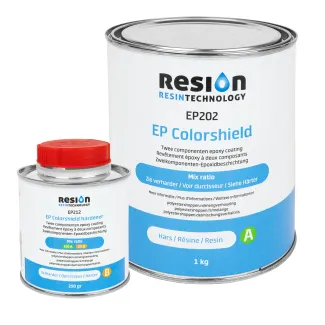
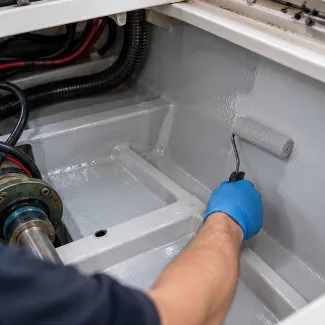
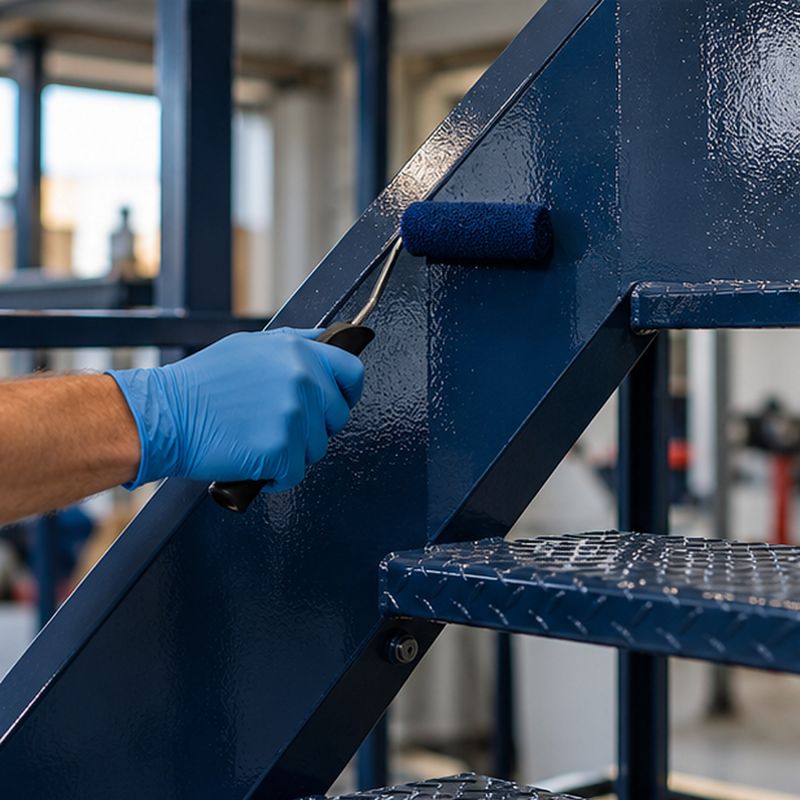
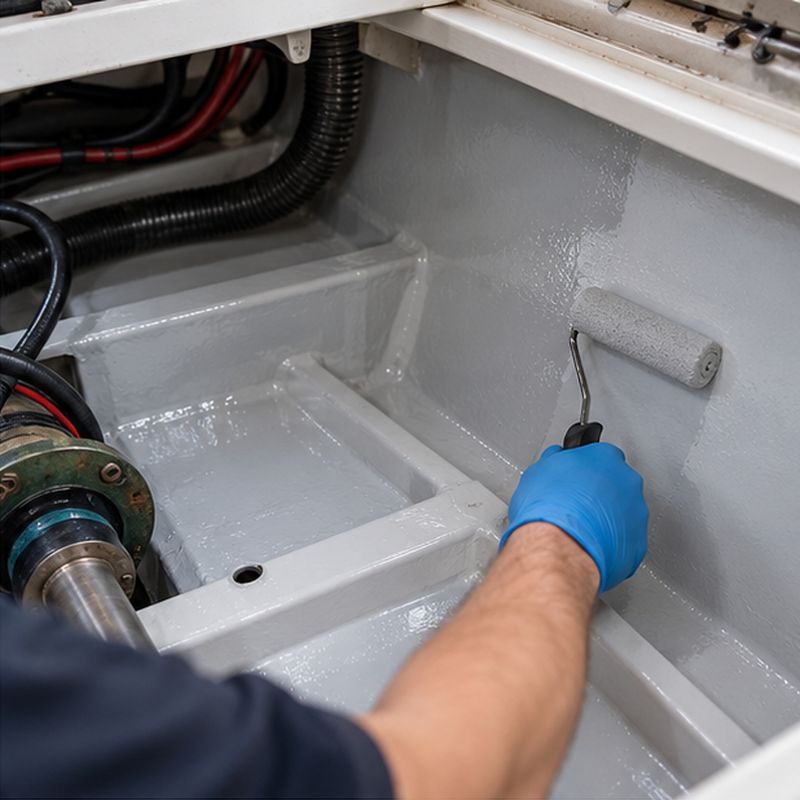
RESION EP Colorshield is a thixotropic epoxy roller coating suitable for a wide range of applications, such as boat bilges, walls in sanitary facilities or kitchens, trailers, steel structures, and more. What makes this roller coating unique is that it is the only epoxy that can be applied vertically. In addition, EP Colorshield is solvent-free and highly resistant to water, grease, oil, and various chemicals.
EP Colorshield is a good alternative to De IJssel Variopox roller coating. Before applying Colorshield, it is important to prepare the substrate properly by applying a primer to promote adhesion. For example, use primer for dry substrates or ZF Primer for metal substrates. EP Colorshield needs several coats especially with light colours to create good coverage.
Benefits of EP Colorshield epoxy roller coating
- It is the only epoxy that can be applied vertically (very suitable as a wall coating, bathroom coating).
- Highly UV resistant and therefore very colourfast.
- Free of solvents (can therefore also be applied in spaces that are difficult to ventilate).
- Easy to apply with a roller.
- Resistant to water, oil, grease, petrol and various chemicals.
- Very durable and resistant to pressure, impact and shock loads.
Applications
EP Colorshield is suitable for many different applications such as:
- Kitchen and bathroom walls.
- Small floors.
- Sanitary rooms.
- Ship's planking.
- Bilges.
- Engine rooms.
- Diesel tanks and petrol tanks.
- Humid places.
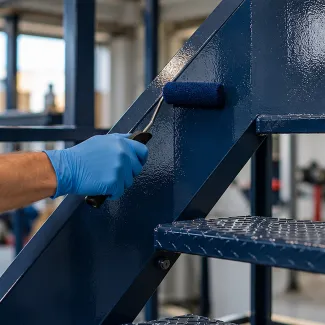
- Steel staircases and constructions.
- Animal housing.
Directions for use
You can easily apply this RESION wall coating by following these steps:
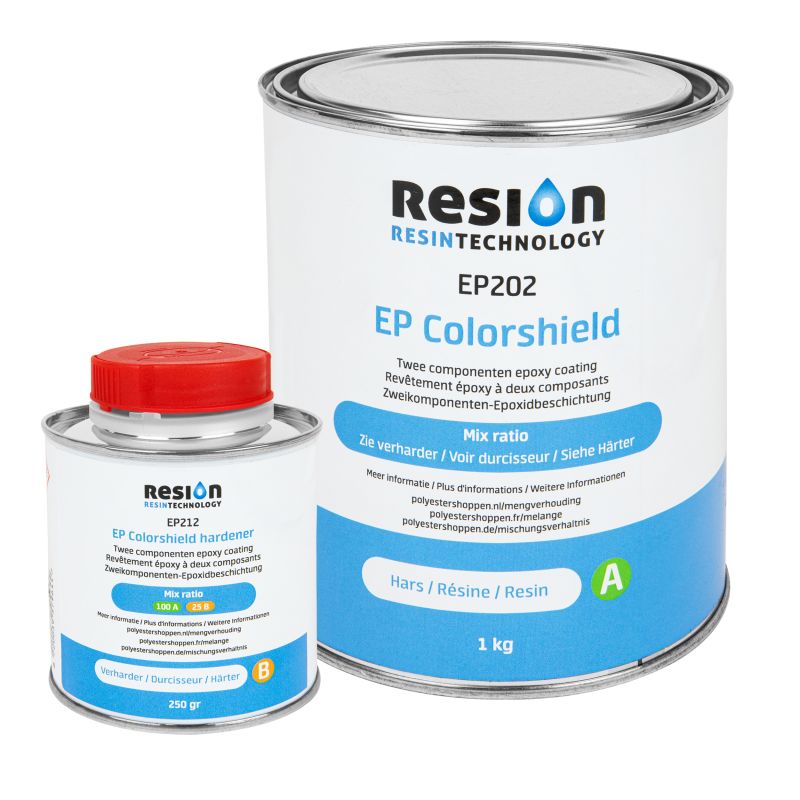
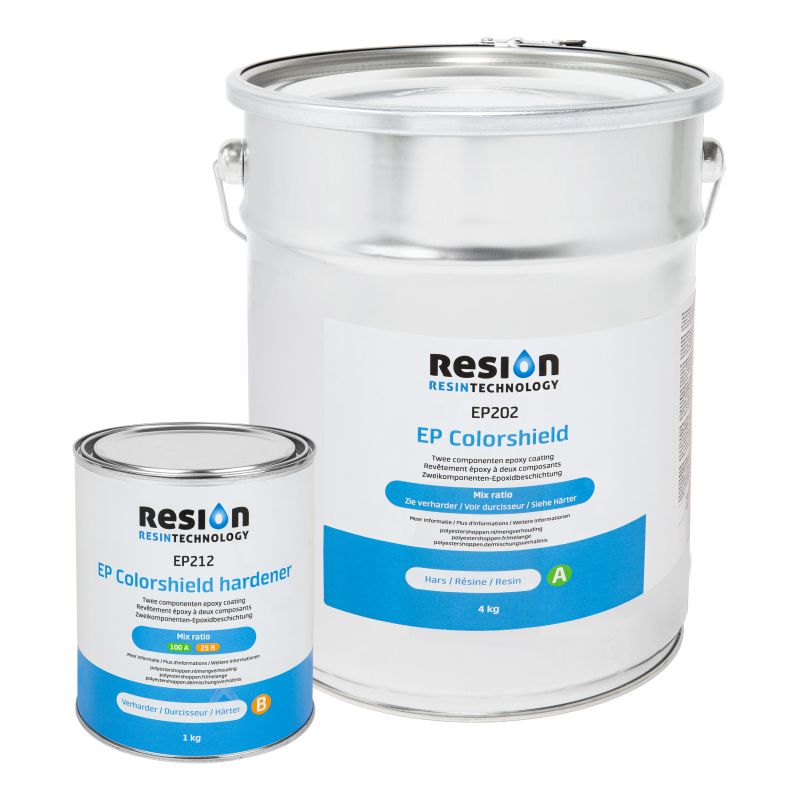
- Carefully weigh the base component and hardener according to the mixing ratio on the packaging (100:25).
- Mix the components thoroughly for 3 minutes. Pour the mixture into a clean mixing container and stir vigorously again.
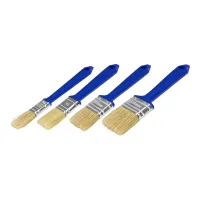
- Apply EP Colorshield evenly to the substrate using a velour roller or disposable brush (the application time is 20 minutes).
- Allow the roller coating to cure for 24 hours at 20℃.
- If necessary, apply a second coat of Colorshield after sanding with 180-grit paper.
- After 2-4 days the epoxy coating is fully cured.
- Finally, finish the coating with DD paint for best colour retention.
To carry out all the steps properly, we have put together a handy auxiliary materials package for applying Colorshield. When using light colours, we recommend applying several layers of EP Colorshield for good coverage.
Specifications
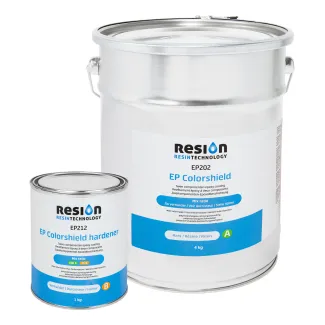
| Unit | Base (EP202) | Hardener (EP212) | Volume |
| 1.25 kg | 1 kg | 0.25 kg | approx. 0.9 litres |
| 5 kg | 4 kg | 1 kg | approx. 3.6 litres |
Mixing ratio: 100:25 (parts by weight)
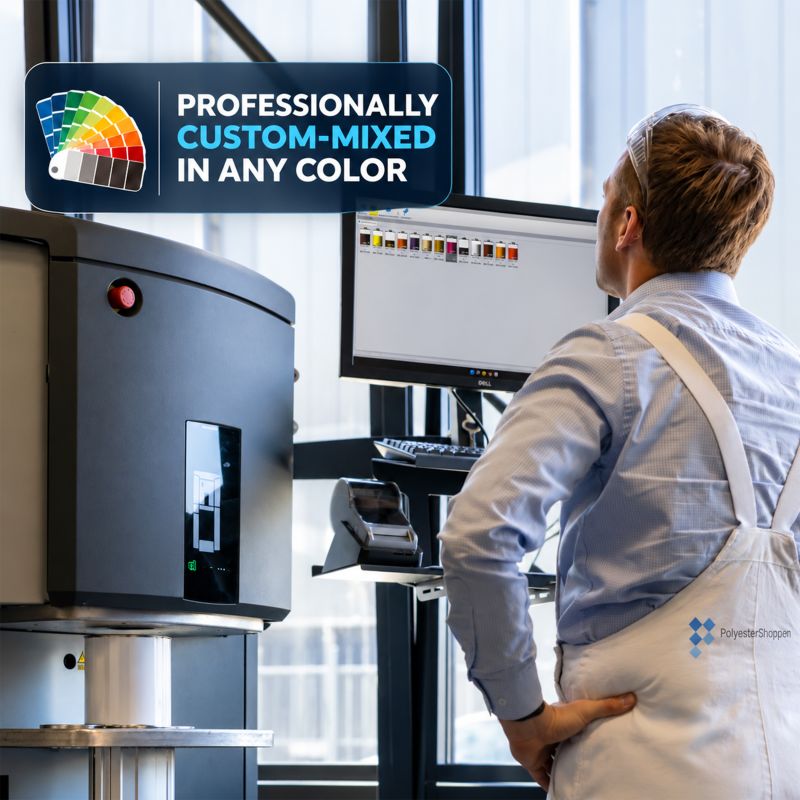
Colour: available in all RAL colours
Gloss: high gloss
Density: approx. 1.4 g/cm3 (mixed product)
Pot life: 20 minutes (20℃)
Minimum processing temperature: 15℃
Dust dry after: approx. 4 hours
Fully cured after: approx. 2-4 days, walkable after 24 hours
Shelf life: at least 12 months (unmixed, in original packaging, stored in a cool and frost-free place)
Yield:
- Flat surface: 10.0 m2/L
- Textured/uneven substrate: 6.7 m2/L
(Practical yield depends on a number of factors such as the shape of the object, the condition and profile of the surface, the method of application, the weather conditions and the skill of the applicator).
More information?
It is easy to order RESION EP Colorshield wall coating online at Polyestershoppen.com. If you order on working days before 5:00 pm CET (Central European Time), your order will be shipped the same day! Would you like more information about RESION EP Colorshield? We are happy to advise you. Please contact us by phone +31850220090, send an email to support@polyestershoppen.com or start a live chat.
Product properties
The key technical properties clearly listed in one place.
- Article number
- EPO000992
-
Mixing ratio indicates how much of each component is needed, for example resin (A) and hardener (B). A ratio of 100:50 by weight means 100 grams of A to 50 grams of B; by volume you might use millilitres. Weight and volume ratios are not necessarily the same because the components may have different densities. Accurate measuring is important for proper curing.
- 100:25
-
Working time is the period during which a product remains workable after mixing or activation, usually given in minutes at a specified temperature, often 20 °C. With reactive resins, the chemical reaction also continues in the mixing container, and larger quantities or higher temperatures can shorten this time. Working time is different from gel time and full curing time.
- Approximately 20 minutes (at 20 °C)
- Colour
- RAL colours
-
The tasks a product is intended for, such as laminating, casting, bonding, sealing or protecting. Products intended for the same application can differ considerably in processing, curing time and final properties.
- Coating
-
UV stabilisation helps a material better withstand the effects of sunlight, including yellowing and deterioration of its properties. It slows ageing but does not make a resin or plastic completely resistant to UV exposure. The degree of protection varies by product.
- Yes
-
The technical product category, such as primer, resin, hardener or cleaner. It explains the product's purpose and helps you find other products with a similar function.
- Epoxy system
-
Density describes the mass of a material per unit volume. Values may be given in g/cm³, kg/L or kg/m³; 1 g/cm³ equals 1 kg/L. For example, one litre of a liquid with a density of 1.2 kg/L weighs approximately 1.2 kg. Density helps convert between weight and volume, but it can vary with temperature.
- Approximately 1.4 kg/L
-
The period for which an unopened product remains usable under the specified storage conditions. Check whether the period starts from the manufacturing date or another date. Shelf life may be shorter after opening, especially for products sensitive to air or moisture.
- At least 12 months
-
Minimum application temperature is the lowest temperature at which a product may be used according to the manufacturer. The limit can apply to the air, substrate and product itself.
At lower temperatures, resins and coatings can become thicker and cure more slowly. Moisture can also condense on a cold substrate and reduce adhesion. Check the dew point and measure the surface temperature before starting. A longer drying time does not automatically make application below the specified minimum acceptable.
- 15 °C
-
A paint or varnish layer is dust-dry when settling dust is less likely to stick to the surface. It may not yet be touch-dry, ready for overcoating or suitable for loading; these are different stages of drying and curing.
- Approximately 4 hours
-
Curing time is the period a product needs to reach a specified stage of cure. It is usually given in hours or days, often at a reference temperature such as 20 °C. A product may be tack-free or safe to handle before reaching its full mechanical and chemical resistance. Film thickness and mixed quantity may also affect the time.
- approx. 2-4 days, walkable after 24 hours
- Net contents
- 1.25 kg, 5 kg
Safety information
Read the warnings and use appropriate protective equipment before handling the product.
Reviews
Frequently bought together
Useful additions for your project.