Often chosen

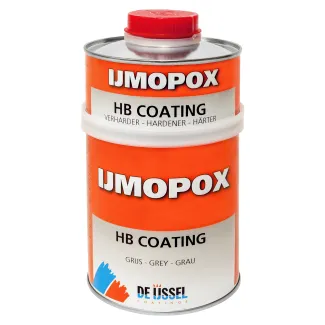
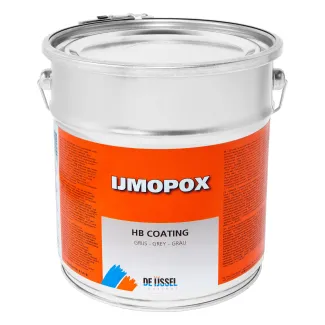
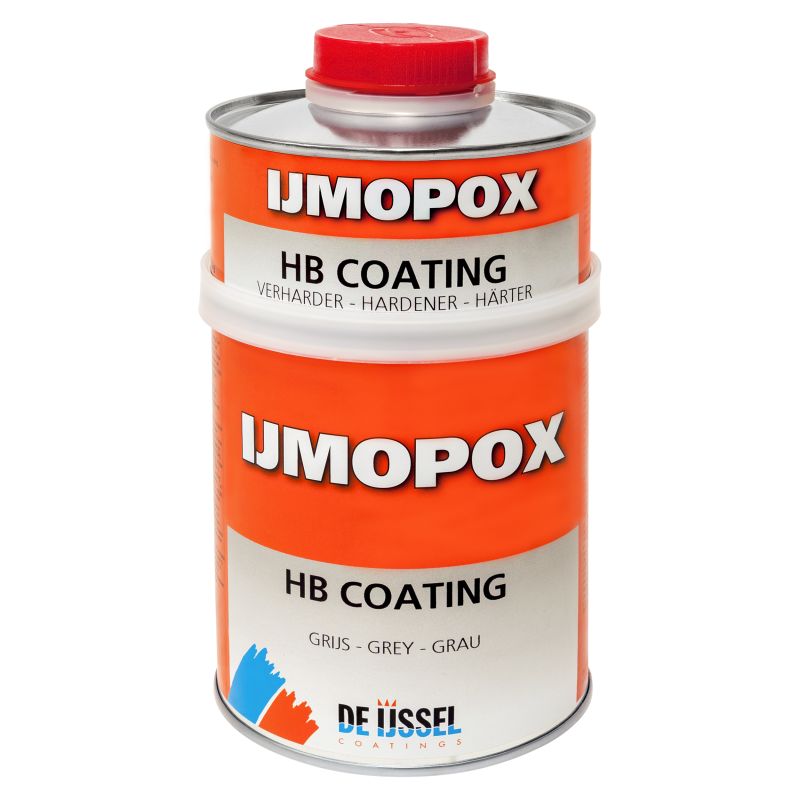
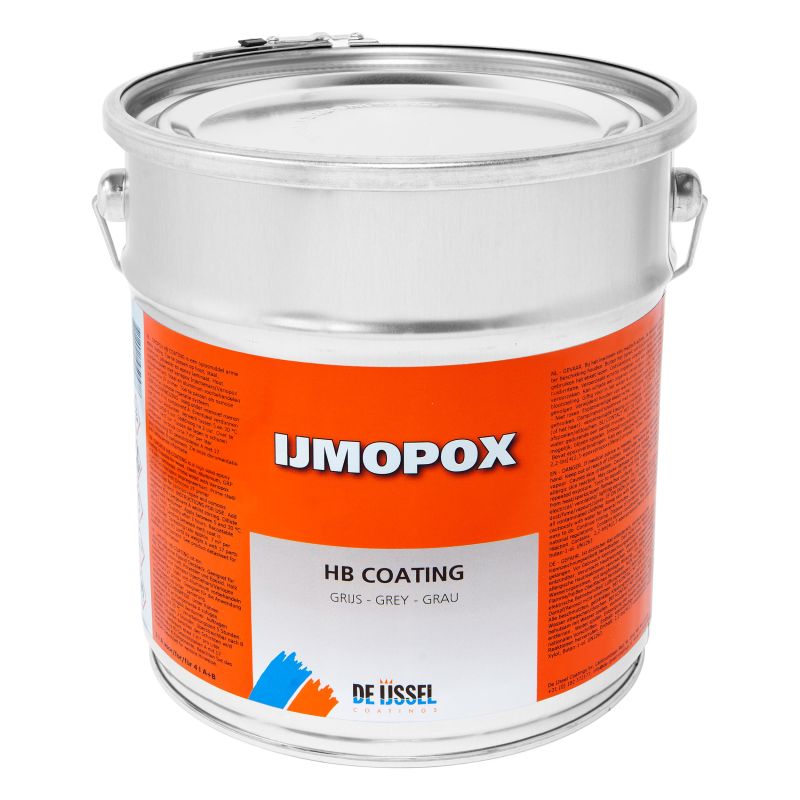
IJmopox HB Coating is a high-quality, low-solvent epoxy coating from De IJssel Coatings. This coating has been specially developed to provide effective protection for polyester substrates against osmosis and also offers excellent corrosion protection on a variety of metals. Thanks to its strong chemical resistance, IJmopox HB Coating is highly resistant to, among other things, salt water and various chemicals.
HB Coating is widely used as a protective primer and provides an ideal base for further finishing with DD Paint High Gloss or DD Paint Semi Gloss.
A major application advantage is that multiple coats of HB Coating can be applied on top of one another without intermediate sanding. If the substrate is coated with a single-pack paint system, this must first be completely removed. The surface should then be roughened with P120–P180 grit sandpaper to ensure optimum adhesion.
IJmopox HB Coating is suitable for a variety of applications, including:
Follow the instructions below to apply the epoxy coating correctly:
| Packaging | Base | Hardener |
| 0.75 litres (suitable for approx. 5.25 m2) | ||
| 4 litres (suitable for approx. 28 m2) | 3 litres | 1 litre |
| 20 litres (suitable for approx. 80 m2) | 15 litres | 5 litres |
Colour: white (RAL 9016), black (9005) and grey (7001)
Gloss: semi-gloss
Mixing ratio (weight): 83:17
Mixing ratio (volume): 75:25
Application temperature: 5 - 25°C
Coverage: approx. 7m2 per litre
Pot life: 5 hours (20°C)
Dust dry after: 2 hours
Recoatable after: 8 hours
Application: brush, roller or spray
Thinner: IJmopox thinner (5-10%)
Shelf life: 12 months unmixed in original packaging in a frost-free environment
Would you like more information or advice on using IJmopox HB Coating? Please contact our product specialists at support@polyestershoppen.com or send us a WhatsApp message. We're happy to help make your project a success!
The key technical properties clearly listed in one place.
Gloss level indicates how much light a dry paint or coating reflects and how the finished surface looks.
Gloss can be measured in gloss units (GU) at a specified angle. Terms such as matt and satin do not necessarily mean exactly the same thing across manufacturers. Substrate condition and application also affect the final appearance.
The technical product category, such as primer, resin, hardener or cleaner. It explains the product's purpose and helps you find other products with a similar function.
The recommended application temperature range indicates the conditions under which the product can generally be applied and cured properly. Three temperatures matter:
A cold substrate can cause condensation and affect adhesion. At higher temperatures, two-component products may react faster, reducing their working time. Check the dew point and follow the product instructions.
The period for which an unopened product remains usable under the specified storage conditions. Check whether the period starts from the manufacturing date or another date. Shelf life may be shorter after opening, especially for products sensitive to air or moisture.
Mixing ratio indicates how much of each component is needed, for example resin (A) and hardener (B). A ratio of 100:50 by weight means 100 grams of A to 50 grams of B; by volume you might use millilitres. Weight and volume ratios are not necessarily the same because the components may have different densities. Accurate measuring is important for proper curing.
The overcoating interval tells you when the next layer of paint, varnish or coating may be applied. Many multi-coat systems specify both a minimum and a maximum interval:
Overcoating too early can affect drying or the finish. Once the maximum interval has passed, cleaning and sanding may be needed to ensure adhesion between coats. Temperature and film thickness affect the waiting times.
A paint or varnish layer is dust-dry when settling dust is less likely to stick to the surface. It may not yet be touch-dry, ready for overcoating or suitable for loading; these are different stages of drying and curing.
Consumption or coverage describes how much product is needed for a given surface area. Consumption may be stated in g/m² or kg/m², while coverage is often given in m²/L or m²/kg. A consumption of 0.2 kg/m² means a theoretical 200 grams per square metre. Actual use depends on film thickness, substrate absorbency, application method and waste.
A specific thinner that can be used, where permitted, to adjust a product's application properties or viscosity. The correct thinner and maximum quantity depend on the product. Incorrect thinning can affect coverage, drying and curing.
The application or processing methods specified by the manufacturer, such as brushing, rolling, spraying, casting or hand laminating. The chosen method can affect consumption, layer thickness and finish.
Working time is the period during which a product remains workable after mixing or activation, usually given in minutes at a specified temperature, often 20 °C. With reactive resins, the chemical reaction also continues in the mixing container, and larger quantities or higher temperatures can shorten this time. Working time is different from gel time and full curing time.
Useful additions for your project.