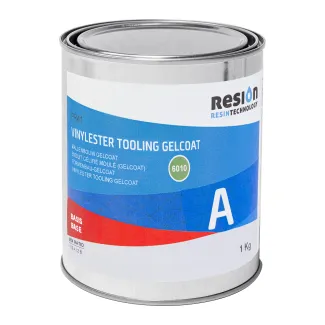
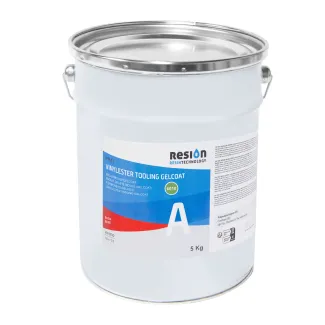
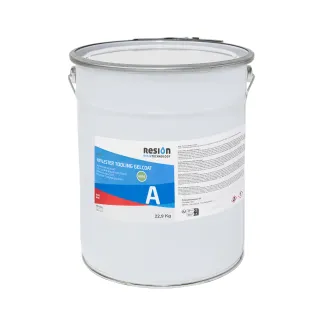
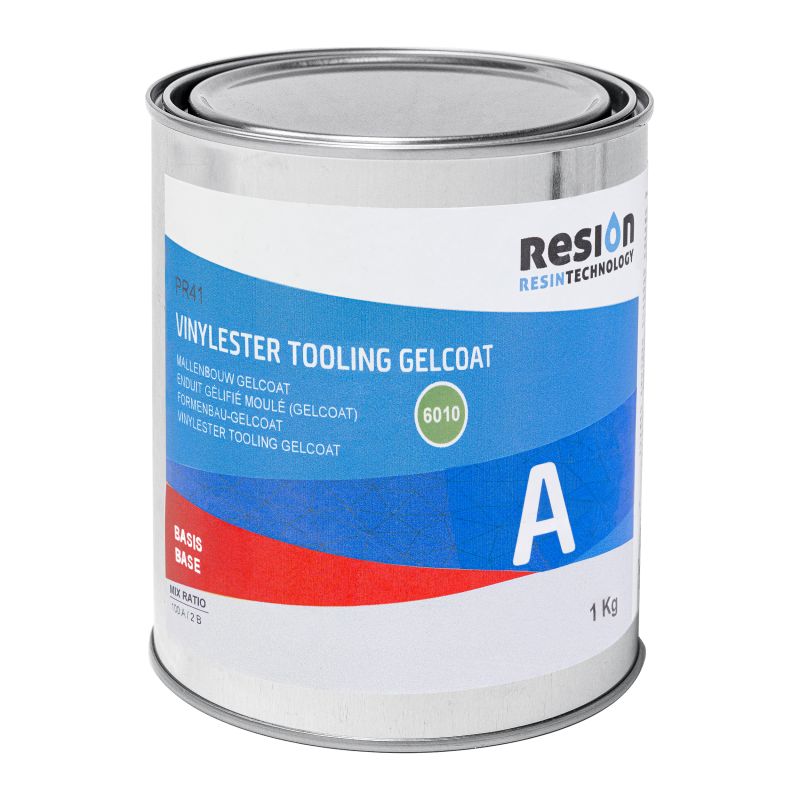
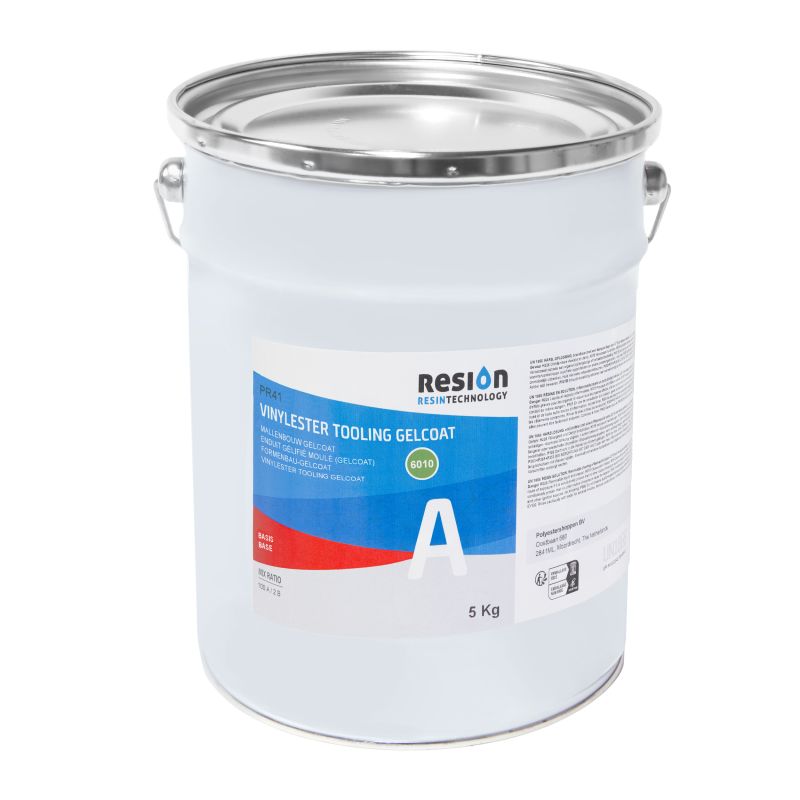
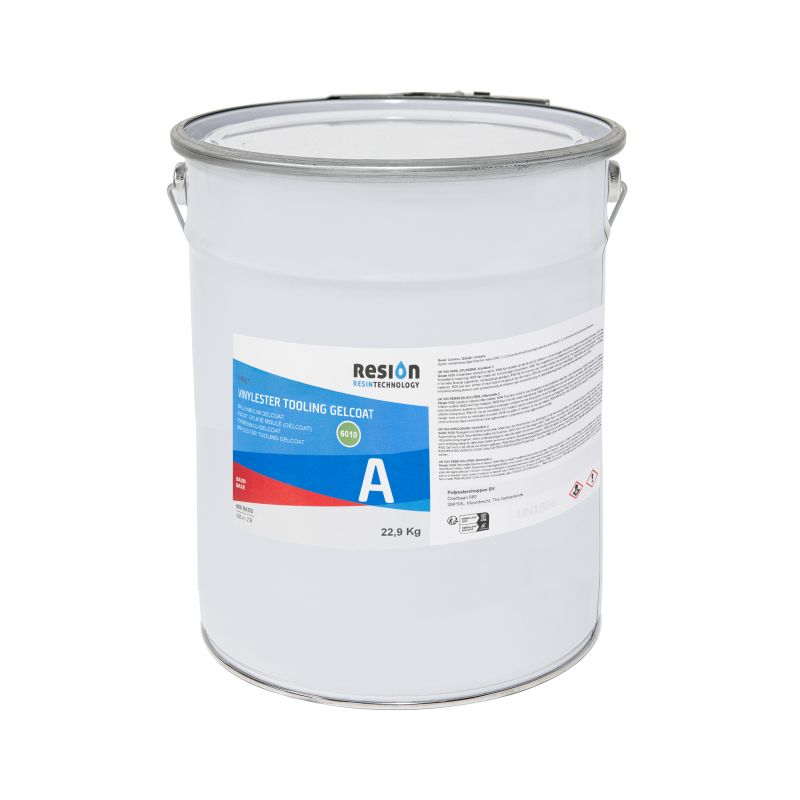
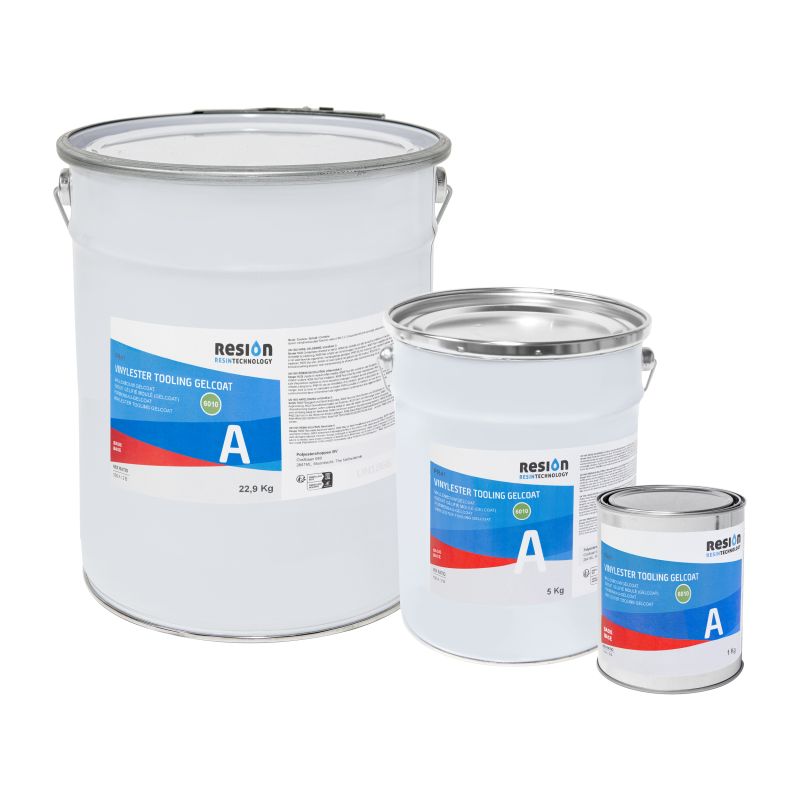

RESION Vinylester Tooling Gelcoat
At a glance
- Gelcoat for polyester moulds
- High temperature resistance
- Scratch-resistant
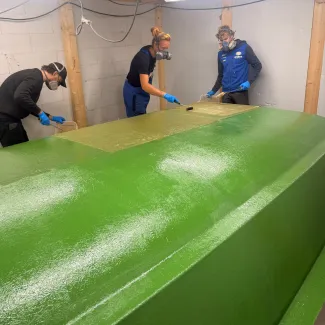
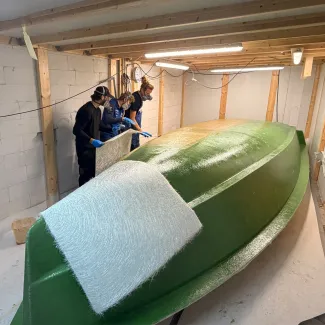
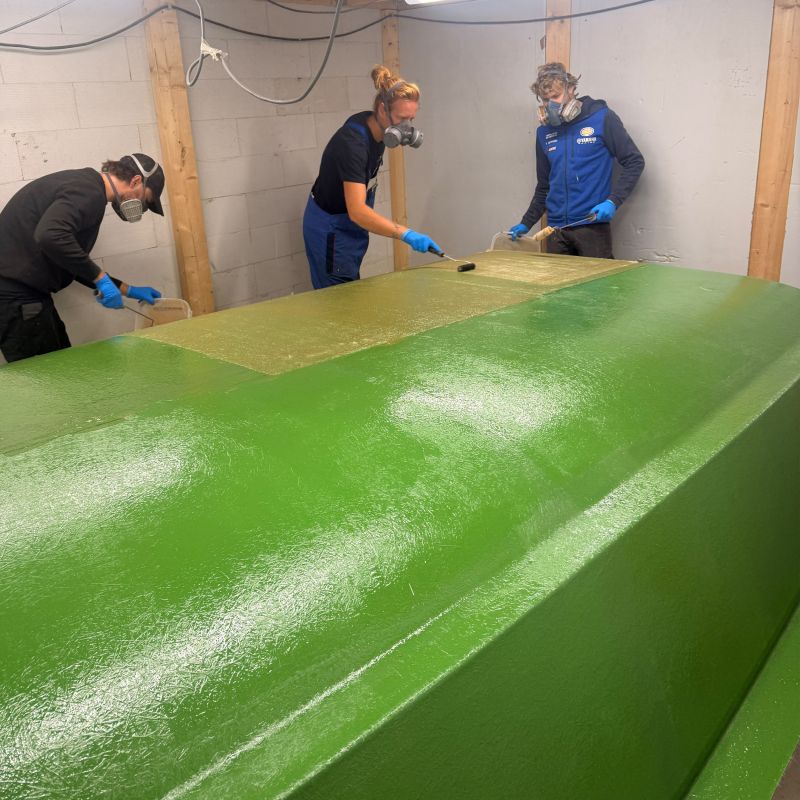
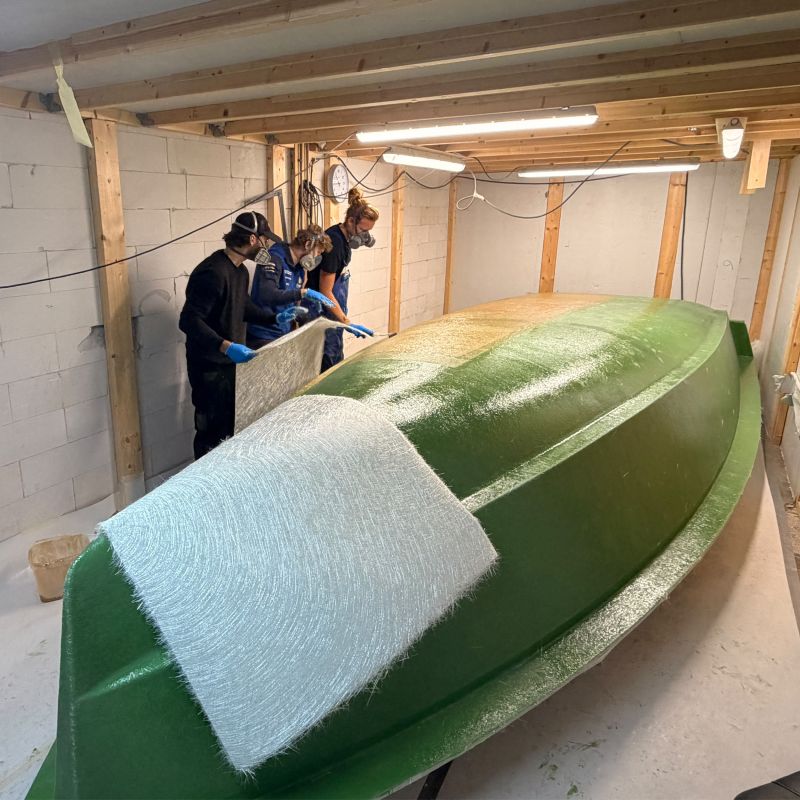
Tooling gelcoat for making a polyester mould. This gelcoat is highly scratch resistant and heat resistant. It is used in combination with vinylester resin and tooling resin, but can also be processed with 'regular' polyester resin.
RESION tooling gelcoat is the basis of a professional mould with high gloss and good scratch resistance. This ensures high quality and effortless removal of products from the mould.
Benefits of vinylester tooling gelcoat
- Scratch resistant.
- Heat resistant.
- High gloss.
- Based on vinylester.
Specifications
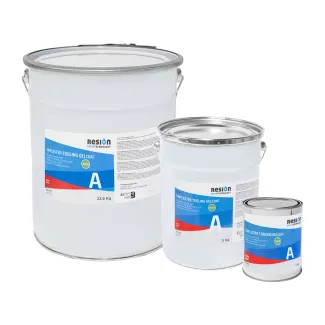
Size: 1 kg, 5 kg, 22,9 kg
Colour: green RAL 6010 (other colours on request)
Density: approx. 1.1 g/cm3, depending on the colour
Recommended layer thickness: 500 - 850 µm (dry), depending on the application
Full curing: after 2 hours
Shelf life: at least 3 months, if not mixed, in original packaging in a cool and frost-free place
Hardener: MEKP hardener
Below is an overview of the amount of hardener required per amount of gelcoat:
| Vinylester tooling gelcoat | Hardener |
| 1 kg | 20 ml hardener |
| 5 kg | 100 ml hardener |
| 22.9 kg | 500 ml hardener |
Product properties
The key technical properties clearly listed in one place.
- Article number
- POL000214
-
The technical product category, such as primer, resin, hardener or cleaner. It explains the product's purpose and helps you find other products with a similar function.
- Gelcoat & Topcoat
-
The tasks a product is intended for, such as laminating, casting, bonding, sealing or protecting. Products intended for the same application can differ considerably in processing, curing time and final properties.
- Mold making
-
The recommended layer thickness is the thickness at which you apply each coat of paint, coating or resin. It is usually given in micrometres (µm) or millimetres (mm).
- Wet film thickness: the thickness immediately after application.
- Dry film thickness: the thickness after drying or curing.
For a coating with 60% solids by volume, a wet film of 100 µm will theoretically produce a dry film of approximately 60 µm. Film thickness affects coverage, protection and drying. Always check whether the manufacturer specifies wet or dry film thickness.
- 500-850 µm (dry)
-
Density describes the mass of a material per unit volume. Values may be given in g/cm³, kg/L or kg/m³; 1 g/cm³ equals 1 kg/L. For example, one litre of a liquid with a density of 1.2 kg/L weighs approximately 1.2 kg. Density helps convert between weight and volume, but it can vary with temperature.
- Approximately 1.1 kg/L
-
The period for which an unopened product remains usable under the specified storage conditions. Check whether the period starts from the manufacturing date or another date. Shelf life may be shorter after opening, especially for products sensitive to air or moisture.
- At least 3 months
-
Mixing ratio indicates how much of each component is needed, for example resin (A) and hardener (B). A ratio of 100:50 by weight means 100 grams of A to 50 grams of B; by volume you might use millilitres. Weight and volume ratios are not necessarily the same because the components may have different densities. Accurate measuring is important for proper curing.
- 100:2 (by weight)
-
Minimum application temperature is the lowest temperature at which a product may be used according to the manufacturer. The limit can apply to the air, substrate and product itself.
At lower temperatures, resins and coatings can become thicker and cure more slowly. Moisture can also condense on a cold substrate and reduce adhesion. Check the dew point and measure the surface temperature before starting. A longer drying time does not automatically make application below the specified minimum acceptable.
- 15 °C
-
Hardener type indicates which component or substance is needed to cure a resin, adhesive or coating. The mechanism varies with the chemical system:
- Epoxy: usually a specific compatible hardener (component B), mixed with the resin at the stated ratio.
- Polyester and vinyl ester: often an MEKP initiator that starts the curing reaction. Dosage is normally given as a percentage.
- Two-component polyurethane: uses a compatible second component, often based on isocyanates, as specified for the system.
Hardeners are not interchangeable. Use only the combination, dosage and safety precautions stated by the manufacturer.
- MEKP hardener
-
Curing time is the period a product needs to reach a specified stage of cure. It is usually given in hours or days, often at a reference temperature such as 20 °C. A product may be tack-free or safe to handle before reaching its full mechanical and chemical resistance. Film thickness and mixed quantity may also affect the time.
- 2 hours
-
Consumption or coverage describes how much product is needed for a given surface area. Consumption may be stated in g/m² or kg/m², while coverage is often given in m²/L or m²/kg. A consumption of 0.2 kg/m² means a theoretical 200 grams per square metre. Actual use depends on film thickness, substrate absorbency, application method and waste.
- 1.8 m²/kg
- Net contents
- 1 kg, 22.9 kg, 5 kg
-
Working time is the period during which a product remains workable after mixing or activation, usually given in minutes at a specified temperature, often 20 °C. With reactive resins, the chemical reaction also continues in the mixing container, and larger quantities or higher temperatures can shorten this time. Working time is different from gel time and full curing time.
- Approximately 15 minutes (at 15 °C)
- Colour
- Green
Safety information
Read the warnings and use appropriate protective equipment before handling the product.
Reviews
Frequently bought together
Useful additions for your project.