
Flash tape
At a glance
- Heat resistant up to 180°C
- Easily removable
- Does not leave a residue
Fast delivery throughout Europe
Secure payment with PayPal, Mastercard, Visa and more
4.7 out of 5 stars on Trusted Shops
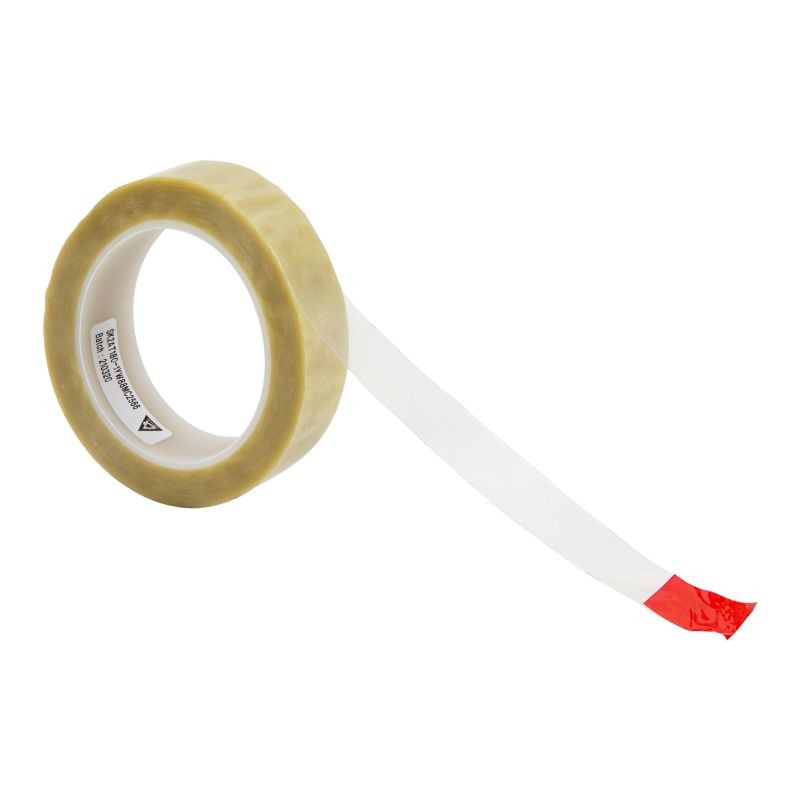
Flash tape for securing various vacuum materials underneath the vacuum bag. This tape is used to securely attach materials such as tear-off fabric (peel ply) and bleeder (vent cloth) to the vacuum bag, preventing them from shifting during the vacuum process. Flash tape is heat resistant up to 180°C, adheres well to various materials and can be removed easily without leaving residue behind.
Please note: flash tape is not suitable as vacuum tape (sealant tape).
Benefits flash tape
- Heat resistant up to 180°C.
- Easy to remove without residue.
- Excellent adhesion to various materials.
Specifications
Width: 25 mm
Length: 66 metres
Heat resistance: 180°C
Backing: polyester
Total thickness: 88 µm
Backing thickness: 34 µm
Adhesive layer thickness: 30 µm
Elongation at break: 100%
Colour: transparent/yellowish
Product properties
The key technical properties clearly listed in one place.
- Article number
- VAC001106
-
The measurement across a product from one side to the other, for example for rolls, panels or fabrics. With rolled materials, the usable width may differ from the overall width.
- 25 mm
-
The physical thickness of the supplied material, such as a panel, pad, film or foam sheet. This differs from the thickness of a liquid coating applied to a surface.
- Backing: 0.034 mm
-
The backing material that supports a functional layer, such as paper or fabric behind abrasive grains or film behind an adhesive coating. The backing affects flexibility, tear resistance and suitability for wet or dry use.
- Polyester
- Length
- 66 m
-
Elongation at break indicates how much a material can stretch during a tensile test before it breaks. It is expressed as a percentage (%) of the original length. At 100% elongation, the material has doubled in length just before breaking. A high value indicates a high ability to deform, but not how much force is needed.
- 100%
-
Heat resistance describes the temperature a material can withstand after correct processing and curing, usually expressed in degrees Celsius (°C). Continuous exposure is different from a brief temperature peak, and mechanical loading may also affect the limit. Heat resistance is not the same as the temperature at which the product can be applied.
- Up to 180 °C
Reviews
Frequently bought together
Useful additions for your project.