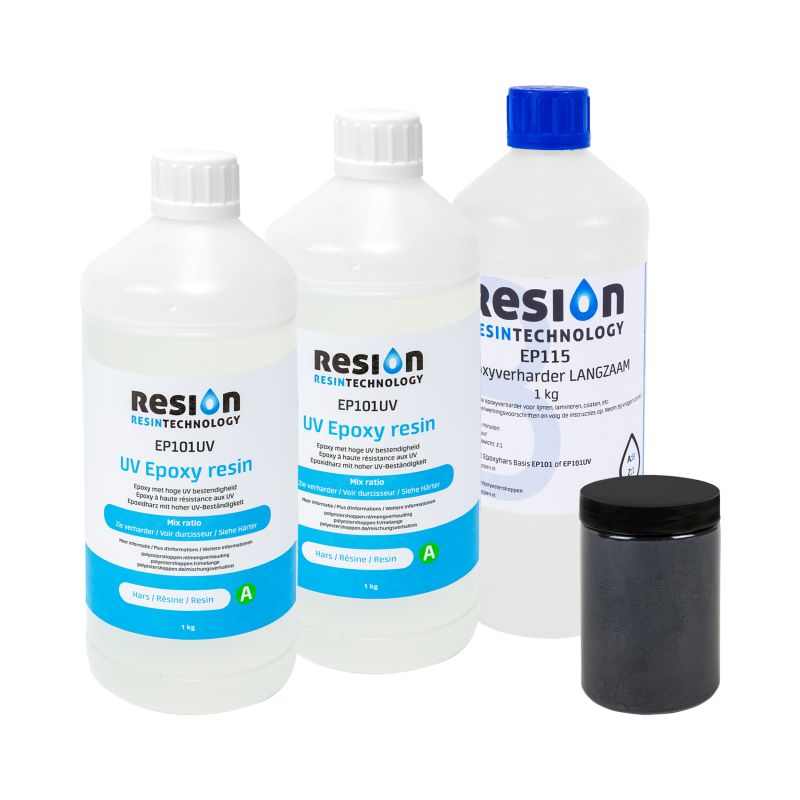

EP101UV | UV Epoxy BASE | 100 grams
UFI: Q8J0-H03E-D005-NSVM
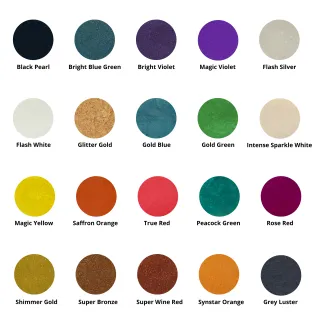
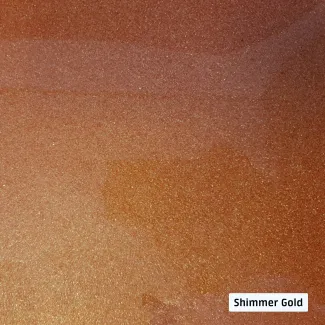
Easily create a beautiful metallic floor on an epoxy basis yourself. The possibilities are endless, because you can combine various pigments for beautiful effects. This makes the metallic epoxy floor ideal for dance halls, bedrooms, showrooms, shops and much more. With the help of our videos, you can easily create a high-quality epoxy floor yourself. Here we explain how to apply the floor in a clearly structured step-by-step plan.
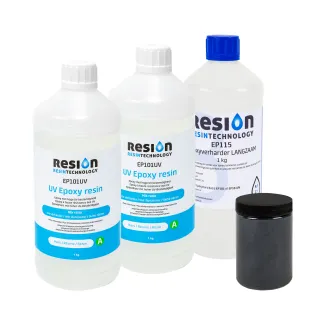
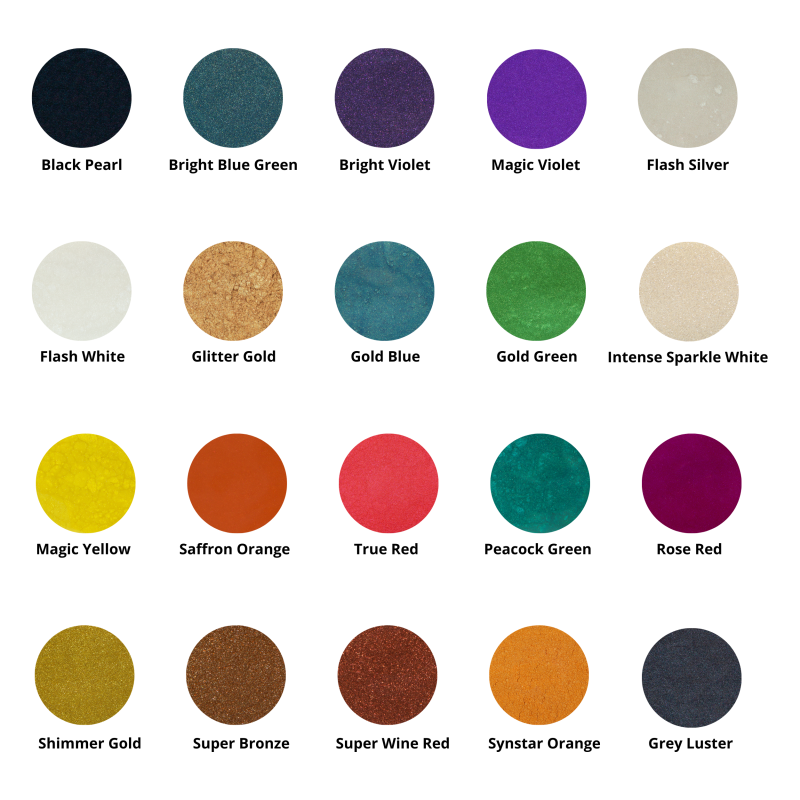
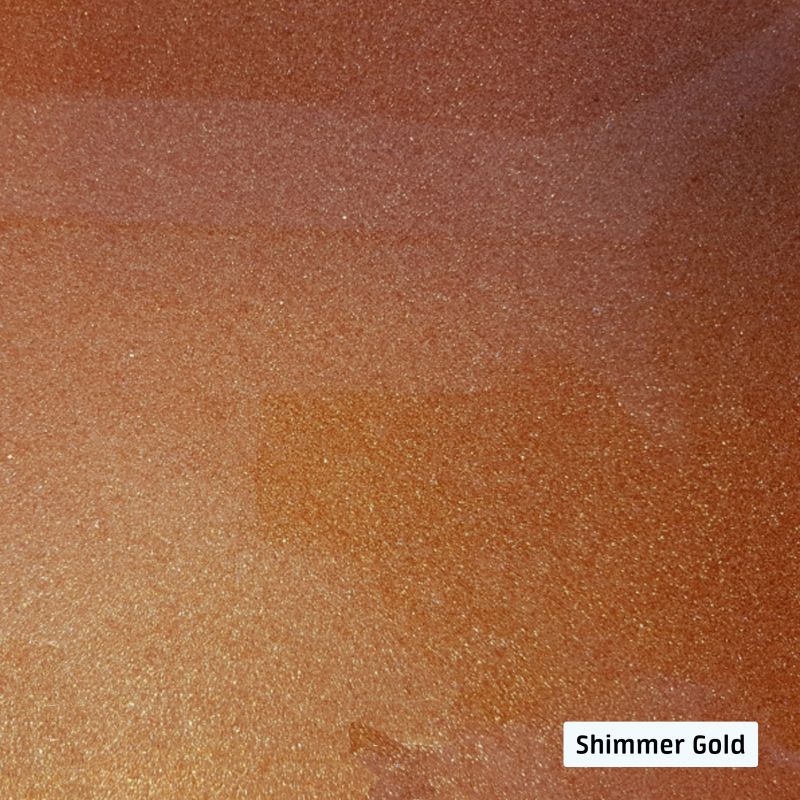
To use metallic epoxy in your screed, it must first be prepared with a hardener. To do this, add the epoxy hardener and the metallic powder pigment to the UV Epoxy base. This epoxy resin is UV stabilised and is therefore highly resistant to UV light. This makes adding UV stabilizer unnecessary. Then follow the steps below:
Now that you know what the user instructions are, let's move on to making an epoxy floor. Follow the steps below:
In the table below you can find the mixing ratio per m2. You can also find more information about the processing time, drying time and more.
| Number of m2 | Epoxy resin | Epoxy hardener | Metallic powder |
| Sample | 100 grams | 50 grams | 2 grams |
| 2.5 m2 | 2 kg | 1 kg | 200 grams |
| 6 m2 | 5 kg | 2.5 kg | 300 grams |
| 13 m2 | 10 kg | 5 kg | 600 grams |
Mixing ratio resin/hardener: 100 parts by weight of resin / 50 parts by weight of hardener
Packaging: 150 grams sample, 2.5 m2, 6 m2, 13 m2
Working time: approx. 30-45 minutes
Dust dry: 20 hours
Fully cured: 48-72 hours
Minimum application temperature: approx. 8°C
Consumption: approx. 1100 grams per m2
Amount of metallic powder: approx. 30-50 grams per kilo of mixed epoxy.
With this package, you can create an epoxy-based metallic floor quite easily and quickly. Do you have questions before you get started? Take a look at the video above that discusses the 10 most frequently asked questions about working with epoxy. Do you prefer to contact one of our specialists? For questions before, during or after your order and during the processing of the epoxy, we are available via Whatsapp, live chat, telephone and e-mail. So don't hesitate to contact us. We can also be reached by telephone at 003185 0220090. or by e-mail at support@polyestershoppen.com.
The key technical properties clearly listed in one place.
The resin family or system that a hardener, additive or reinforcement material can be combined with, such as epoxy, polyester or vinyl ester. Compatibility depends on the complete system, not just the general resin type.
The technical product category, such as primer, resin, hardener or cleaner. It explains the product's purpose and helps you find other products with a similar function.
Minimum application temperature is the lowest temperature at which a product may be used according to the manufacturer. The limit can apply to the air, substrate and product itself.
At lower temperatures, resins and coatings can become thicker and cure more slowly. Moisture can also condense on a cold substrate and reduce adhesion. Check the dew point and measure the surface temperature before starting. A longer drying time does not automatically make application below the specified minimum acceptable.
A paint or varnish layer is dust-dry when settling dust is less likely to stick to the surface. It may not yet be touch-dry, ready for overcoating or suitable for loading; these are different stages of drying and curing.
Curing time is the period a product needs to reach a specified stage of cure. It is usually given in hours or days, often at a reference temperature such as 20 °C. A product may be tack-free or safe to handle before reaching its full mechanical and chemical resistance. Film thickness and mixed quantity may also affect the time.
Consumption or coverage describes how much product is needed for a given surface area. Consumption may be stated in g/m² or kg/m², while coverage is often given in m²/L or m²/kg. A consumption of 0.2 kg/m² means a theoretical 200 grams per square metre. Actual use depends on film thickness, substrate absorbency, application method and waste.
Working time is the period during which a product remains workable after mixing or activation, usually given in minutes at a specified temperature, often 20 °C. With reactive resins, the chemical reaction also continues in the mixing container, and larger quantities or higher temperatures can shorten this time. Working time is different from gel time and full curing time.
Read the warnings and use appropriate protective equipment before handling the product.
UFI: Q8J0-H03E-D005-NSVM
Useful additions for your project.