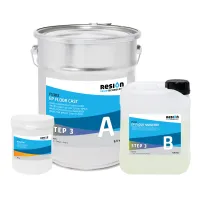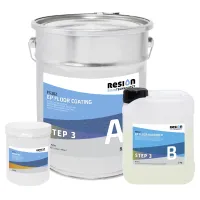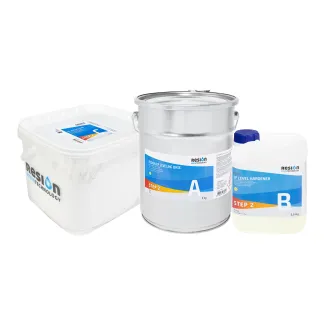
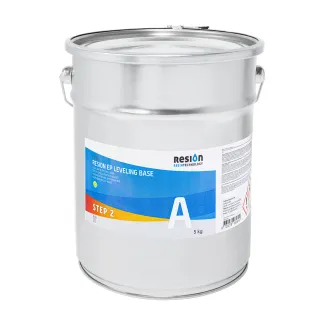
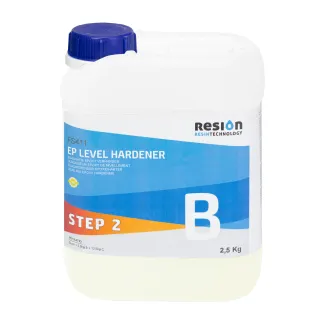
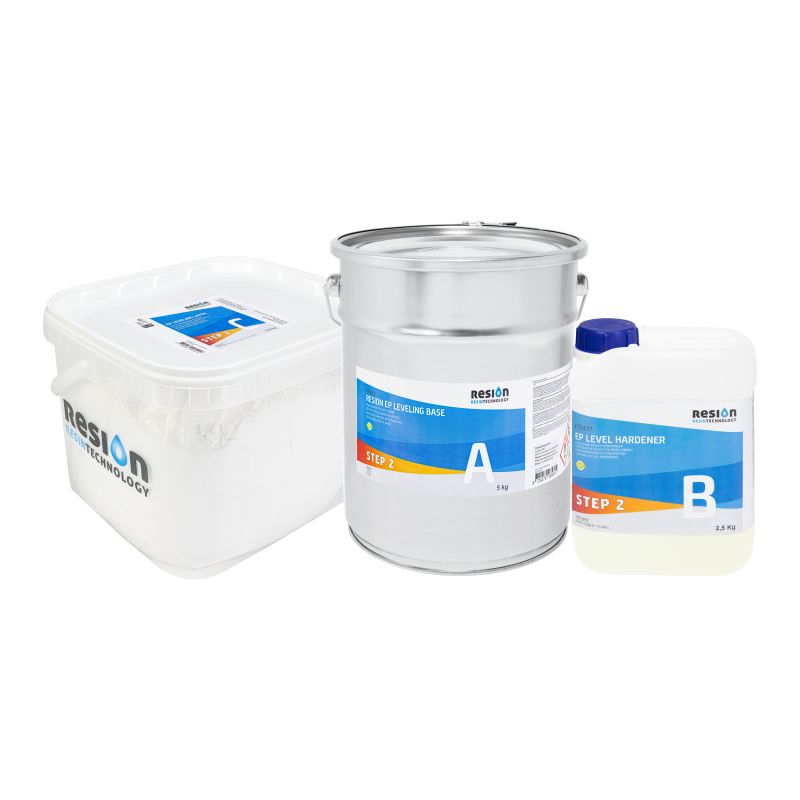
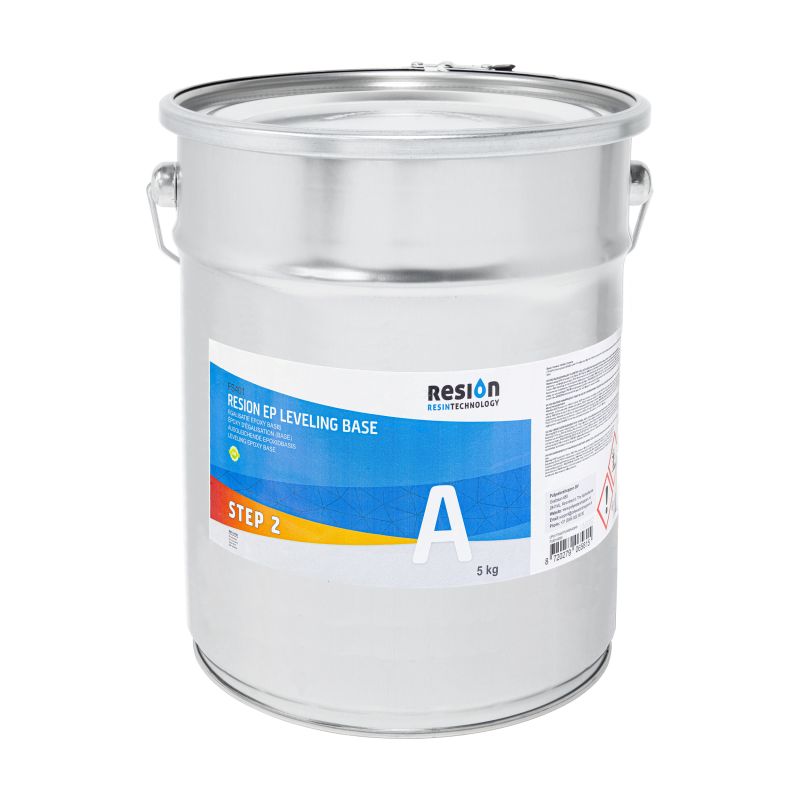
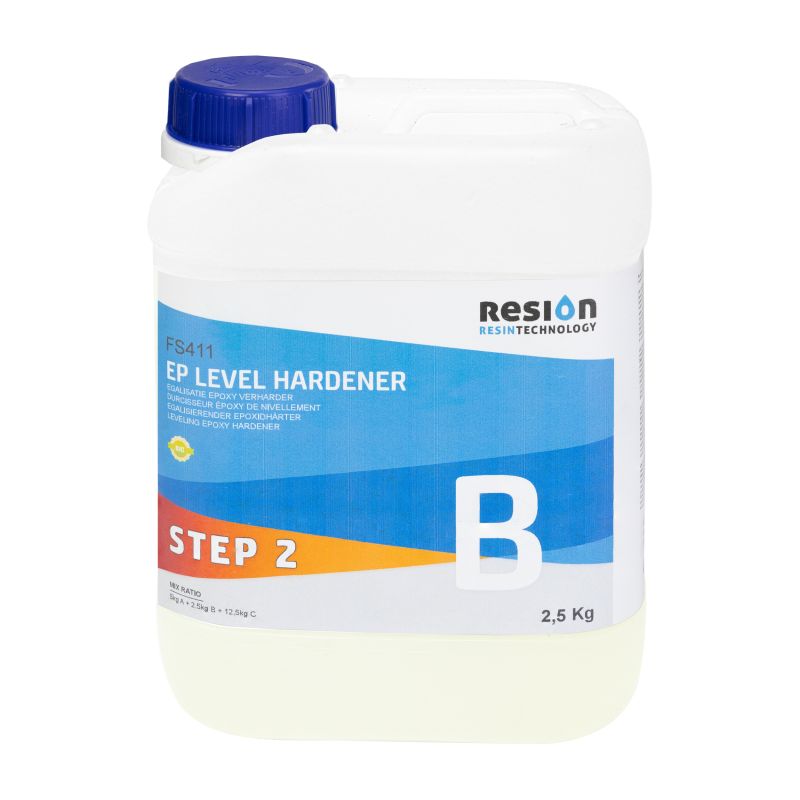
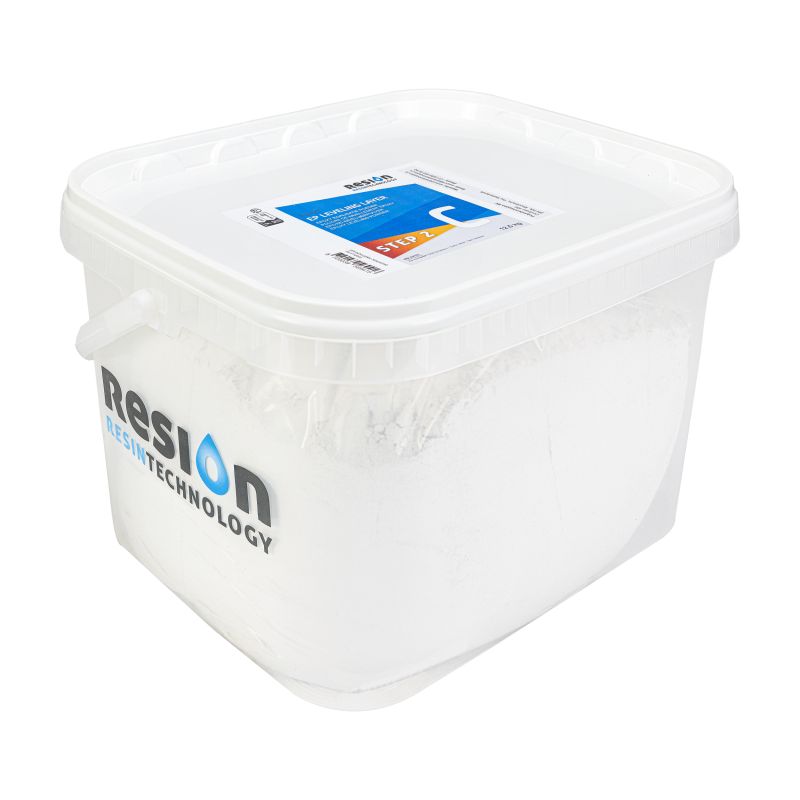

RESION | EP Leveling Base | 2 kg
UFI: XSJ0-J07T-7004-MUD0
RESION Levelling Epoxy (levelling mortar) makes it easy to smooth uneven surfaces. Concrete floors with rough surfaces, uneven areas or depressions can easily be levelled using this product. The epoxy levelling compound can be used as a wear layer or finished with our epoxy floor coating, epoxy cast floor or PU cast floor.
The epoxy levelling compound must be applied to a primed floor. Mix the supplied epoxy resin and hardener in a mixing container using a spiral mixer. Then add the supplied powder. Mix until a smooth, homogeneous mixture is obtained. Then pour the epoxy levelling compound onto the floor in sections. Spread the mixture using a flat trowel, floor squeegee or squeegee to the desired thickness, allowing the epoxy to self-level and create a smooth, even surface.
After curing overnight, the floor is generally ready for foot traffic. Apply your chosen flooring system within 24 hours.
Typical applications of epoxy levelling compound include:
Consumption:
| Resin | Hardener | Powder | Volume | |
| 8 kg set | 2 kg | 1 kg | 5 kg | 5 litres |
| 20 kg set | 5 kg | 2.5 kg | 12.5 kg | 12.5 litres |
| 40 kg set | 2 x 5 kg | 2 x 2.5 kg | 2 x 12.5 kg | 25 litres |
The key technical properties clearly listed in one place.
The technical product category, such as primer, resin, hardener or cleaner. It explains the product's purpose and helps you find other products with a similar function.
The resin family or system that a hardener, additive or reinforcement material can be combined with, such as epoxy, polyester or vinyl ester. Compatibility depends on the complete system, not just the general resin type.
Minimum application temperature is the lowest temperature at which a product may be used according to the manufacturer. The limit can apply to the air, substrate and product itself.
At lower temperatures, resins and coatings can become thicker and cure more slowly. Moisture can also condense on a cold substrate and reduce adhesion. Check the dew point and measure the surface temperature before starting. A longer drying time does not automatically make application below the specified minimum acceptable.
Working time is the period during which a product remains workable after mixing or activation, usually given in minutes at a specified temperature, often 20 °C. With reactive resins, the chemical reaction also continues in the mixing container, and larger quantities or higher temperatures can shorten this time. Working time is different from gel time and full curing time.
Mixing ratio indicates how much of each component is needed, for example resin (A) and hardener (B). A ratio of 100:50 by weight means 100 grams of A to 50 grams of B; by volume you might use millilitres. Weight and volume ratios are not necessarily the same because the components may have different densities. Accurate measuring is important for proper curing.
Read the warnings and use appropriate protective equipment before handling the product.
UFI: XSJ0-J07T-7004-MUD0
UFI: 4XF0-U0FQ-300T-SK4V
UFI: 0470-S0NK-700S-KH40
Useful additions for your project.