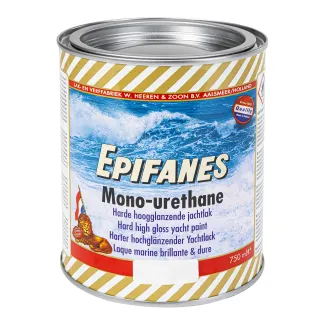
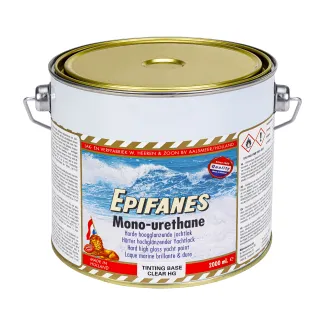

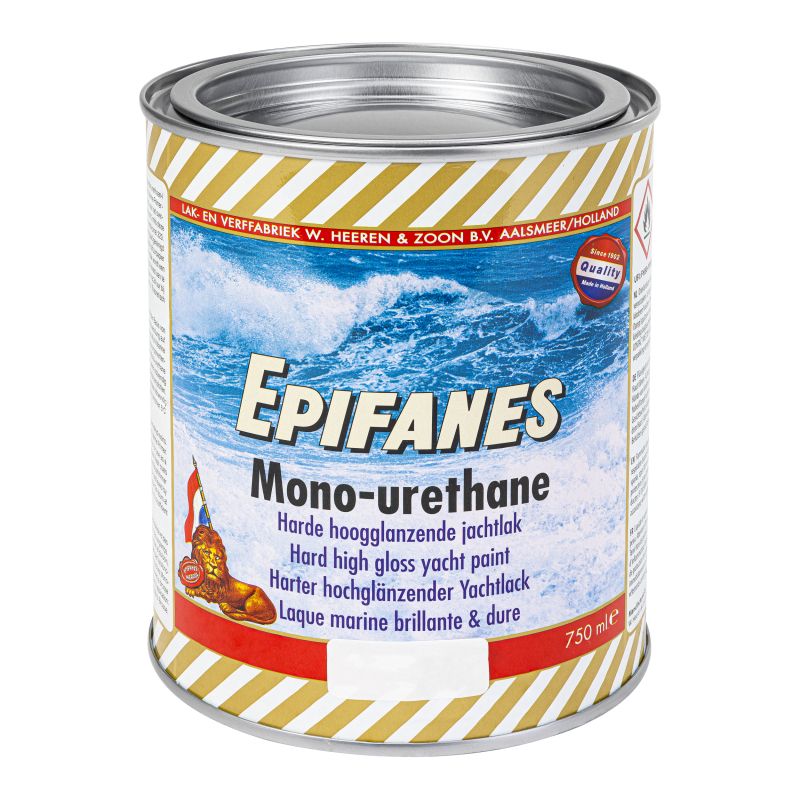
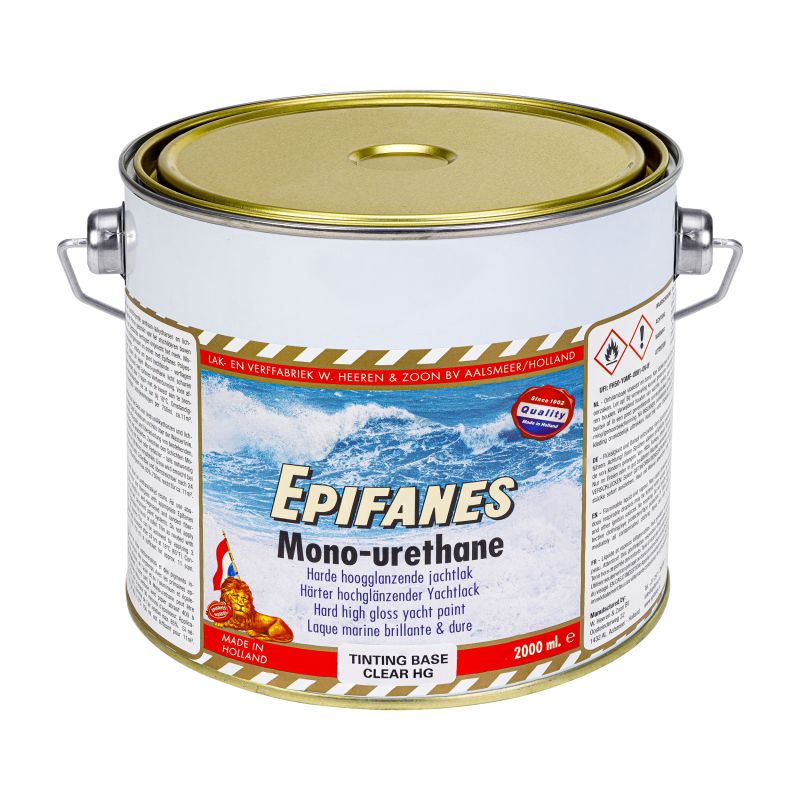


Epifanes Mono-urethane 1K Yacht Paint (high gloss)
At a glance
- 1-component boat paint
- Available in all RAL colours
- Scratch-resistant
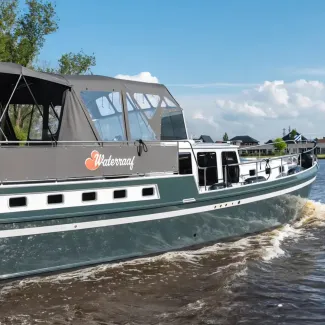
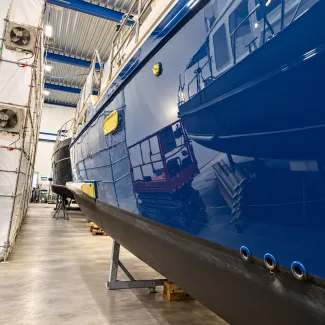
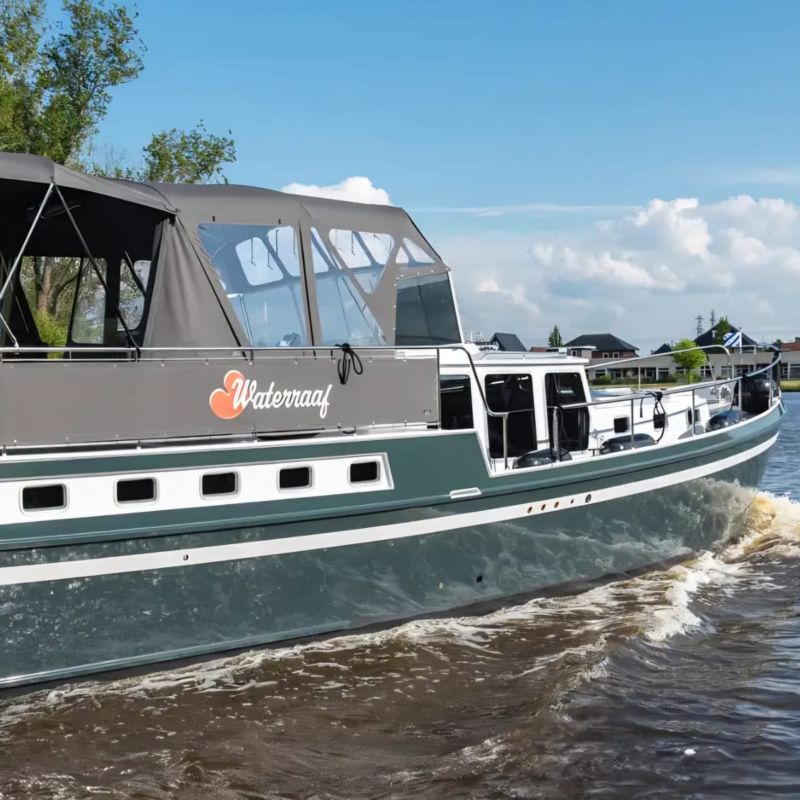
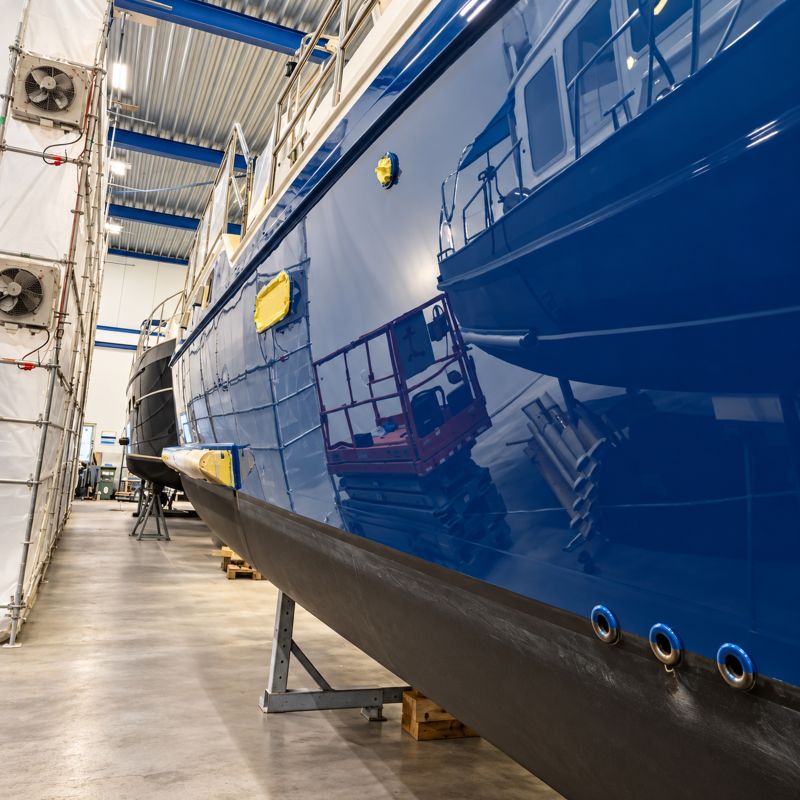
With Epifanes single-component high-gloss yacht paint, you can give your boat a durable and professional finish. Epifanes Mono-Urethane Yacht Paint is a premium-quality boat lacquer with a beautiful high-gloss finish. This coating is suitable for use above the waterline and offers excellent resistance to scratches, impacts and wear. Being a single-component product, Epifanes Mono-Urethane is easy to apply on a variety of substrates, including polyester, steel, aluminum and wood.
High-gloss Epifanes 1K Yacht Paint in colour
At Polyestershoppen, Epifanes Mono-urethane Yacht Paint is available in almost any colour you desire. In addition to the 24 standard colours (800 numbers), you can choose from RAL, NCS, AWL, Grip and other colour systems. Use the colour picker to select your ideal colour. With our Epifanes mixing machine, the colour is immediately mixed to order and shipped quickly. Orders placed before 5.00 pm CET (Central European Time) are dispatched the same day!
Applications Epifanes Mono-urethane
Epifanes Mono-urethane Yacht Paint is suitable for use as a topcoat on substrates such as polyester, steel, aluminium or wood. Always use the appropriate primer to ensure optimal adhesion. In addition, this yacht paint can also be used to maintain existing single-component lacquer systems, regardless of the brand.
Benefits of Epifanes Mono-urethane Yacht Paint
- High-quality one-component high gloss yacht paint.
- Easy to apply.
- Available in standard colours, RAL colours and colours on request.
- Excellent scratch, impact and abrasion resistance.
- Long-lasting colour and gloss retention.
- Resistant to solvents and chemicals.
Directions for use
Follow the instructions below to correctly apply the 1-component yacht varnish:
- Degrease the entire surface, then sand with P180 grit and degrease again.
- Apply Epifanes Multi Marine primer or Primocon primer and leave to cure for approximately 12 hours.
- Sand the surface with P180 grit paper.
- Open the Epifanes Mono-urethane Yacht Paint and stir well with a mixing spatula.
- Dilute the boat paint if desired with 5-10% Epifanes thinner.
- Apply the first coat of Mono-urethane paint with a fleece roller without pressing hard. Apply full for a good protective layer thickness and smooth the surface.
- Allow the boat paint to cure for 24 hours and then sand the surface with P400-grit paper.
- Now apply 2 more coats in the same way.
- After the last coat, let the paint cure completely for 2-3 days.
Under ‘documents’ you will find a number of more detailed manuals for this 1-component yacht paint. Also watch the instruction video below for a clear explanation.
Specifications
Contents: 750 ml, 2000 ml
Gloss: high-gloss
Recommended film thickness: 70 - 80 µm wet = 35 - 40 µm dry
Theoretical coverage: 11m2 per litre
Dust dry: 3 hours (20°C)
Sandable/recoatable: 24 hours (20°C)
Density: 950 - 1300 gr. / dm³ (depending on colour)
VOC content: 339 grams/litre
Shelf life: at least 3 years from production date, in unopened original packaging, stored at a temperature between 5°C and 30°C.
More information about Epifanes yacht paint?
Do you have any questions about Epifanes Mono-urethane or would you like more information about using this paint? No problem, we are happy to give you honest and expert advice! Feel free to contact our specialists via email or WhatsApp. If you order Epifanes Mono-urethane before 5:00 pm CET (Central European Time), we will send your order the same day!
Product properties
The key technical properties clearly listed in one place.
- Article number
- LAK002095
-
Gloss level indicates how much light a dry paint or coating reflects and how the finished surface looks.
- Matt: little reflection and a subdued appearance.
- Satin: a gentle sheen between matt and high gloss.
- High gloss: stronger reflections and a more pronounced colour, although surface imperfections may become more visible.
Gloss can be measured in gloss units (GU) at a specified angle. Terms such as matt and satin do not necessarily mean exactly the same thing across manufacturers. Substrate condition and application also affect the final appearance.
- High gloss
-
The technical product category, such as primer, resin, hardener or cleaner. It explains the product's purpose and helps you find other products with a similar function.
- 1K paint
-
The recommended layer thickness is the thickness at which you apply each coat of paint, coating or resin. It is usually given in micrometres (µm) or millimetres (mm).
- Wet film thickness: the thickness immediately after application.
- Dry film thickness: the thickness after drying or curing.
For a coating with 60% solids by volume, a wet film of 100 µm will theoretically produce a dry film of approximately 60 µm. Film thickness affects coverage, protection and drying. Always check whether the manufacturer specifies wet or dry film thickness.
- 70-80 µm wet (= 35-40 µm dry)
-
Density describes the mass of a material per unit volume. Values may be given in g/cm³, kg/L or kg/m³; 1 g/cm³ equals 1 kg/L. For example, one litre of a liquid with a density of 1.2 kg/L weighs approximately 1.2 kg. Density helps convert between weight and volume, but it can vary with temperature.
- 950-1.300 g/dm³
-
The period for which an unopened product remains usable under the specified storage conditions. Check whether the period starts from the manufacturing date or another date. Shelf life may be shorter after opening, especially for products sensitive to air or moisture.
- At least 36 months
-
A paint or varnish layer is dust-dry when settling dust is less likely to stick to the surface. It may not yet be touch-dry, ready for overcoating or suitable for loading; these are different stages of drying and curing.
- 3 hours (20 °C)
-
Consumption or coverage describes how much product is needed for a given surface area. Consumption may be stated in g/m² or kg/m², while coverage is often given in m²/L or m²/kg. A consumption of 0.2 kg/m² means a theoretical 200 grams per square metre. Actual use depends on film thickness, substrate absorbency, application method and waste.
- 15 m²/L
- Net contents
- 750 ml
-
VOC content (volatile organic compounds) indicates the amount of these substances in a product, usually expressed in g/L (grams per litre). They may evaporate during application and drying. The value describes the composition, but actual exposure also depends on how much is used, ventilation and the application method.
- 339 g/L
Safety information
Read the warnings and use appropriate protective equipment before handling the product.
Reviews
Frequently bought together
Useful additions for your project.