Steel is a strong material, but without proper treatment, it quickly runs the risk of rust and premature deterioration. Whether you are repainting a bare steel hull or carrying out maintenance, proper preparation and the correct paint system are crucial. In this article, we cover two scenarios: painting above the waterline and below the waterline.
Painting above the waterline
The success of a well-applied paint system begins with preparation. Pay sufficient attention to this step to prevent rust, poor adhesion, and finishing issues.
Cleaning
Before painting, the steel must be completely clean and dry. Remove dirt, grease, oil, and other contaminants with Epifanes Cleaning Thinner. A clean surface ensures optimal adhesion for both primer and topcoat.
Rust removal
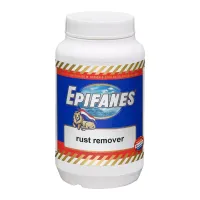
Bare steel must be completely free of rust and mill scale. Ideally, steel should be abrasive blasted to Sa 2.5. If that is not possible, you can manually remove rust using a needle scaler or by sanding with coarse sandpaper (e.g., P60-P80). Do not use a wire brush, as this can cause new rust formation. Remove sharp edges and weld spatter, and treat stubborn rust with Epifanes Rust Remover to prepare the substrate for coating.
After completing these steps, apply the first coat of primer as quickly as possible to prevent new oxidation.
Sa (Sauber) is a standard classification from the ISO 8501-1 standard for steel blast cleaning, used to grade surface preparation prior to painting. It indicates how clean and rust-free the steel must be. Sa 2.5 represents a very high degree of cleanliness according to this standard.
Fairing and filling
Do you have minor surface irregularities in the steel? Use RESION Polyester Filler to fill them in.
System build-up above the waterline
One-component paint system on steel
| Step 1 | Step 2 | |
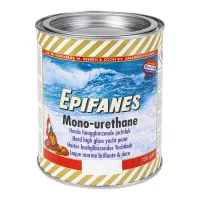
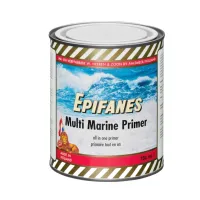
| Epifanes Multi Marine Primer | Epifanes Mono-urethane Yacht Paint | |
| Number of coats | 3 | 3 |
| Thinning | 5-10% | 0-5% |
| Drying time | 18 hours | 24 hours |
| Sanding | P220 - dry | P400 - wet |
| Remarks | Note! Thin the first coat by 25% and apply with a stiff brush. If necessary, fair smooth with RESION Polyester filler (max. 1 mm). | Thin the first coat by 5-10%. |
Two-component paint system on steel
| Step 1 | Step 2 | Step 3 | |
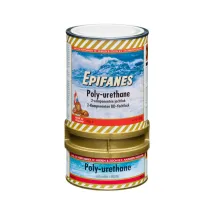
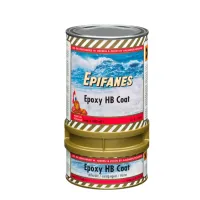
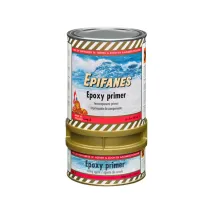
| Epifanes Epoxy Primer | Epifanes Epoxy HB Coat | Epifanes Poly-urethane Yacht Paint | |
| Number of coats | 1 | 2 | 3 |
| Thinning | 25% | 5-10% | 0-5% |
| Drying time | 12 hours | 6 hours | 24 hours |
| Sanding | P180-P220 - dry | Do not sand | P400 - wet |
| Remarks | Note! Thin the first coat by 25% and apply with a stiff brush. Fair smooth with epoxy filler if required. | Only sand with P180-220 if the subsequent coat is applied after 48 hours. Clean the final coat with Epifanes Cleaning Thinner. |
Thin the first coat by 5-10%. Apply subsequent coats within 48 hours without sanding in between. Always sand between coats after 48 hours. |
Painting below the waterline
Below the waterline, protection against corrosion and continuous water immersion is all the more critical. Factor these tasks into your preparation to ensure a durable underwater finish.
Cleaning and rust removal
Just like above the waterline, the steel must be dry, clean, and rust-free. Clean using Epifanes Cleaning Thinner and remove rust by abrasive blasting or sanding with P60 grit. Do not use a wire brush; round off sharp edges and remove weld spatter. Treat difficult rust spots with Epifanes Rust Remover, then apply a primer coat as quickly as possible to prevent further oxidation.
Fairing and filling
Underneath the waterline, filling is typically kept to a minimum or avoided entirely. If filling is necessary, use an appropriate underwater filler such as Variopox Epoxy Filler or International Watertite.
Existing epoxy
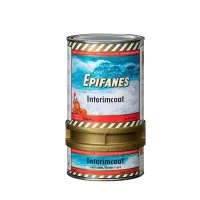
If an epoxy coating is already present on the hull and you want to re-protect or complete it, degrease the existing epoxy with Epifanes Cleaning Thinner and sand coarsely with P60. Then apply one coat of Epifanes Interimcoat+; this is an epoxy tie-coat primer specifically designed as a bonding base for antifouling applications both above and below the waterline.
Existing antifouling
When dealing with existing antifouling, it must first be scrubbed or scraped down. Rinse thoroughly with fresh tap water and degrease with Epifanes 1-C Spray Thinner. Afterward, apply two new coats of antifouling.
System build-up below the waterline
One-component paint system on bare steel
| Step 1 | Step 2 | |
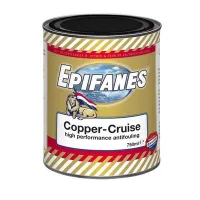
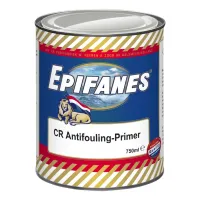
| Epifanes Antifouling Primer | Epifanes Copper-Cruise antifouling | |
| Number of coats | 5 | 2 |
| Thinning | 0-5% | 0-5% |
| Drying time | 6 hours | 6 hours |
| Sanding | Do not sand | Do not sand |
| Remarks |
Note! Thin the first coat by 25% and apply with a stiff brush. Allow the final coat to cure for 48 hours. If antifouling is not applied within 7 days, sand with P150-180 grit. |
Two-component paint system on bare steel
| Step 1 | Step 2 | Step 3 | Step 4 | |
| Epifanes Epoxy Primer | Epifanes Epoxy HB Coat | Epifanes Interimcoat+ | Epifanes Copper-Cruise antifouling | |
| Number of coats | 1 | 4 | 1 | 2 |
| Thinning | 25% | 5-10% | 5-10% | 0-5% |
| Drying time | 12 hours | 6 hours | 12 hours | 6 hours |
| Sanding | Do not sand | Do not sand | Do not sand | Do not sand |
| Remarks | This is the tie-coat primer for subsequent layers. Fair smooth with epoxy filler if required. | Only sand (P180) if the next coat is applied after more than 48 hours. | This serves as the bonding primer for antifouling. Allow the system to cure for 5 days, then degrease with Cleaning Thinner. Do not sand! |
Paint system maintenance
A properly applied paint system requires attention throughout the season as well. Regularly check for damage, blistering, or discoloration. Spot-repair minor damage by degreasing, lightly sanding, and repainting using the previously applied Epifanes products, such as Mono-urethane Yacht Paint or a suitable copper-cruise antifouling. Proper maintenance prevents rust formation, extends the lifespan of your paintwork, and ensures optimal protection for your vessel.
Do you have questions about building a paint system for steel boats? Feel free to contact our product specialists!