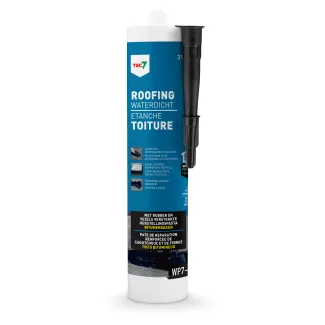
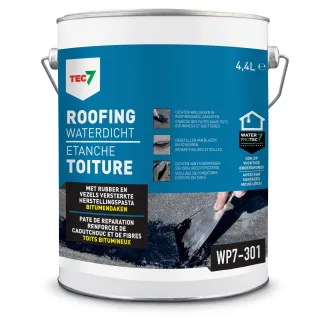
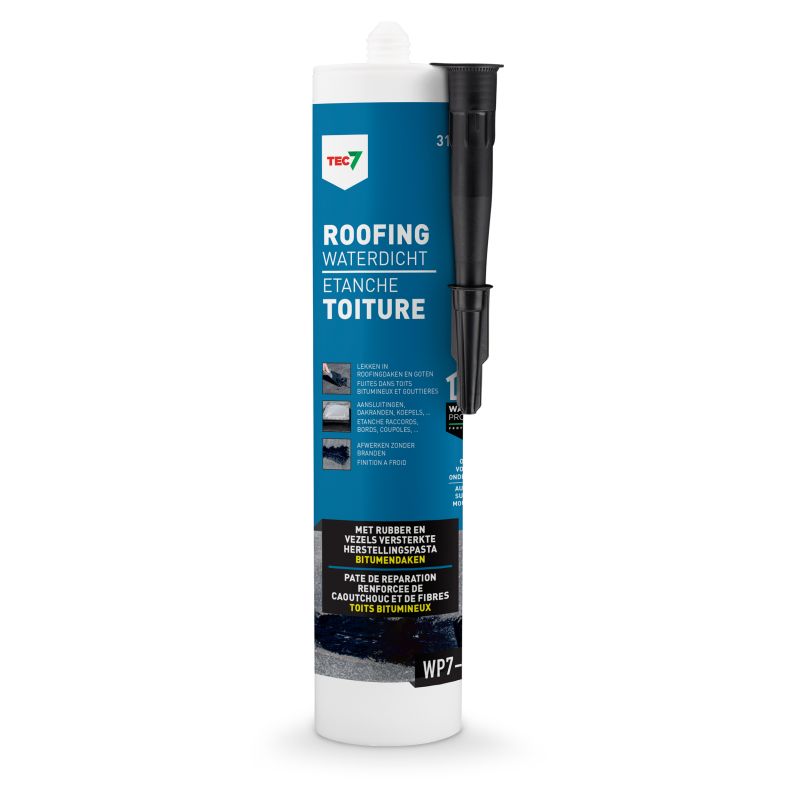
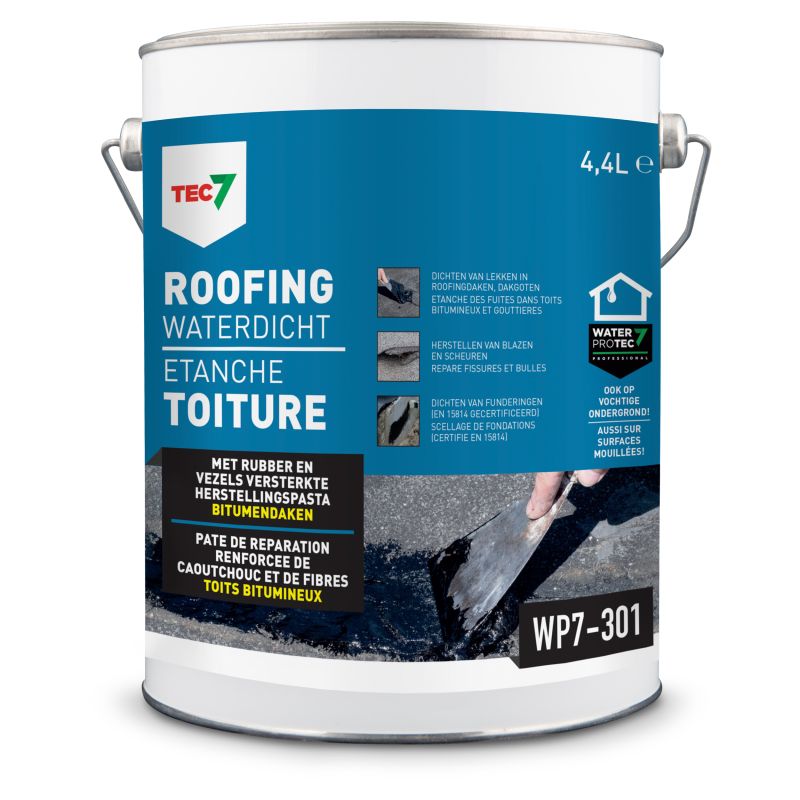

Tec7 WP7-301 Roofing Waterproof
At a glance
- Tec7 WP7-301
- Roof repair paste
- Ready-made paste
Tec7 Roofing Waterproof is a ready-to-use, easy-to-apply roof repair paste reinforced with rubber and glass fibres, from Tec7’s Waterprotect (WP) product line. WP7-301 can be applied to both wet and dry surfaces, including vertical surfaces. The product is immediately waterproof and rain-resistant, adheres to most building materials and is compatible with all bituminous materials. It can be finished with slate chippings for additional UV protection and foot traffic resistance.
Benefits of Tec7 Roofing Waterproof
- Cold repair of leaks, cracks and blisters.
- Contains rubber for long-lasting flexibility.
- Contains bitumen for an effective seal.
- Contains fibres for lasting strength.
Applications of WP7-301
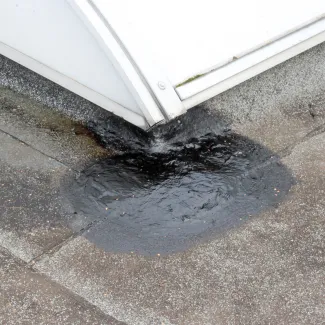
- Sealing leaks in bituminous roofs and gutters.
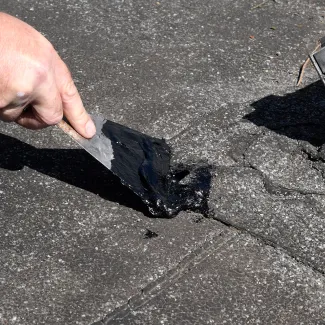
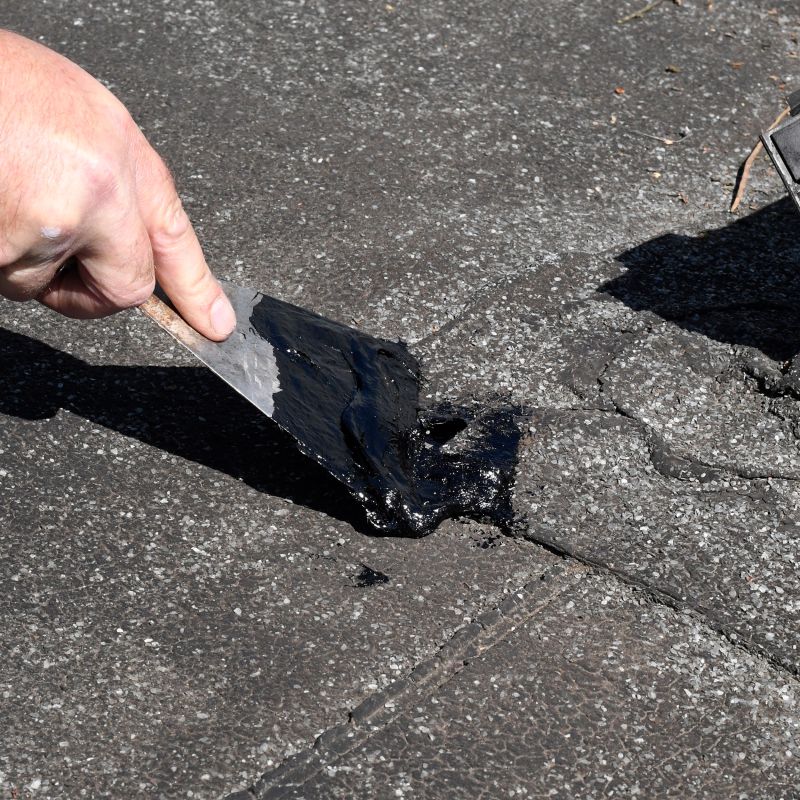
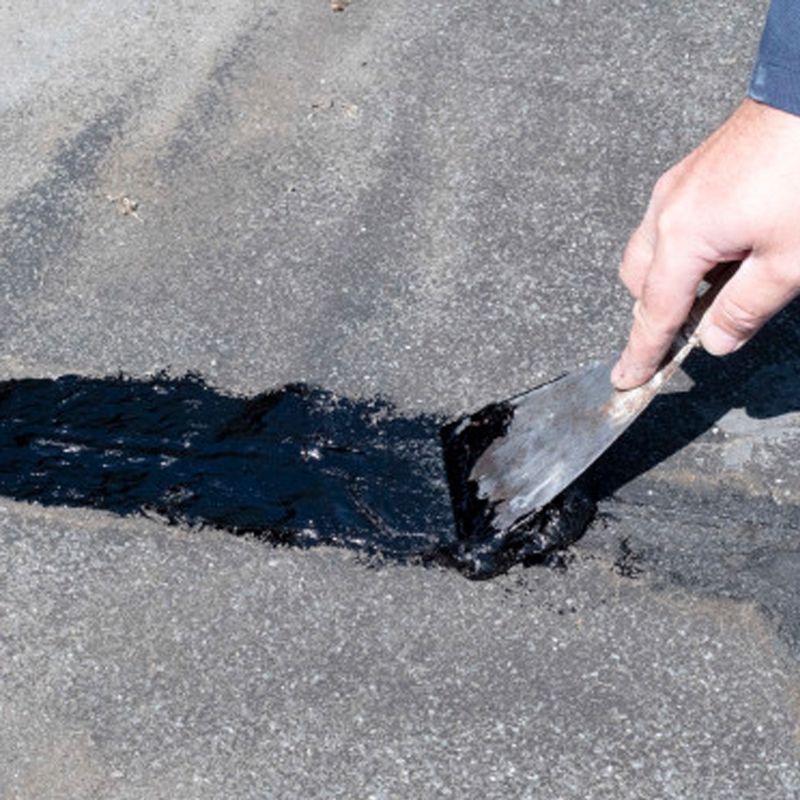
- Repair of blisters and cracks.
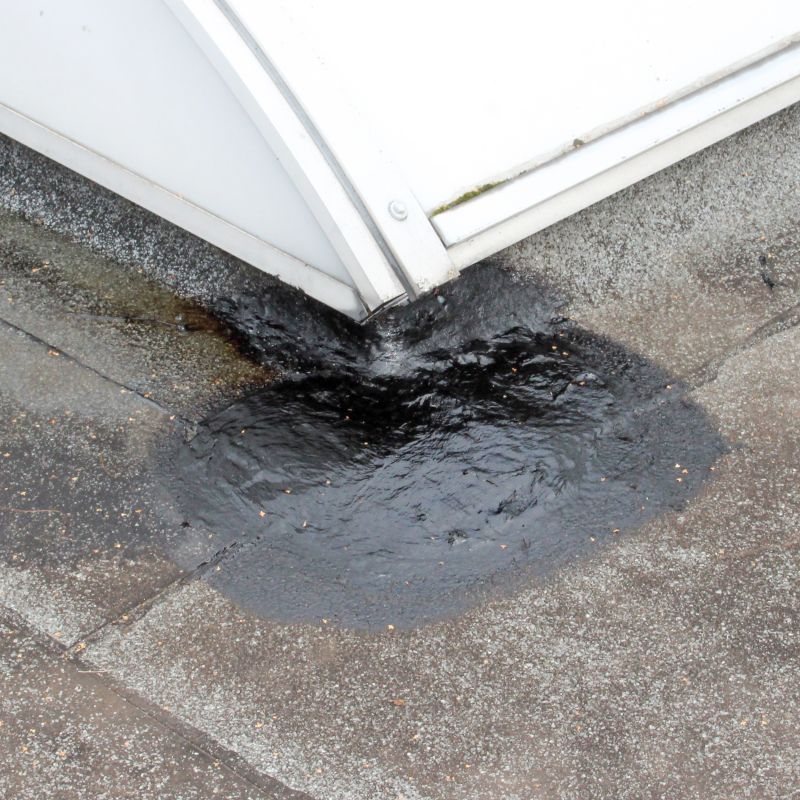
- Sealing roof penetrations and chimneys.
- Waterproofing foundations (certified according to EN 15814).
- Waterproofing joints, roof edges, roof domes, balconies and terraces.
Directions for use
- Apply Tec7 Roofing Waterproof to a clean, stable surface free from ice and snow.
- If necessary, clean and dry the surface without heating it. Remove loose material and hardened bitumen. Cut blisters in the roof covering open in a cross shape.
- Reinforce major repairs with pieces of roofing felt or Tec7 Fibreglass Tape.
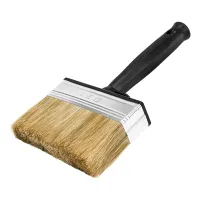
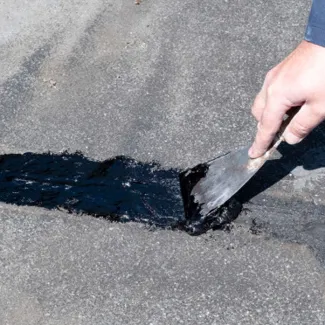
- Apply with a sealant gun, brush or spatula.
Finish the surface and clean tools with Tec7 Cleaner. Do not use in ponds or watercourses, or on roofs that drain into ponds. Apply a layer 2 mm thick. When finishing with slate chippings, a layer thickness of 1 mm is sufficient.
1 litre is sufficient for a 1 mm layer over 1 m².
Specifications
Base: glass fibre-reinforced modified bitumen
Odour: solvent odour
Colour: black
Relative density: 1.1
Elongation at break: 170%
Application temperature: -15 °C to +40 °C
Temperature resistance: -40 °C to +85 °C
Chemical resistance: not resistant to hydrocarbon-based solvents
Paintable: no
Shelf life: 24 months when stored in the sealed original packaging in a cool, dry, frost-free place
Safety measures: consult the safety data sheet
Product properties
The key technical properties clearly listed in one place.
- Article number
- DAK001085
-
The recommended application temperature range indicates the conditions under which the product can generally be applied and cured properly. Three temperatures matter:
- Air: the temperature in the workshop or outdoors.
- Substrate: the temperature of the surface being treated.
- Product: the temperature of the resin, adhesive or coating itself.
A cold substrate can cause condensation and affect adhesion. At higher temperatures, two-component products may react faster, reducing their working time. Check the dew point and follow the product instructions.
- -15-40 °C
-
The chemical base describes the chemistry of an adhesive, sealant, resin or coating, such as epoxy, polyester, polyurethane, (methyl)methacrylate or a hybrid polymer. It affects curing, flexibility and adhesion. Products with the same chemical base are not necessarily suitable for the same applications.
- glass fibre filled modified bitumen
-
The characteristic smell of a product when opened or applied, such as neutral, mild or solvent-like. Smell intensity is not a reliable indication of exposure to hazardous substances; refer to the safety data sheet.
- Solvent odour
-
The period for which an unopened product remains usable under the specified storage conditions. Check whether the period starts from the manufacturing date or another date. Shelf life may be shorter after opening, especially for products sensitive to air or moisture.
- 24 months
-
The overcoating interval tells you when the next layer of paint, varnish or coating may be applied. Many multi-coat systems specify both a minimum and a maximum interval:
- Minimum overcoating time: the previous layer is dry or cured enough to accept another coat.
- Maximum overcoating time: the period during which the next coat can bond without extra surface preparation under the stated conditions.
Overcoating too early can affect drying or the finish. Once the maximum interval has passed, cleaning and sanding may be needed to ensure adhesion between coats. Temperature and film thickness affect the waiting times.
- Not overpaintable
-
Elongation at break indicates how much a material can stretch during a tensile test before it breaks. It is expressed as a percentage (%) of the original length. At 100% elongation, the material has doubled in length just before breaking. A high value indicates a high ability to deform, but not how much force is needed.
- 170%
- Net contents
- 870 ml
-
Heat resistance describes the temperature a material can withstand after correct processing and curing, usually expressed in degrees Celsius (°C). Continuous exposure is different from a brief temperature peak, and mechanical loading may also affect the limit. Heat resistance is not the same as the temperature at which the product can be applied.
- -40 to 85 °C
Safety information
Read the warnings and use appropriate protective equipment before handling the product.
Reviews
Frequently bought together
Useful additions for your project.