If you have ever looked at a technical data sheet (TDS) for a professional structural adhesive, you were likely overwhelmed by terms like lap shear strength, peel strength, MPa, and various ISO standards. But what do those test results actually mean in practice? And how do manufacturers ensure that a bonded joint stays secure under the most extreme conditions?
In this article, we dive into the world of testing laboratories. Next time, you will understand the numbers on the data sheet precisely and choose the right adhesive for your project without hesitation.
Why are structural adhesives tested so rigorously?
In modern industry, high-quality structural adhesives are increasingly replacing traditional fasteners like screws, rivets, and welds. Whether in aerospace, automotive, or electronics: a bonded joint must be 100% reliable—even after years of exposure to heat, moisture, and mechanical stress.
To guarantee this, manufacturers test their products according to strict international standards (ISO). In specialized laboratories, bonded assemblies are pushed to their absolute limits using precision equipment until they fail. The three most common mechanical tests on a data sheet are the lap shear test, the tensile test, and the peel test.
1. Lap Shear Strength
This is the most widely used adhesive test and the value you will find on virtually every technical data sheet.
How is it tested? Two standardized strips of material (such as aluminum or steel) are bonded together with a precise overlap. Once fully cured, a tensile testing machine grips the ends and pulls the strips apart lengthwise until the bond breaks.
- What does it measure? How well the adhesive resists forces sliding parallel to (across) the bonding surface.
- In practice: this simulates overlapping sheet materials or panels subjected to tension. The force at which the bonded joint breaks is expressed in MPa (Megapascals) or N/mm2. The higher the lap shear strength, the stronger the basic bond.
2. Tensile Strength
While the lap shear test measures the force between materials, the tensile test looks at the internal strength of the adhesive itself.
How is it tested? A specimen rod is cast using only cured adhesive, without metal or plastic substrates. The tensile testing machine pulls this rod apart from both ends until it snaps in half.
- What does it measure? The internal cohesion of the adhesive itself and its elasticity (elongation at break).
- In practice: a high tensile strength means the adhesive is intrinsically tough. Does the adhesive also feature high 'elongation at break'? Then it can absorb movement, expansion, and contraction without tearing internally.
3. Roller Peel Strength
Adhesives excel at handling shear forces, but naturally struggle more with 'peeling'. To measure this, manufacturers use the roller peel test.
How is it tested? A flexible strip is bonded to a rigid substrate (such as sandblasted aluminum). A specialized machine then pulls the flexible strip away from the substrate at a fixed angle.
- What does it measure? The adhesive's resistance to forces concentrated entirely on a single, moving line (think of pulling a thin panel away from the edge).
- In practice: crucial for structures exposed to wind gusts, vibrations, or where thin materials might lift at the edges. Peel strength is expressed in N/mm.
The big three powerhouses: Epoxy, MMA, and PU
Now that you know how manufacturers conduct tests, it is time to compare the three main adhesive technologies. In the industrial world, three core technologies handle the heavy lifting: epoxy adhesives, methyl methacrylate adhesives (MMA), and polyurethane adhesives (PU). Each type responds differently to mechanical testing. Use the table below as a compass for your adhesive selection.
| Property / Test | Epoxy Adhesives | Methyl Methacrylate Adhesives (MMA) | Polyurethane Adhesives (PU) |
|---|---|---|---|
| Lap Shear Strength Shear resistance |
★★★★★ Extremely high The strongest pure bond on metals and concrete. |
★★★★☆ Very high Excellent grip on metals & most plastics. |
★★★☆☆ Good More than sufficient for most structures. |
| Peel Strength Peel resistance |
★★☆☆☆ Low Rigidity makes epoxy vulnerable to peeling under edge loads. |
★★★★☆ High Great balance between toughness and structural strength. |
★★★★★ Excellent Built-in flexibility makes PU excel here. |
| Elasticity / Elongation Vibration absorption |
★☆☆☆☆ Rigid & hard Virtually no flexibility; can crack under shock. |
★★★☆☆ Medium flexibility Dampens thermal expansion & vibrations well. |
★★★★★ Highly elastic Ideal for dampening shocks and vibrations. |
| Cure Speed Time to handling strength |
★★☆☆☆ Slower Often requires time or heat for full strength. |
★★★★★ Lightning fast Functionally set within minutes. |
★★★☆☆ Fast to medium Provides controlled open working time. |
| UV & Weather Resistance Outdoor suitability |
★★☆☆☆ Moderate Can yellow or chalk in sunlight. |
★★★★☆ Good Remains stable under most weather conditions. |
★★★★★ Excellent Remains optically and technically sound (when UV-stabilized). |
| Best Substrates | Metals, concrete, stone, and hardwood assemblies. | Metals, composites, and most plastics. | Plastics, composites, wood, glass, and rubbers. |
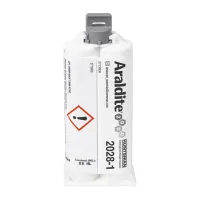
| Common Adhesives | Araldite 2011, Araldite Standard, Araldite 2031-1 | Araldite 2050, Araldite 2051, Araldite 2022-1 | Araldite 2018, Araldite 2028-1 |
Durability testing
An adhesive can be rock solid immediately after curing in the lab, but will it maintain that strength after five years of rain, freezing cold, or chemical exposure? Manufacturers simulate years of wear using durability tests:
- Heat Ageing
Bonded test panels remain in an oven (e.g., 70°C) for days or weeks. Afterwards, a tensile machine measures remaining strength. Surprising fact: some adhesives actually gain strength here due to 'post-curing'! - Chemical Resistance (Immersion tests)
Test panels are fully submerged in water, fuel, oil, or acids for up to 90 days, after which their mechanical properties are retested. - Weathering and UV Testing
Inside an artificial sunlight tester or tropical environmental chamber, the adhesive undergoes intense UV light and high humidity. It is checked for embrittlement and yellowing (measured via the Yellowing Index).
Three questions before choosing an adhesive
When selecting a structural adhesive, do not blindly look for the highest lap shear strength figure. The best adhesive is the one tailored to your specific load and environment. Always ask yourself these three questions:
- What forces act on the joint?
Is it primarily shear stress? Choose Epoxy or MMA. Do you expect peeling, bending, or vibrations? Then a polyurethane adhesive is almost always the better choice. - What are the environmental conditions?
Will the product be outdoors? You need UV and moisture resistance. Is the assembly subject to vibrations (engines, vehicles, wind load)? Then you need elasticity. - How fast must it bond?
Do you need to proceed with production immediately? Choose MMA. Need time to position parts precisely? PU adhesives or slow epoxy systems offer more working time.
Need more information about adhesives?
At Polyestershoppen, you will find an extensive range of adhesives from leading industrial brands like Araldite and Plexus. Need assistance selecting the right epoxy, methacrylate, or polyurethane adhesive for your job? Feel free to contact our specialists—we are happy to assist you!