Air bubbles, a common problem you run into while pouring epoxy. There are several ways to remove air bubbles and you can read about them in this article. If you have any questions about our products or need help with your project feel free to contact our customer service team.
5 Tips to remove air bubbles from epoxy
These are the 5 tips to remove air bubbles in epoxy:
Tip 1. Mix calmly
Make sure you mix the components together calmly, this way you avoid knocking air bubbles into the epoxy. After mixing, it is also best to let the epoxy stand for a while, this will give the air bubbles a chance to rise.
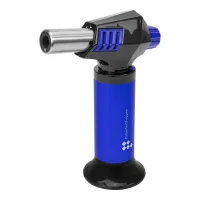
Tip 2. Remove air bubbles with a gas burner
Use a burner/butane gas burner (for larger surfaces) to make a short sweeping motion across the surface to remove air bubbles. Be careful not to hold the burner too close to the epoxy or against the mould, otherwise it will burn. You can repeat this several times after casting, during the epoxy's processing time.
Tip 3. Use RESION Bubble Burst
With RESION Bubble Burst, you can easily remove air bubbles from the epoxy without affecting the mould or epoxy. You only need to spray over the surface a few times to make the bubbles disappear.
More information on how to use RESION Bubble Burst can be found on this page.
Tip 4. Heat the epoxy
Heating the epoxy makes it more fluid, allowing bubbles to rise more easily. You can do this by putting the mixing cup or bottles of epoxy in water of about 50 degrees. Keep an eye on it though as the epoxy should not get too hot and the epoxy itself should not come into contact with the water.
Tip 5. Use a vacuum pump
Surely, using a vacuum vent set is one of the most effective ways to bubble-free pouring. The set consists of a vacuum pump with a dome. With the help of the pump, all the air is pulled out of the dome and so all the bubbles come up by themselves. More information on how to use the set can be found here.
When you need to vent large amounts of epoxy at once, for casting a table for example, you can connect a vacuum chamber to the vacuum pump.
Buying these materials is an investment, but if you work with epoxy more often, it's well worth it!
More information or tips on epoxy?
We hope you got something out of this article and that you will be less bothered by air bubbles from now on. Do you still have questions about removing air bubbles from epoxy? Feel free to contact our specialists. We will be happy to advise you so you can make your project a success!