Recommended

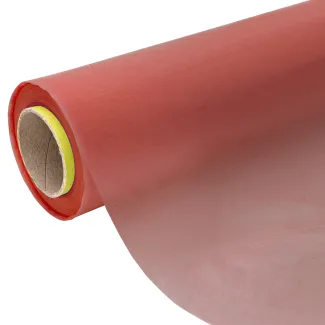
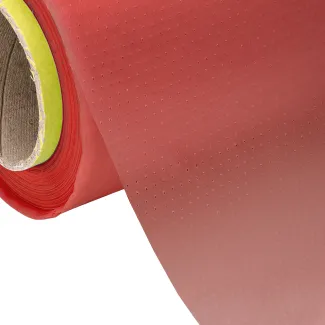
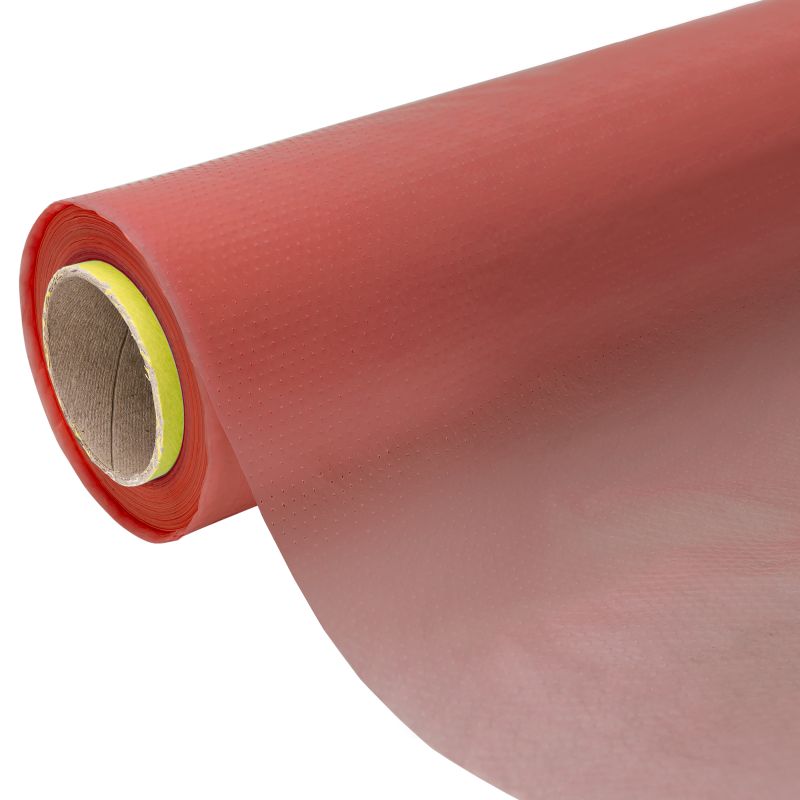
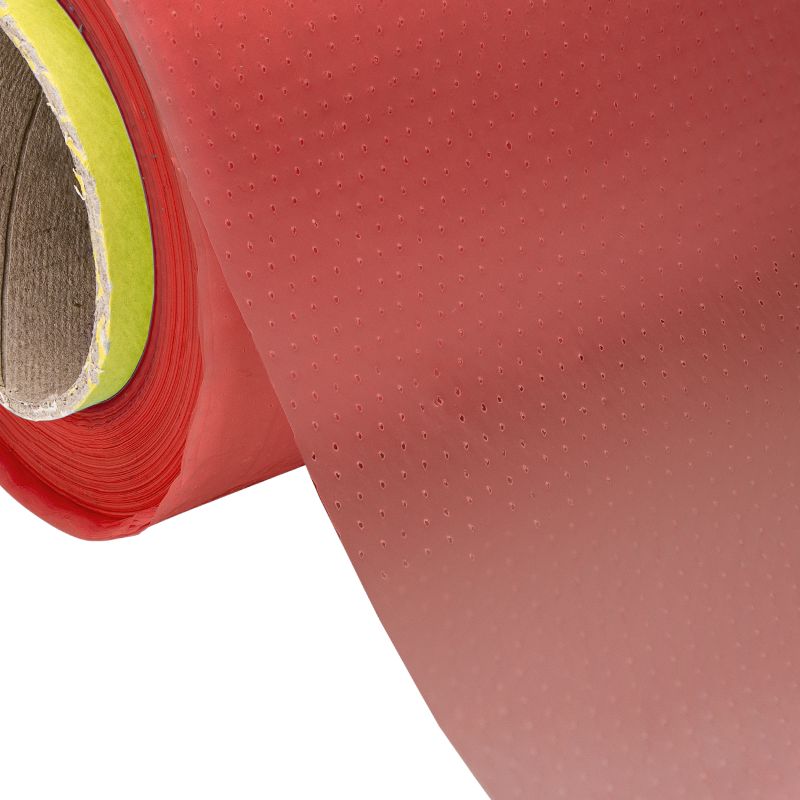
This perforated film is highly suitable for vacuum bagging laminates (wet bagging). The film is very strong and features a special PJ perforation, making it ideal for wet bagging applications. The perforated film for wet bagging is self-releasing and can therefore be applied directly to the laminate. The film can also be used in combination with peel ply.
The recommended vacuum level is 0.5–0.8 bar negative pressure.
Material: polypropylene
Perforation: PJ (for wet bagging)
Colour: red
Thickness: 30 μm
Recommended processing temperature: 150 °C
Recommended vacuum level: 0.5–0.8 bar negative pressure
Maximum temperature: 157 °C
Elongation at break: 500 %
Tensile strength at break: 42 MPa
Dimensions:
The key technical properties clearly listed in one place.
The technical product category, such as primer, resin, hardener or cleaner. It explains the product's purpose and helps you find other products with a similar function.
The recommended application temperature range indicates the conditions under which the product can generally be applied and cured properly. Three temperatures matter:
A cold substrate can cause condensation and affect adhesion. At higher temperatures, two-component products may react faster, reducing their working time. Check the dew point and follow the product instructions.
The product's dimensions, usually shown as length × width × height or another product-specific order. Check whether the measurements describe the outside, inside or usable space, especially for containers and moulds.
The physical thickness of the supplied material, such as a panel, pad, film or foam sheet. This differs from the thickness of a liquid coating applied to a surface.
The arrangement of extraction holes in a sanding disc or backing pad. A matching hole pattern helps remove sanding dust. Check that the holes line up with the backing pad and dust extraction system.
The base material a product or part is made from, such as HDPE, aluminium, glass fibre or foam. Material choice affects weight, stiffness, chemical resistance and how the part can be worked or processed.
Elongation at break indicates how much a material can stretch during a tensile test before it breaks. It is expressed as a percentage (%) of the original length. At 100% elongation, the material has doubled in length just before breaking. A high value indicates a high ability to deform, but not how much force is needed.
Tensile strength is the maximum tensile stress a material can withstand during a tensile test before failure. It is usually expressed in MPa (megapascals) or N/mm² (newtons per square millimetre); 1 MPa = 1 N/mm². Under comparable test conditions, a higher value means greater resistance to tension. In composites, fibre orientation also affects the result.
Useful additions for your project.