Over time, your boat—which used to sit so beautifully shiny in the water—loses its luster due to exposure to various weather conditions. The polyester or paintwork on your boat becomes dull and can even start to weather. That is why it is extremely important to maintain your boat properly every year and polish it thoroughly every now and then. But how do you actually do that, and which products do you need? In this article, we explain how to bring back your boat's shine using cleaning products from the Riwax Nautic product line (RS).
In this article, we work according to the Riwax step-by-step plan. This guide consists of the following five steps:
- Step 1. Preparation (initial cleaning).
- Step 2. Matting.
- Step 3. Polishing the boat.
- Step 4. Finishing and protection.
- Step 5. Maintenance during the season.
You can easily order all Riwax products online at Polyestershoppen.nl. Need advice on boat maintenance? Feel free to contact our product specialists!
Step 1. Preparation (initial cleaning)
Requirements:
- Riwax RS Boat Clean
- Brush
- Riwax RS Surface Clean (optional)
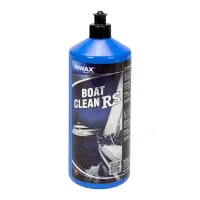
Before polishing, sanding, or waxing your polyester boat, we advise cleaning the boat and/or motor thoroughly using RS Boat Clean. This multi-purpose cleaner is suitable for deep cleaning and degreasing boat hulls, bilges, and engines. Riwax RS Boat Clean does not stay in emulsion, making oil and grease residues easy to separate. This cleaning agent is also ideal for routine boat cleaning.
Always rinse the boat thoroughly with water after washing and chamois the surface dry.
Step 2. Matting
Requirements
What is matting?
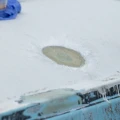
Matting is a method in which a paper-thin layer of the gelcoat or paint is sanded away. This sounds more drastic than it actually is because gelcoat is quite thick. You can therefore mat the surface without any problems. Matting is also an effective method for smoothing out a dirty waterline (ghosting from old lettering, scratches, and similar damage).
When should you mat?
Assess the condition of the paint or gelcoat. Is the gelcoat or paint still in good condition? Then you do not need to mat. Proceed directly to Step 3B or 3C.
We advise that you do mat the surface if there is:
- Weathered and/or dull gelcoat or paint.
- Repaired gelcoat.
- Deep scratches caused by fenders.
- Orange peel effect.
- Visible ghosting/relief from old adhesive lettering.
How to mat?
To mat a surface, we recommend using a dual-action random orbital sander combined with fine-grit Abralon matting discs. Sand the surface with matting discs in grit P1000, P2000, and P4000. Always sand wet and keep the surface moist using a water spray bottle during matting.
Areas that cannot be reached with the sander can easily be done by hand. Take a new disc with a bucket of water and mat using circular movements.
Matting results in a clean, smooth, and above all dull surface. This is the perfect moment to repair or sand out scratches and defects in the gelcoat. Not necessary? Then proceed to the next step: polishing!
Step 3. Polishing the boat
In this step, we are going to polish the matted or dull gelcoat. For proper polishing, we recommend using the following products:
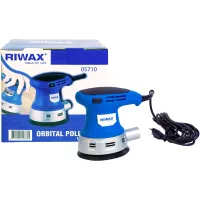
- Riwax rotary polisher
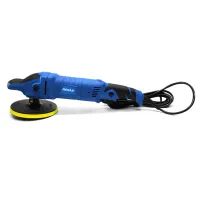
Use a suitable polisher to achieve a perfect result. For polishing, we recommend using a rotary polisher such as the Riwax polisher. This high-quality machine features variable speed control so you have complete control during polishing. - Polishing pads
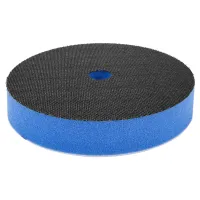
The Riwax polishing pads are long-lasting and available in the following grades: black (soft), white (medium), and blue (hard). You can easily attach the pads to a Riwax polisher. - Wool bonnet / sheepskin
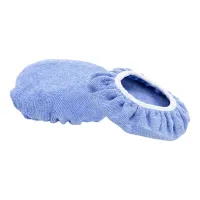
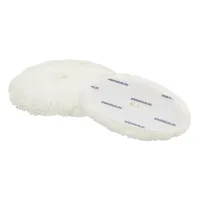
A sheepskin pad is widely used by DIYers to quickly buff out damage and imperfections. The main advantage of a sheepskin pad is that the surface heats up less quickly. To use a wool bonnet, you will need an interface pad to prevent heat build-up. We recommend using multiple wool pads if you are treating the entire boat. Rinse the sheepskin pad regularly in a bucket of water.
3A: Polishing heavily weathered gelcoat
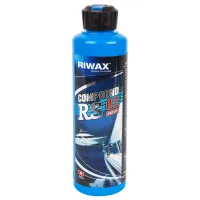
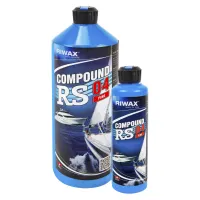
Use Riwax RS02 to polish heavily weathered gelcoat on the boat. Apply a small amount of compound to a blue polishing pad or sheepskin pad and set the polisher to a low speed. Spread the compound lightly over the surface and begin polishing. Work systematically from top to bottom and left to right with a slight overlap. Slowly increase the RPM while polishing.
For the finishing touch, clean the surface after polishing with Riwax RS20 Spray Finish. Satisfied with the result? Move on to the next step!
3B: Polishing lightly weathered gelcoat
Use Riwax RS04 to polish lightly weathered gelcoat. Apply a small amount of compound to a blue polishing pad or sheepskin pad and set the polisher to a low speed. Spread the compound lightly over the surface and begin polishing. Work systematically from top to bottom and left to right with a slight overlap. Slowly increase the RPM while polishing.
For the finishing touch, clean the surface after polishing with Riwax RS20 Spray Finish. Satisfied with the result? Move on to the next step!
3C: Polishing new gelcoat (gelcoat in good condition)
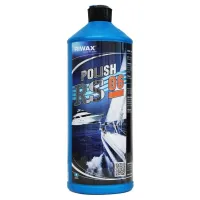
With Riwax RS06, you restore the gelcoat's shine if it is already in good condition. Apply a small amount of polish to a white polishing pad and set the polisher to a low speed. Spread the polish over the surface and begin buffing. Work systematically from top to bottom and left to right with a slight overlap. Slowly increase the RPM while polishing.
Step 4. Finishing and protection
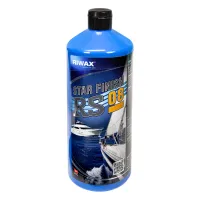
Now that your boat is polished, it looks pristine and shiny once again. Naturally, you want to preserve this high-gloss shine for as long as possible, which makes this final step essential. In this step, you will apply a protective coat of wax. Applying wax deepens the gloss and creates a dirt- and water-repellent layer.
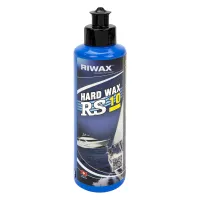
Riwax offers two types of boat wax: Riwax RS08 (Star Finish) and Riwax RS10 (Hard Wax). Both waxes are easy to apply by hand. Machine application is also possible. For long-lasting protection, we recommend using Riwax RS10 (Hard Wax).
Applying boat wax by hand (recommended)
Apply a thin layer of wax by hand. Always use a clean Riwax polishing cloth for waxing, and not a microfiber polishing cloth. Polishing cloths have an open structure that allows you to apply the wax properly. After treating the entire boat, let the wax haze/cure for about an hour. Buff the wax thoroughly after cure time using a premium microfiber cloth until full gloss is achieved. Avoid applying in direct sunlight for optimal results.
Applying boat wax by machine
In addition to manual application, you can also apply the wax using a dual-action orbital polisher. Use a black (soft) polishing pad for this and let the machine do the work.
Step 5. Maintenance during the season
After following the previous steps, your boat—fully polished and protected—is ready for a wonderful boating season. But even during the season, you naturally want to keep the boat in top condition. Use the following products for periodic cleaning during the season:
- Riwax RS Surface Clean
Riwax RS Surface Clean is a must-have for boat owners. With this cleaner, you can effortlessly remove limescale deposits from the paint and clean teak wood onboard. Incredibly handy for keeping your boat in peak condition throughout the season.
- Riwax RS Wax Shampoo
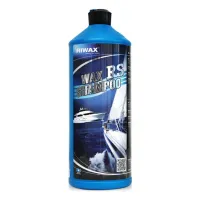
Wash your boat during the season with Riwax RS Wax Shampoo. The shampoo removes grease and dirt without stripping the finish and adds fresh shine with every wash (wash & wax in 1).
- Riwax RS Wax Polish
Use Riwax RS Wax Polish for minor touch-up maintenance during the season. Use this wax to remove dull spots or light marks on the paintwork.
- Riwax RS Spray Finish
With Riwax RS Spray Finish, you can clean surfaces without water and give the finish an instant boost. This spray cleaner contains selected preservatives and is suitable for all surfaces.
Need more information on boat polishing with Riwax?
Do you have any questions after reading this article about the Riwax step-by-step plan or Riwax products? Feel free to contact our product specialists. We are happy to advise you to help make your project a complete success!